

Motmot

エチオピアノドジロツバメ 対 ハリオツバメ

Hirundo aethiopica 対 Hirundo smithii

エチオピアノドジロツバメとハリオツバメのクイズ
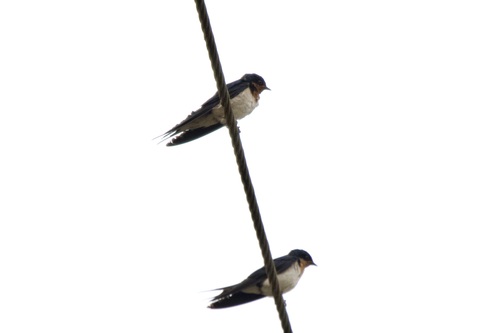
エチオピアノドジロツバメ (Hirundo aethiopica) エチオピアノドジロツバメ
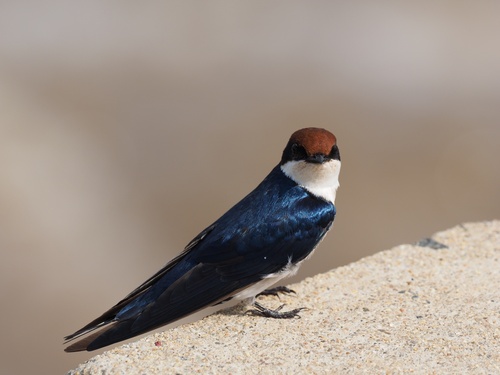
ハリオツバメ (Hirundo smithii) ハリオツバメ

メディア

読み込み中…

要点

エチオピアノドジロツバメとハリオツバメを区別する最も信頼できるフィールドマークは、成鳥のハリオツバメに見られる非常に長い糸状の外尾羽(「ワイヤー」)の存在であり、エチオピアノドジロツバメにはこれがありません。幼鳥のハリオツバメにはこれらのワイヤーが欠けていますが、茶色の冠と背中によって区別でき、若いエチオピアノドジロツバメのより均一な羽毛と対照的です。両種は小型のアイイロツバメで、栗色または茶色がかった帽子を持っていますが、ハリオツバメの尾の形状と帽子の色(特に成鳥において)が重要です。未成熟の鳥はしばしば混同されるため、冠の色と尾の構造に注意を払ってください。

識別のコツ

  1. Tail wires in adults: 成鳥のハリオツバメは、尾の先端を超えて引きずる非常に長い糸状の外尾羽(「ワイヤー」)を持っています。エチオピアノドジロツバメは、年齢や性別に関係なくこれらのワイヤーを示しません。
  2. Juvenile crown color: 幼鳥のハリオツバメは茶色の冠、背中、尾を持ち、白い腹部と対照的です。エチオピアノドジロツバメの幼鳥はこの強い茶色の冠を欠き、上面はより均一な色合いです。
  3. Adult cap color: 成鳥のハリオツバメは、青い上面に対して目立つ明るい栗色の帽子を示します。エチオピアノドジロツバメの帽子はより鈍く、はっきりとした定義がありません。
  4. Tail shape in flight: 尾のワイヤーが明らかでない場合(例:雌のハリオツバメや視界が悪い場合)でも、ハリオツバメはエチオピアノドジロツバメよりも深く分かれた尾を示すことが多いですが、これは微妙であり、他のマークと組み合わせて使用するのが最良です。
  5. Sexual dimorphism: ハリオツバメのみが尾のワイヤーの長さにおいて性差を示します—オスはメスよりも長いワイヤーを持っています。エチオピアノドジロツバメはこの違いを示しません。
  6. Flight silhouette: ハリオツバメの成鳥は、特に後ろや下から見たときに、引きずるワイヤーによる独特の飛行プロファイルを持っています。エチオピアノドジロツバメの飛行は、小型のツバメに典型的で、引きずる糸はありません。
  7. Perched posture: 側に止まっているとき、成鳥のハリオツバメのワイヤーはしばしば見え、時には止まり木に引きずられることもあります。エチオピアノドジロツバメはこの特徴を示しません。
  8. Plumage contrast in immatures: 幼いハリオツバメは明らかに茶色がかった背中と冠を持っていますが、エチオピアノドジロツバメの未成熟個体はより均一な色合いで、強い頭と背中の対比を欠いています。
  9. Cap demarcation: 帽子と白い腹部の境界は、成鳥のハリオツバメではより鋭く、鮮やかです。エチオピアノドジロツバメの頭の色は、羽毛の残りの部分により微妙に溶け込んでいます。
  10. Habitat context: 両種は水の近くで見られますが、ハリオツバメは水域により密接に関連しています。水から遠くで見られた場合、エチオピアノドジロツバメの可能性が高いですが、診断的ではありません。
  11. Range overlap: 両種が生息する場所では、まず尾のワイヤーを確認し、その後、未成熟個体の冠の色と背中のパターンを確認してください。
  12. Confusion risk in juveniles: ワイヤーのない幼鳥のハリオツバメは大きな落とし穴です;エチオピアノドジロツバメと区別するために茶色の冠と背中に焦点を当ててください。
  13. No reliable size difference: フィールドでこれらの種を区別するためにサイズや質量に頼らないでください。
  14. No voice distinction in available notes: 鳴き声は両者の間で特異的であるとは記述されていないため、鳴き声を区別に使用しないでください。
  15. Seasonal context: 両種は主にアフリカに生息しているため、季節は強い区別要因ではありません。年中羽毛と構造に焦点を当ててください。

大きさ

両種はサイズと質量がほぼ同じで、エチオピアノドジロツバメは平均13.0 g、ハリオツバメは12.7 gです [wikidata]。フィールドでは、サイズは信頼できる区別要因ではなく、両者は小型で細身のツバメとして見えます。ハリオツバメは時々、尾のワイヤー(成鳥)によってわずかに長いと説明されますが、体のボリュームは本質的に同じです。

羽色

行動

ハリオツバメはしばしば水の上を低く飛んでいるのが見られ、飛行中に長い尾のワイヤーを見せ、速くて敏捷な飛行をします。エチオピアノドジロツバメも空中で敏捷ですが、特徴的な引きずるワイヤーがないため、飛行シルエットは小型のツバメにより典型的です。両種は止まりますが、ハリオツバメのワイヤーは止まっているときでも目立ちます(成鳥の場合)。

生息環境

両種は開けた土地に生息し、しばしば水や人間の居住地の近くにいます。ハリオツバメは特に水域に関連しており、水面の低いところで餌を取ります。エチオピアノドジロツバメはアフリカ全体に広い範囲を持ち、非渡り性ですが、ハリオツバメ(アフリカ亜種)も居住性ですが、水生生息地により密接に関連している可能性があります。生息地だけでは、範囲が重なる場所では信頼できる区別要因ではありません。

より良い説明を送る

比較と同じ項目を使ってください。文章はすぐに公開されます。

The most reliable field mark to separate Ethiopian Swallow from Wire-tailed Swallow is the presence of extremely long, filamentous outer tail feathers ('wires') in adult Wire-tailed Swallows, which are absent in Ethiopian Swallow. Juvenile Wire-tailed Swallows lack these wires, but can be told by their brown crown and back, contrasting with the more uniform plumage of young Ethiopian Swallows. Both species are small, blue-and-white swallows with chestnut or brownish caps, but the Wire-tailed Swallow’s tail shape and cap color (especially in adults) are key. Immature birds are often confused, so pay close attention to crown color and tail structure.

  1. Tail wires in adults: Adult Wire-tailed Swallows have extremely long, filamentous outer tail feathers ('wires') that trail well beyond the tail tip. Ethiopian Swallow never shows these wires at any age or sex.
  2. Juvenile crown color: Juvenile Wire-tailed Swallows have a brown crown, back, and tail, contrasting with their white underparts. Ethiopian Swallow juveniles lack this strong brown crown and are more uniformly colored above.
  3. Adult cap color: Adult Wire-tailed Swallows show a bright chestnut cap that stands out against the blue upperparts. Ethiopian Swallow’s cap is duller and less sharply defined.
  4. Tail shape in flight: Even when tail wires are not obvious (e.g., in female Wire-tailed Swallow or in poor views), Wire-tailed Swallow often shows a more deeply forked tail than Ethiopian Swallow, though this is subtle and best used in combination with other marks.
  5. Sexual dimorphism: Only Wire-tailed Swallow shows sexual dimorphism in tail wire length—males have longer wires than females. Ethiopian Swallow does not show this difference.
  6. Flight silhouette: Wire-tailed Swallow adults have a distinctive flight profile due to their trailing wires, especially when seen from behind or below. Ethiopian Swallow’s flight is more typical of small swallows, lacking any trailing filaments.
  7. Perched posture: When perched, adult Wire-tailed Swallow’s wires are often visible, sometimes even dragging on the perch. Ethiopian Swallow never shows this feature.
  8. Plumage contrast in immatures: Young Wire-tailed Swallows have a noticeably brownish back and crown, while Ethiopian Swallow immatures are more uniformly colored and lack the strong head-back contrast.
  9. Cap demarcation: The boundary between the cap and the white underparts is sharper and more vivid in Wire-tailed Swallow adults; Ethiopian Swallow’s head color blends more subtly into the rest of the plumage.
  10. Habitat context: Both species can be found near water, but Wire-tailed Swallow is more tightly associated with water bodies. If seen far from water, Ethiopian Swallow is more likely, though not diagnostic.
  11. Range overlap: Where both species occur, always check for tail wires first, then crown color and back pattern in immatures.
  12. Confusion risk in juveniles: Juvenile Wire-tailed Swallows without wires are a major pitfall; focus on the brown crown and back to separate them from Ethiopian Swallow.
  13. No reliable size difference: Do not rely on size or mass to separate these species in the field.
  14. No voice distinction in available notes: Vocalizations are not described as distinctive between the two, so do not use calls for separation.
  15. Seasonal context: Both species are largely resident in Africa, so season is not a strong separator. Focus on plumage and structure year-round.

Both species are nearly identical in size and mass, with Ethiopian Swallow averaging 13.0 g and Wire-tailed Swallow 12.7 g [wikidata]. In the field, size is not a reliable separator, as both appear as small, slender swallows. Wire-tailed Swallow is sometimes described as slightly longer due to its tail wires (adults), but body bulk is essentially the same.

  • Juvenile/Immature birds: Juvenile Wire-tailed Swallows lack the long tail wires and instead show a brown crown, back, and tail, with underparts still white. Ethiopian Swallow juveniles do not have the pronounced brown crown and back; their cap and upperparts are less contrasting and more uniform. This difference in head and back color is the best mark for immatures.
  • Adults: Adult Wire-tailed Swallows have a bright chestnut cap, bright blue upperparts, and long, filamentous tail wires (males longer than females). Ethiopian Swallow adults have a similar blue-and-white pattern but lack the tail wires and have a less intensely colored cap. The cap of Ethiopian Swallow is not as bright chestnut as in Wire-tailed Swallow and may appear duller or less sharply demarcated.
  • Sex differences: Both species are sexually similar, but in Wire-tailed Swallow, females have shorter tail wires than males. Ethiopian Swallow does not show such sexual dimorphism in tail length.

Wire-tailed Swallows are often seen flying low over water, displaying their long tail wires in flight, and are fast, agile flyers. Ethiopian Swallow is also aerial and agile, but lacks the distinctive trailing wires, making its flight silhouette more typical of small swallows. Both species perch, but Wire-tailed Swallow’s wires are conspicuous even when perched (in adults).

Both species occur in open country, often near water and human habitation. Wire-tailed Swallow is especially associated with water bodies, where it feeds low over the surface. Ethiopian Swallow has a wide range across Africa and is non-migratory, while Wire-tailed Swallow (African subspecies) is also resident but may be more tightly linked to aquatic habitats. Habitat alone is not a reliable separator where ranges overlap.

変更を破棄しますか?

保存していない編集があります。今離れると失われます。

エチオピアノドジロツバメ · ハリオツバメ · 苦手な鳥