

Ethiopian Swallow vs Wire-tailed Swallow
Hirundo aethiopica contro Hirundo smithii
Fai un quiz con Ethiopian Swallow e Wire-tailed Swallow
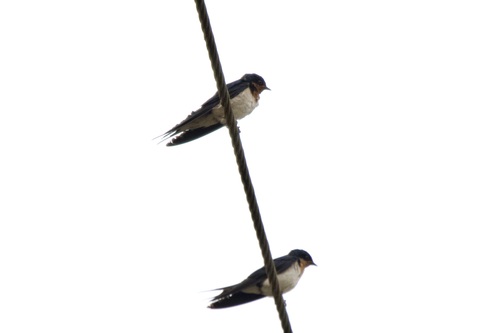 Ethiopian Swallow
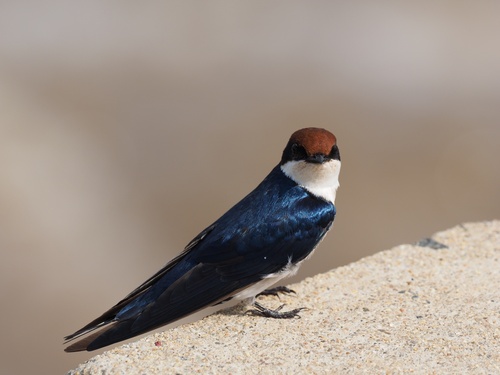 Wire-tailed Swallow
In breve
Il segno di campo più affidabile per separare l'Ethiopian Swallow dal Wire-tailed Swallow è la presenza di estremamente lunghe piume della coda esterne filamentose ('fili') nei Wire-tailed Swallows adulti, che sono assenti nell'Ethiopian Swallow. I Wire-tailed Swallows juvenili mancano di questi fili, ma possono essere distinti dalla loro corona e dorso marroni, in contrasto con il piumaggio più uniforme dei giovani Ethiopian Swallows. Entrambe le specie sono piccoli, swallows blu e bianchi con copricapi castani o marroni, ma la forma della coda e il colore del copricapo del Wire-tailed Swallow (soprattutto negli adulti) sono fondamentali. Gli uccelli immaturi sono spesso confusi, quindi presta particolare attenzione al colore della corona e alla struttura della coda.
Consigli di identificazione
- Tail wires in adults: I Wire-tailed Swallows adulti hanno estremamente lunghe piume della coda esterne filamentose ('fili') che si estendono ben oltre la punta della coda. L'Ethiopian Swallow non mostra mai questi fili a nessuna età o sesso.
- Juvenile crown color: I Wire-tailed Swallows juvenili hanno una corona marrone, dorso e coda, in contrasto con le loro parti inferiori bianche. L'Ethiopian Swallow juvenili mancano di questa forte corona marrone e sono più uniformemente colorati sopra.
- Adult cap color: I Wire-tailed Swallows adulti mostrano un copricapo castano brillante che si distingue contro le parti superiori blu. Il copricapo dell'Ethiopian Swallow è più opaco e meno nettamente definito.
- Tail shape in flight: Anche quando i fili della coda non sono evidenti (ad es., nella Wire-tailed Swallow femmina o in viste sfocate), il Wire-tailed Swallow mostra spesso una coda più profondamente biforcuta rispetto all'Ethiopian Swallow, anche se questo è sottile e meglio utilizzato in combinazione con altri segni.
- Sexual dimorphism: Solo il Wire-tailed Swallow mostra dimorfismo sessuale nella lunghezza dei fili della coda: i maschi hanno fili più lunghi delle femmine. L'Ethiopian Swallow non mostra questa differenza.
- Flight silhouette: I Wire-tailed Swallow adulti hanno un profilo di volo distintivo a causa dei loro fili che si estendono, specialmente quando visti da dietro o sotto. Il volo dell'Ethiopian Swallow è più tipico dei piccoli swallows, privo di filamenti che si estendono.
- Perched posture: Quando sono appollaiati, i fili del Wire-tailed Swallow adulto sono spesso visibili, a volte addirittura strisciando sul posatoio. L'Ethiopian Swallow non mostra mai questa caratteristica.
- Plumage contrast in immatures: I giovani Wire-tailed Swallows hanno un dorso e una corona visibilmente marroni, mentre gli immaturi dell'Ethiopian Swallow sono più uniformemente colorati e mancano del forte contrasto testa-dorso.
- Cap demarcation: Il confine tra il copricapo e le parti inferiori bianche è più netto e vivido negli adulti Wire-tailed Swallow; il colore della testa dell'Ethiopian Swallow si fonde più sottilmente nel resto del piumaggio.
- Habitat context: Entrambe le specie possono essere trovate vicino all'acqua, ma il Wire-tailed Swallow è più strettamente associato ai corpi idrici. Se visto lontano dall'acqua, è più probabile che si tratti di un Ethiopian Swallow, anche se non è diagnostico.
- Range overlap: Dove si trovano entrambe le specie, controlla sempre prima i fili della coda, poi il colore della corona e il modello del dorso negli immaturi.
- Confusion risk in juveniles: I Wire-tailed Swallows juvenili senza fili sono una trappola importante; concentrati sulla corona e sul dorso marroni per separarli dall'Ethiopian Swallow.
- No reliable size difference: Non fare affidamento su dimensioni o massa per separare queste specie sul campo.
- No voice distinction in available notes: Le vocalizzazioni non sono descritte come distintive tra le due, quindi non utilizzare i richiami per la separazione.
- Seasonal context: Entrambe le specie sono per lo più residenti in Africa, quindi la stagione non è un forte separatore. Concentrati sul piumaggio e sulla struttura tutto l'anno.
Taglia
Entrambe le specie sono quasi identiche in dimensioni e massa, con l'Ethiopian Swallow che pesa in media 13,0 g e il Wire-tailed Swallow 12,7 g [wikidata]. Sul campo, la dimensione non è un separatore affidabile, poiché entrambe appaiono come piccoli swallows snelli. Il Wire-tailed Swallow è talvolta descritto come leggermente più lungo a causa dei suoi fili della coda (adulti), ma la massa corporea è essenzialmente la stessa.
Piumaggio
- Juvenile/Immature birds: I Wire-tailed Swallows juvenili mancano dei lunghi fili della coda e mostrano invece una corona, un dorso e una coda marroni, con le parti inferiori ancora bianche. I juvenili dell'Ethiopian Swallow non hanno la corona e il dorso marroni pronunciati; il loro copricapo e le parti superiori sono meno contrastanti e più uniformi. Questa differenza nel colore della testa e del dorso è il miglior segno per gli immaturi.
- Adults: I Wire-tailed Swallows adulti hanno un copricapo castano brillante, parti superiori blu brillanti e lunghi fili della coda filamentosi (maschi più lunghi delle femmine). Gli adulti dell'Ethiopian Swallow hanno un modello blu e bianco simile ma mancano dei fili della coda e hanno un copricapo meno intensamente colorato. Il copricapo dell'Ethiopian Swallow non è così castano brillante come nel Wire-tailed Swallow e può apparire più opaco o meno nettamente demarcato.
- Sex differences: Entrambe le specie sono sessualmente simili, ma nel Wire-tailed Swallow, le femmine hanno fili della coda più corti dei maschi. L'Ethiopian Swallow non mostra tale dimorfismo sessuale nella lunghezza della coda.
Comportamento
I Wire-tailed Swallows sono spesso visti volare bassi sull'acqua, mostrando i loro lunghi fili della coda in volo, e sono volatori veloci e agili. L'Ethiopian Swallow è anch'esso aereo e agile, ma manca dei distintivi fili che si estendono, rendendo il suo profilo di volo più tipico dei piccoli swallows. Entrambe le specie si appollaiano, ma i fili del Wire-tailed Swallow sono evidenti anche quando sono appollaiati (negli adulti).
Habitat
Entrambe le specie si trovano in campagna aperta, spesso vicino all'acqua e all'abitazione umana. Il Wire-tailed Swallow è particolarmente associato ai corpi idrici, dove si nutre a bassa quota sulla superficie. L'Ethiopian Swallow ha un'ampia distribuzione in Africa ed è non migratoria, mentre il Wire-tailed Swallow (sottospecie africana) è anch'esso residente ma potrebbe essere più strettamente legato agli habitat acquatici. L'habitat da solo non è un separatore affidabile dove le aree di distribuzione si sovrappongono.
Ethiopian Swallow · Wire-tailed Swallow · I miei uccelli difficili