

Motmot

クリノドオタテドリ 対 ワキアカオタテドリ

Pteroptochos castaneus 対 Eugralla paradoxa

クリノドオタテドリとワキアカオタテドリのクイズ
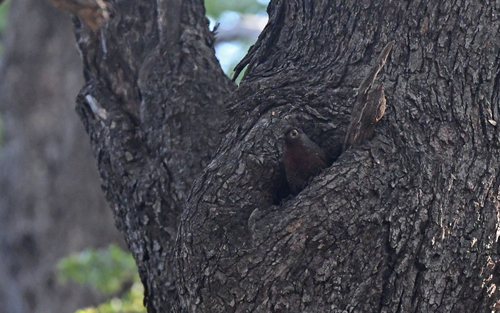
クリノドオタテドリ (Pteroptochos castaneus) クリノドオタテドリ
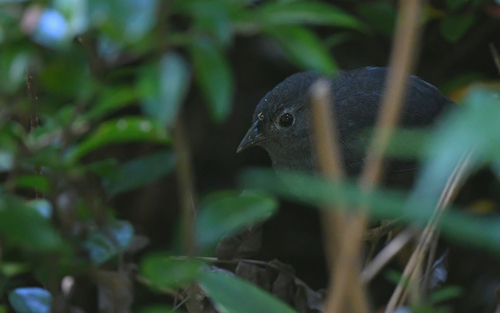
ワキアカオタテドリ (Eugralla paradoxa) ワキアカオタテドリ

メディア

読み込み中…

要点

クリノドオタテドリとワキアカオタテドリを区別する最も信頼できるフィールドマークはサイズです:huet-huetは非常に大きく、ずんぐりした体型で、暗赤色の喉を持っていますが、tapaculoははるかに小さく、よりコンパクトで、オーカー茶色の側面と粘土色の腹部を示します。幼鳥のワキアカオタテドリは、huet-huetのどの年齢とも異なり、明確にシナモン/ルフスと暗灰色の縞模様があります。成鳥では、huet-huetの淡いバフ色の翼帯とクリノドオタテドリの喉の色が、tapaculoの単調な暗灰色の上面と独特の顔のプロファイルと対照的です。両者は南アメリカの南部の森林に生息しているため、直接比較が可能ですが、迅速で不十分な視界や未熟な鳥との混同が最も起こりやすいです。

識別のコツ

  1. サイズは最も即座の手がかりです:クリノドオタテドリは、ワキアカオタテドリの約5倍の重さと長さがあります。鳥がツグミサイズまたはそれ以上に見える場合はhuet-huetであり、もしウグイスサイズであればtapaculoです。これはすべての年齢と性別に当てはまります。
  2. 幼鳥の羽毛は診断的です:若いワキアカオタテドリは全体がシナモン/ルフスと暗灰色の縞模様があります。どの年齢のhuet-huetもこのパターンを示しません。この地域で小さな縞模様のある鳥を見た場合、それはtapaculoです。
  3. 成鳥の喉の色:クリノドオタテドリは暗赤色(クリノド)喉を持ち、暗褐色の体と対照的です。ワキアカオタテドリの喉は単調な灰色で、他の腹部と一致しています。
  4. 翼帯:成鳥のhuet-huetは、止まっている時や飛んでいる時に見える淡いバフ色の翼帯を示します。このマークはtapaculoには年齢に関係なく存在しません。
  5. 側面と腹部の色:ワキアカオタテドリはオーカー茶色(黄土色)の側面と粘土色の腹部を持ち、灰色の腹部と対照的です。huet-huetは、クリノドの喉を除いて、下側が均一に暗褐色です。
  6. 顔のプロファイル:tapaculoは独特の「ローマ鼻」プロファイルを持ち、顕著で傾斜のある額とくちばしがあります。huet-huetはより典型的で頑丈なツグミのような頭とくちばしを持っています。
  7. 全体の色調:huet-huetは全体が暗褐色ですが、tapaculoは上面が暗灰色で、下面がより淡い灰色で、茶色は側面と腹部に制限されています。
  8. 構造とジズ:huet-huetはずんぐりしており、重く丸い体と強い脚を持っています。tapaculoは小さく、よりコンパクトで、より繊細に見えることがあります。
  9. 飛行中:huet-huetの淡いバフ色の翼帯は飛行中にちらりと見えることがありますが、tapaculoの翼は単調です。
  10. 止まっている姿勢:huet-huetはしばしば直立して頑丈に見えますが、tapaculoはより水平でマウスのように見えることがあります。
  11. 生息地の重複:両者は似たような森林に生息しているため、生息地だけに頼って識別しないでください。
  12. 性的二形性は確認されていません:両種は両性で似ているように見えるため、これらのマークはオスとメスの両方に適用されます。
  13. 声はカバーされていません:音声はノートに記載されていないため、この情報に基づいて歌や鳴き声を使用して分離しないでください。
  14. 落とし穴:幼鳥のtapaculoの視界が悪い場合、小さくて奇妙な羽毛のhuet-huetと間違われることがありますが、縞模様は独特です。逆に、暗い大きな鳥でクリノドの喉と翼帯を持つものは常にhuet-huetです。
  15. 分子の区別:これらの種はかつて同種と見なされていましたが、現在は異なることが知られています。中間的な形態を仮定しないでください。

大きさ

クリノドオタテドリは劇的に大きく、平均165g、長さ23cmで、巨大なアンティピッタの後に続く最大のリノクリプティドです[wikipedia]。ワキアカオタテドリははるかに小さく、成鳥は約34.5g、長さ14.5cmです[wikidata][wikipedia]。フィールドでは、huet-huetは頑丈で重い体に見え、tapaculoはコンパクトで明らかに軽いです。距離があっても、サイズのギャップは際立っており、両種がその地域で知られている場合、双眼鏡で明らかになるはずです。

羽色

幼鳥のワキアカオタテドリは全体がシナモン/ルフスと暗灰色の縞模様があり、クリノドオタテドリのどの年齢にも見られないパターンです。成鳥のhuet-huetは全体が暗褐色で、特徴的な暗赤色(クリノド)の喉と淡いバフ色の翼帯を持っています。この翼帯はtapaculoには存在しません。成鳥のワキアカオタテドリは上面が暗灰色、下面がより淡い灰色で、腹部と腹部が粘土色、側面がオーカー茶色です。tapaculoは喉の斑点や翼帯がなく、顔は独特の「ローマ鼻」プロファイルを持っていると説明されています。両種は全体的に暗いですが、huet-huetの喉と翼帯、tapaculoのオーカー側面と腹部は重要な対比です。

行動

行動は利用可能なノートから強く診断的ではありません。両種はリノクリプティダエに典型的な隠れた地面に生息する鳥であり、両者は密な下草を移動しているのが見られることがあります。huet-huetの大きなサイズは、より遅くて鈍重に見えるかもしれませんが、tapaculoの小さなサイズはより敏捷またはマウスのように見えるかもしれませんが、これは直接比較なしでは信頼できるフィールドマークではありません。

生息環境

両種は南中部チリと隣接する西アルゼンチンに生息しており、しばしば似たような森林生息地に見られます[wikipedia]。生息地だけでは信頼できる区別にはならず、範囲と好ましい環境が重なっています。

より良い説明を送る

比較と同じ項目を使ってください。文章はすぐに公開されます。

The most reliable field mark to separate Chestnut-throated Huet-huet from Ochre-flanked Tapaculo is size: the huet-huet is vastly larger and bulkier, with a stocky build and a dark red throat, while the tapaculo is much smaller, more compact, and shows ochre-brown flanks and a clay-brown vent. Juvenile Ochre-flanked Tapaculo is distinctly barred cinnamon/rufous and dusky gray, unlike any age of huet-huet. In adults, the huet-huet’s pale buff wing bar and chestnut throat contrast with the tapaculo’s plain dark gray upperparts and unique facial profile. Both occur in similar southern South American forests, so direct comparison is possible, but confusion is most likely with quick, poor views or immature birds.

  1. Size is the most immediate clue: Chestnut-throated Huet-huet is nearly five times heavier and much longer than Ochre-flanked Tapaculo. If the bird looks thrush-sized or larger, it is a huet-huet; if it is wren-sized, it is a tapaculo. This holds for all ages and sexes.
  2. Juvenile plumage is diagnostic: Young Ochre-flanked Tapaculo is barred cinnamon/rufous and dusky gray all over. No huet-huet, at any age, shows this pattern. If you see a small, barred bird in this region, it is the tapaculo.
  3. Throat color in adults: Chestnut-throated Huet-huet has a dark red (chestnut) throat, contrasting with its dark brown body. Ochre-flanked Tapaculo’s throat is plain gray, matching the rest of the underparts.
  4. Wing bar: Adult huet-huet shows a pale buff bar on the wing, visible when perched or in flight. This mark is absent in the tapaculo at all ages.
  5. Flank and vent color: Ochre-flanked Tapaculo has tawny-brown (ochre) flanks and a clay-brown vent and abdomen, contrasting with its gray underparts. The huet-huet is uniformly dark brown below, except for the chestnut throat.
  6. Facial profile: The tapaculo has a unique 'Roman nose' profile, with a pronounced, sloping forehead and bill. The huet-huet has a more typical, robust thrush-like head and bill.
  7. Overall color tone: Huet-huet is dark brown overall, while the tapaculo is dark gray above and paler gray below, with brown restricted to the flanks and vent.
  8. Structure and jizz: The huet-huet is stocky, with a heavy, rounded body and strong legs. The tapaculo is smaller, more compact, and may appear more delicate.
  9. In flight: The pale buff wing bar of the huet-huet may be glimpsed in flight, while the tapaculo’s wings are plain.
  10. Perched posture: Huet-huet often appears upright and robust, while tapaculo may seem more horizontal and mouse-like.
  11. Habitat overlap: Both occur in similar forests, so do not rely on habitat alone for identification.
  12. No sexual dimorphism noted: Both species appear similar in both sexes, so these marks apply to males and females.
  13. Voice not covered: Vocalizations are not described in the notes, so do not use song or call for separation based on this information.
  14. Pitfalls: Poor views of a juvenile tapaculo may be mistaken for a small, odd-plumaged huet-huet, but the barring is unique. Conversely, a large, dark bird with a chestnut throat and wing bar is always a huet-huet.
  15. Molecular distinction: These species were once considered conspecific, but are now known to be distinct; do not assume intermediate forms.

Chestnut-throated Huet-huet is dramatically larger, averaging 165 g and 23 cm in length, making it the largest rhinocryptid after the giant antpittas [wikipedia]. Ochre-flanked Tapaculo is much smaller, with adults around 34.5 g and 14.5 cm long [wikidata][wikipedia]. In the field, the huet-huet appears robust and heavy-bodied, while the tapaculo is compact and noticeably lighter. Even at a distance, the size gap is striking and should be apparent with binoculars if both species are known from the area.

Juvenile Ochre-flanked Tapaculo is heavily barred cinnamon/rufous and dusky gray throughout, a pattern not found in any age of Chestnut-throated Huet-huet. Adult huet-huet is dark brown overall with a distinctive dark red (chestnut) throat and a pale buff wing bar; this wing bar is absent in the tapaculo. Adult Ochre-flanked Tapaculo is dark gray above, paler gray on the underparts, with clay-brown on the abdomen and vent, and tawny-brown flanks. The tapaculo lacks any throat patch or wing bar, and its face is described as having a 'Roman nose' profile, which is unique among tapaculos. Both species are overall dark, but the huet-huet’s throat and wing bar, and the tapaculo’s ochre flanks and vent, are key contrasts.

Behavior is not strongly diagnostic from the available notes. Both species are skulking, ground-dwelling birds typical of Rhinocryptidae, and both may be seen moving through dense undergrowth. The huet-huet’s larger size may make it appear slower and more ponderous, while the tapaculo’s smaller size could make it seem more agile or mouse-like, but this is not a reliable field mark without direct comparison.

Both species are found in south-central Chile and adjacent western Argentina, often in similar forested habitats [wikipedia]. Habitat alone is not a reliable separator, as their ranges and preferred environments overlap.

変更を破棄しますか?

保存していない編集があります。今離れると失われます。

クリノドオタテドリ · ワキアカオタテドリ · 苦手な鳥