

Motmot

Brown-throated Sunbird 対 ノドアカコバシタイヨウチョウ

Anthreptes malacensis 対 Anthreptes rhodolaemus

Brown-throated Sunbirdとノドアカコバシタイヨウチョウのクイズ
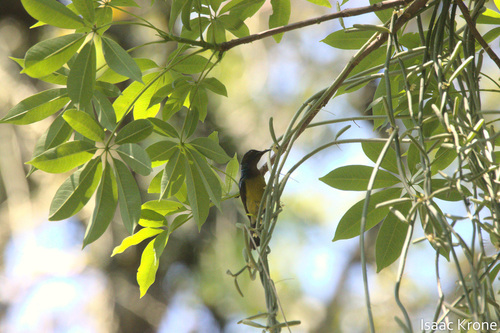
Brown-throated Sunbird (Anthreptes malacensis) Brown-throated Sunbird
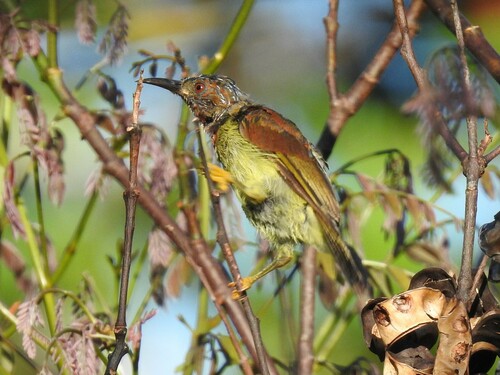
ノドアカコバシタイヨウチョウ (Anthreptes rhodolaemus) ノドアカコバシタイヨウチョウ

メディア

読み込み中…

要点

ブラウンセイタカシギとノドアカコバシタイヨウチョウを区別する最も信頼できる方法は、羽毛に注目することです:オスのブラウンセイタカシギは、翼覆や肩羽に栗色を持つ虹色の緑と紫の上面を示し、腹部は主に黄色です。一方、ノドアカコバシタイヨウチョウのオスは、特徴的な赤い喉を持っています(ブラウンセイタカシギには存在しません)。ブラウンセイタカシギのメスは、上面がオリーブグリーンで、下面が黄色がかっていますが、ノドアカコバシタイヨウチョウのメスのフィールドマークは資料に詳しく記載されていないため、注意が必要です。構造的には、ブラウンセイタカシギは比較的大きく、重いセイタカシギで、厚いくちばしを持ち、利用可能な質量データに基づくと、ノドアカよりもわずかに小さい可能性があります。生息地の好みも役立ちます:ブラウンセイタカシギはより広範囲の半開放的な生息地に見られ、ノドアカコバシタイヨウチョウは低地の森林により密接に関連しています。適切な森林で赤い喉を持つセイタカシギを見た場合、それはノドアカである可能性が高いです。そうでなければ、ブラウンセイタカシギの栗色の翼覆と全体の色合いを確認してください。

識別のコツ

  1. オスの赤い喉:ノドアカコバシタイヨウチョウのオスだけが赤い喉を持っています;ブラウンセイタカシギのオスはこの特徴を示しません。赤い喉のオスを見た場合、同定は簡単です。
  2. 栗色の翼覆と肩羽:オスのブラウンセイタカシギは、止まっている時や良い光の下で見える翼覆と肩羽に栗色を持っています。ノドアカのオスはこの栗色の色合いがありません。
  3. 虹色の緑と紫の上面:オスのブラウンセイタカシギは、上面に虹色の緑と紫の混合を示しますが、ノドアカのオスはこの点であまり記載されていません—ブラウンセイタカシギの金属的な光沢と栗色の全体的な印象を探してください。
  4. 黄色の下面:ブラウンセイタカシギのオスは主に下面が黄色で、暗い光や部分的な視界で役立ちます。ノドアカのオスは黄色があまり広範囲でないかもしれませんが、詳細は不足しています。
  5. メスの区別は不確か:メスのブラウンセイタカシギは、上面がオリーブグリーンで、下面が黄色がかっています。ノドアカコバシタイヨウチョウのメスのフィールドマークは記載されていないため、注意が必要で、可能であれば生息地やオスとの関連を利用してください。
  6. くちばしの構造:ブラウンセイタカシギは厚いくちばしを持つと記載されており、他のセイタカシギと区別するのに役立つかもしれませんが、これは資料でノドアカと直接比較されていません。
  7. サイズ:両種はサイズが似ていますが、ブラウンセイタカシギはわずかにがっしりして見えるかもしれません;これは信頼できるフィールドマークではありません。
  8. 生息地の文脈:ブラウンセイタカシギは半開放的な生息地、庭、エッジで一般的ですが、ノドアカは低地の森林により制限されています。羽毛があいまいな場合は、生息地を補助的な手がかりとして使用してください。
  9. 幼鳥/未成熟の区別:どちらの種にも特定の幼鳥や未成熟の翼や飛行マークは記載されていないため、全体の色と生息地に依存してください。
  10. 知られている声の違いはなし:資料ではどちらの種の鳴き声も記載されていないため、声を区別に使用しないでください。
  11. 地理的重複:両種は同じ一般的な地域に出現することがありますが、ブラウンセイタカシギは乱れた開放的な地域でより広範囲に分布しています。
  12. 季節的な羽毛の違いは記載されていない:両種は年間を通じて診断的な特徴を保持しているように見えるため、季節は要因ではありません。
  13. 「グレーの喉」の混乱に注意:フィリピンでは、グレーの喉のセイタカシギがブラウンセイタカシギの亜種と見なされることがありますが、測定値や羽毛が異なります;これはノドアカとの混乱ではありませんが、地域の変異に注意してください。
  14. 混合群れ:両種が一緒に見られる場合、オスは喉の色で簡単に区別できます;メスはオスと一緒に見ない限り、特定しない方が良いかもしれません。
  15. 光と角度:虹色の色合いや栗色は、暗い光では見えにくい場合があります。喉が明確に赤い場合、それはノドアカの診断的な特徴です;そうでなければ、ブラウンセイタカシギの栗色と全体の色合いを探してください。

大きさ

ブラウンセイタカシギは、セイタカシギとしては比較的大きく、重いと記載されており、質量範囲は7.4–13.5 g、長さは約14 cmです。ノドアカコバシタイヨウチョウの質量は13.1 gとされており、これは最大のブラウンセイタカシギの個体と同じか、平均してわずかに重いことを示唆していますが、違いは微妙で、フィールドで診断的である可能性は低いです。両種はサイズが似ていますが、ブラウンセイタカシギは厚いくちばしのためにがっしりして見えるかもしれません。

羽色

成鳥のオスの場合、ブラウンセイタカシギは虹色の緑と紫の上面、翼覆と肩羽に栗色を持ち、主に下面は黄色です。ノドアカコバシタイヨウチョウのオスは赤い喉で定義されており、これはブラウンセイタカシギにはありません。メスのブラウンセイタカシギは上面がオリーブグリーンで、下面が黄色がかっています;ノドアカコバシタイヨウチョウのメスの詳細なフィールド記述は資料にないため、メスの区別は不確かです。どちらの種にも年齢特有の幼鳥の翼パターンの違いは記載されていないため、未成熟の区別は全体の色合いと生息地の文脈に依存します。すべての年齢において、赤い喉の不在と翼覆の栗色の存在はブラウンセイタカシギを支持します。

行動

両種は主に蜜を食べますが、ブラウンセイタカシギは小さな果物やベリーを取ることもあり、幼鳥には昆虫を与えます。資料にはノドアカコバシタイヨウチョウの行動に関する詳細はなく、行動の違いは診断的ではありません。

生息環境

ブラウンセイタカシギは東南アジア全体の広範囲の半開放的な生息地に生息し、庭、エッジ、二次成長を含みます。ノドアカコバシタイヨウチョウはより専門的で、主に亜熱帯または熱帯の湿った低地の森林に見られます。開放的または乱れた地域でセイタカシギに出会った場合、ブラウンセイタカシギの可能性が高く、密集した乱れのない低地の森林ではノドアカが好まれます。

より良い説明を送る

比較と同じ項目を使ってください。文章はすぐに公開されます。

The most reliable way to separate Brown-throated Sunbird from Red-throated Sunbird is by focusing on plumage: male Brown-throated Sunbirds show iridescent green and purple upperparts with chestnut on the wing-coverts and scapulars, and are primarily yellow below, while Red-throated Sunbird males have a distinctive red throat (not present in Brown-throated). Females of Brown-throated are olive-green above and yellowish below, but female Red-throated Sunbird field marks are not detailed in the sources, so caution is needed. Structurally, Brown-throated Sunbird is a relatively large, heavy sunbird with a thick bill, and may average slightly smaller than Red-throated based on available mass data. Habitat preference can also help: Brown-throated is found in a wider range of semi-open habitats, while Red-throated is more closely tied to lowland forests. If you see a sunbird with a red throat in suitable forest, it's likely Red-throated; otherwise, check for the chestnut wing-coverts and overall coloration for Brown-throated.

  1. Red throat in males: Only Red-throated Sunbird males have a red throat; Brown-throated males never show this feature. If you see a red-throated male, the ID is straightforward.
  2. Chestnut wing-coverts and scapulars: Male Brown-throated Sunbirds have chestnut on the wing-coverts and scapulars, visible when perched or in good light. Red-throated males lack this chestnut coloration.
  3. Iridescent green and purple upperparts: Male Brown-throated Sunbirds show a mix of iridescent green and purple on the upperparts, while Red-throated males are less described in this respect—look for the overall impression of metallic sheen and chestnut in Brown-throated.
  4. Yellow underparts: Brown-throated Sunbird males are primarily yellow below, which can help in poor light or partial views. Red-throated males may have less extensive yellow, but details are lacking.
  5. Female separation is uncertain: Female Brown-throated Sunbirds are olive-green above and yellowish below. Female Red-throated Sunbird field marks are not described, so be cautious and use habitat and association with males if possible.
  6. Bill structure: Brown-throated Sunbird is described as having a thick bill, which may help distinguish it from other sunbirds, but this is not compared directly to Red-throated in the sources.
  7. Size: Both species are similar in size, but Brown-throated may appear slightly stockier; this is not a reliable field mark.
  8. Habitat context: Brown-throated Sunbird is common in semi-open habitats, gardens, and edges, while Red-throated is more restricted to lowland forest. Use habitat as a supporting clue, especially if plumage is ambiguous.
  9. Juvenile/immature separation: No specific juvenile or immature wing or flight marks are described for either species, so rely on overall color and habitat.
  10. No known vocal differences: The sources do not describe vocalizations for either species, so do not use voice for separation.
  11. Geographic overlap: Both species can occur in the same general region, but Brown-throated is more widespread in disturbed and open areas.
  12. No seasonal plumage differences noted: Both species appear to retain their diagnostic features year-round, so season is not a factor.
  13. Beware of the "grey-throated" confusion: In the Philippines, the grey-throated sunbird is sometimes considered a subspecies of Brown-throated, but differs in measurements and plumage; this is not a confusion with Red-throated, but be aware of local variation.
  14. Mixed flocks: If you see both species together, males are easy to separate by throat color; females may be best left unidentified unless seen with a male.
  15. Lighting and angle: Iridescent colors and chestnut may be hard to see in poor light. If the throat is clearly red, it is diagnostic for Red-throated; otherwise, look for chestnut and overall coloration for Brown-throated.

Brown-throated Sunbird is described as relatively large and heavy for a sunbird, with a mass range of 7.4–13.5 g and a length of about 14 cm. Red-throated Sunbird's mass is given as 13.1 g, suggesting it is at least as heavy as the largest Brown-throated individuals, possibly slightly heavier on average, but the difference is subtle and not likely to be diagnostic in the field. Both species are similar in size, but Brown-throated may appear stockier due to its thick bill.

For adult males, Brown-throated Sunbird has iridescent green and purple upperparts, chestnut on the wing-coverts and scapulars, and is mainly yellow below. Red-throated Sunbird males are defined by a red throat, which is absent in Brown-throated. Female Brown-throated Sunbirds are olive-green above and yellowish below; there is no detailed field description for female Red-throated Sunbirds in the sources, so separation of females is uncertain. No age-specific or juvenile wing pattern differences are described for either species, so immature separation relies on overall coloration and habitat context. In all ages, absence of a red throat and presence of chestnut on the wing-coverts favors Brown-throated.

Both species feed primarily on nectar, but Brown-throated Sunbird is also noted to take small fruits, berries, and feeds juveniles with insects. There is no behavioral detail for Red-throated Sunbird in the sources, so behavioral differences are not diagnostic.

Brown-throated Sunbird occupies a wide range of semi-open habitats across southeast Asia, including gardens, edges, and secondary growth. Red-throated Sunbird is more specialized, found mainly in subtropical or tropical moist lowland forests. If you encounter a sunbird in open or disturbed areas, Brown-throated is more likely; in dense, undisturbed lowland forest, Red-throated is favored.

変更を破棄しますか?

保存していない編集があります。今離れると失われます。

Brown-throated Sunbird · ノドアカコバシタイヨウチョウ · 苦手な鳥