

Suimanga Gorjipardo vs Suimanga Gorjirrojo
Anthreptes malacensis frente a Anthreptes rhodolaemus
Juega un quiz con Suimanga Gorjipardo y Suimanga Gorjirrojo
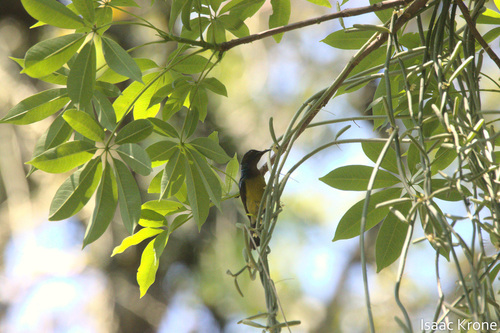 Suimanga Gorjipardo
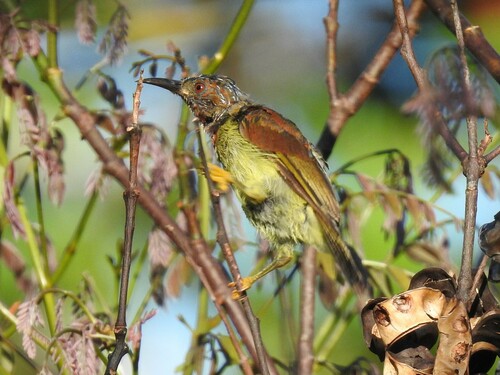 Suimanga Gorjirrojo
En breve
La forma más confiable de separar la Suimanga Gorjipardo de la Suimanga Gorjirrojo es enfocándose en el plumaje: los machos de Suimanga Gorjipardo muestran partes superiores iridiscentes verdes y púrpuras con castaño en las coberturas alares y escápulas, y son principalmente amarillos por debajo, mientras que los machos de Suimanga Gorjirrojo tienen una garganta roja distintiva (no presente en la Gorjipardo). Las hembras de la Gorjipardo son de color verde oliva por encima y amarillentas por debajo, pero las marcas de campo de la hembra de Suimanga Gorjirrojo no están detalladas en las fuentes, por lo que se necesita precaución. Estructuralmente, la Suimanga Gorjipardo es un suimanga relativamente grande y pesado con un pico grueso, y puede promediar ligeramente más pequeño que la Gorjirrojo según los datos de masa disponibles. La preferencia de hábitat también puede ayudar: la Gorjipardo se encuentra en una gama más amplia de hábitats semi-abiertos, mientras que la Gorjirrojo está más estrechamente ligada a los bosques de tierras bajas. Si ves un suimanga con una garganta roja en un bosque adecuado, es probable que sea Gorjirrojo; de lo contrario, verifica las coberturas alares castañas y la coloración general para la Gorjipardo.
Consejos de identificación
- Garganta roja en machos: Solo los machos de Suimanga Gorjirrojo tienen una garganta roja; los machos de Gorjipardo nunca muestran esta característica. Si ves un macho con garganta roja, la identificación es sencilla.
- Coberturas alares y escápulas castañas: Los machos de Suimanga Gorjipardo tienen castaño en las coberturas alares y escápulas, visible cuando están posados o en buena luz. Los machos de Gorjirrojo carecen de esta coloración castaña.
- Partes superiores iridiscentes verdes y púrpuras: Los machos de Suimanga Gorjipardo muestran una mezcla de verde iridiscente y púrpura en las partes superiores, mientras que los machos de Gorjirrojo están menos descritos en este aspecto; busca la impresión general de brillo metálico y castaño en la Gorjipardo.
- Partes inferiores amarillas: Los machos de Suimanga Gorjipardo son principalmente amarillos por debajo, lo que puede ayudar en condiciones de poca luz o vistas parciales. Los machos de Gorjirrojo pueden tener menos amarillo extenso, pero faltan detalles.
- La separación de hembras es incierta: Las hembras de Suimanga Gorjipardo son de color verde oliva por encima y amarillentas por debajo. Las marcas de campo de la hembra de Suimanga Gorjirrojo no están descritas, así que ten cuidado y usa el hábitat y la asociación con machos si es posible.
- Estructura del pico: La Suimanga Gorjipardo se describe como teniendo un pico grueso, lo que puede ayudar a distinguirla de otros suimangas, pero esto no se compara directamente con la Gorjirrojo en las fuentes.
- Tamaño: Ambas especies son similares en tamaño, pero la Gorjipardo puede parecer ligeramente más robusta; esta no es una marca de campo confiable.
- Contexto de hábitat: La Suimanga Gorjipardo es común en hábitats semi-abiertos, jardines y bordes, mientras que la Gorjirrojo está más restringida a bosques de tierras bajas. Usa el hábitat como una pista de apoyo, especialmente si el plumaje es ambiguo.
- Separación de juveniles/inmaduros: No se describen marcas específicas de alas o vuelo para juveniles o inmaduros de ninguna de las especies, así que confía en el color general y el hábitat.
- Sin diferencias vocales conocidas: Las fuentes no describen vocalizaciones para ninguna de las especies, así que no uses la voz para la separación.
- Superposición geográfica: Ambas especies pueden ocurrir en la misma región general, pero la Gorjipardo es más extensa en áreas perturbadas y abiertas.
- No se notan diferencias de plumaje estacional: Ambas especies parecen conservar sus características diagnósticas durante todo el año, por lo que la temporada no es un factor.
- Cuidado con la confusión de "garganta gris": En Filipinas, el suimanga de garganta gris a veces se considera una subespecie de la Gorjipardo, pero difiere en medidas y plumaje; esto no es una confusión con la Gorjirrojo, pero ten en cuenta la variación local.
- Bandadas mixtas: Si ves ambas especies juntas, los machos son fáciles de separar por el color de la garganta; las hembras pueden ser mejor dejadas sin identificar a menos que se vean con un macho.
- Iluminación y ángulo: Los colores iridiscentes y el castaño pueden ser difíciles de ver en poca luz. Si la garganta es claramente roja, es diagnóstica para la Gorjirrojo; de lo contrario, busca castaño y coloración general para la Gorjipardo.
Tamaño
La Suimanga Gorjipardo se describe como relativamente grande y pesada para un suimanga, con un rango de masa de 7.4–13.5 g y una longitud de aproximadamente 14 cm. La masa de la Suimanga Gorjirrojo se da como 13.1 g, lo que sugiere que es al menos tan pesada como los individuos más grandes de Gorjipardo, posiblemente ligeramente más pesada en promedio, pero la diferencia es sutil y no es probable que sea diagnóstica en el campo. Ambas especies son similares en tamaño, pero la Gorjipardo puede parecer más robusta debido a su pico grueso.
Plumaje
Para los machos adultos, la Suimanga Gorjipardo tiene partes superiores iridiscentes verdes y púrpuras, castaño en las coberturas alares y escápulas, y es principalmente amarilla por debajo. Los machos de Suimanga Gorjirrojo se definen por una garganta roja, que está ausente en la Gorjipardo. Las hembras de Suimanga Gorjipardo son de color verde oliva por encima y amarillentas por debajo; no hay una descripción de campo detallada para las hembras de Suimanga Gorjirrojo en las fuentes, por lo que la separación de hembras es incierta. No se describen diferencias de patrón de alas específicas por edad o juveniles para ninguna de las especies, por lo que la separación de inmaduros depende de la coloración general y el contexto del hábitat. En todas las edades, la ausencia de una garganta roja y la presencia de castaño en las coberturas alares favorecen a la Gorjipardo.
Comportamiento
Ambas especies se alimentan principalmente de néctar, pero se observa que la Suimanga Gorjipardo también toma pequeños frutos, bayas y alimenta a los juveniles con insectos. No hay detalles de comportamiento para la Suimanga Gorjirrojo en las fuentes, por lo que las diferencias de comportamiento no son diagnósticas.
Hábitat
La Suimanga Gorjipardo ocupa una amplia gama de hábitats semi-abiertos en el sureste asiático, incluidos jardines, bordes y crecimiento secundario. La Suimanga Gorjirrojo es más especializada, encontrándose principalmente en bosques húmedos de tierras bajas subtropicales o tropicales. Si encuentras un suimanga en áreas abiertas o perturbadas, es más probable que sea Gorjipardo; en un denso bosque de tierras bajas no perturbado, se prefiere la Gorjirrojo.
Suimanga Gorjipardo · Suimanga Gorjirrojo · Mis aves difíciles