

Brown-throated Sunbird vs Red-throated Sunbird
Anthreptes malacensis contro Anthreptes rhodolaemus
Fai un quiz con Brown-throated Sunbird e Red-throated Sunbird
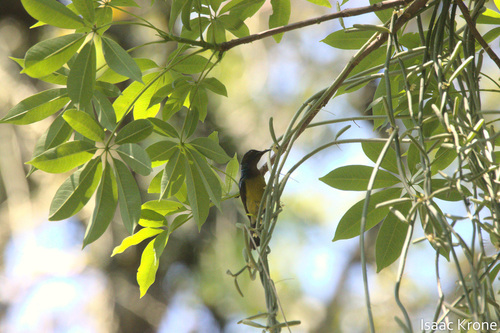 Brown-throated Sunbird
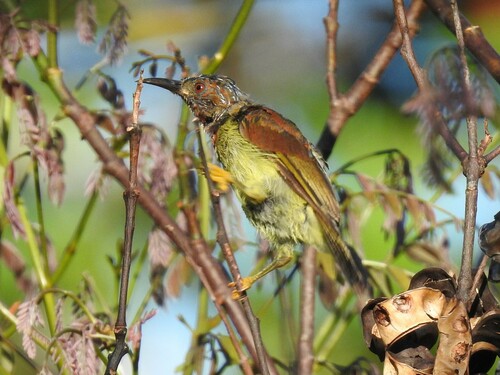 Red-throated Sunbird
In breve
Il modo più affidabile per separare il Brown-throated Sunbird dal Red-throated Sunbird è concentrarsi sul piumaggio: i maschi di Brown-throated Sunbird mostrano parti superiori iridescenti verdi e viola con castano sulle copritrici alari e scapolari, e sono principalmente gialli sotto, mentre i maschi di Red-throated Sunbird hanno una gola rossa distintiva (non presente nel Brown-throated). Le femmine di Brown-throated sono verde oliva sopra e giallastre sotto, ma i segni distintivi delle femmine di Red-throated Sunbird non sono dettagliati nelle fonti, quindi è necessaria cautela. Strutturalmente, il Brown-throated Sunbird è un sunbird relativamente grande e pesante con un becco spesso, e potrebbe essere leggermente più piccolo del Red-throated in base ai dati di massa disponibili. Anche la preferenza per l'habitat può aiutare: il Brown-throated si trova in una gamma più ampia di habitat semi-aperti, mentre il Red-throated è più strettamente legato alle foreste di pianura. Se vedi un sunbird con una gola rossa in una foresta adatta, è probabile che sia un Red-throated; altrimenti, controlla le copritrici alari castane e il colore generale per il Brown-throated.
Consigli di identificazione
- Gola rossa nei maschi: Solo i maschi di Red-throated Sunbird hanno una gola rossa; i maschi di Brown-throated non mostrano mai questa caratteristica. Se vedi un maschio con gola rossa, l'identificazione è semplice.
- Copritrici alari e scapolari castane: I maschi di Brown-throated Sunbird hanno castano sulle copritrici alari e scapolari, visibile quando sono posati o in buona luce. I maschi di Red-throated non hanno questa colorazione castana.
- Parti superiori iridescenti verdi e viola: I maschi di Brown-throated Sunbird mostrano una miscela di verde e viola iridescenti sulle parti superiori, mentre i maschi di Red-throated sono meno descritti in questo senso—cerca l'impressione generale di lucentezza metallica e castano nel Brown-throated.
- Parti inferiori gialle: I maschi di Brown-throated Sunbird sono principalmente gialli sotto, il che può aiutare in condizioni di scarsa illuminazione o visioni parziali. I maschi di Red-throated potrebbero avere meno giallo esteso, ma i dettagli mancano.
- Separazione delle femmine è incerta: Le femmine di Brown-throated Sunbird sono verde oliva sopra e giallastre sotto. I segni distintivi delle femmine di Red-throated Sunbird non sono descritti, quindi sii cauto e usa l'habitat e l'associazione con i maschi se possibile.
- Struttura del becco: Il Brown-throated Sunbird è descritto come avente un becco spesso, il che può aiutare a distinguerlo da altri sunbirds, ma questo non è confrontato direttamente con il Red-throated nelle fonti.
- Dimensioni: Entrambe le specie sono simili in dimensioni, ma il Brown-throated potrebbe apparire leggermente più robusto; questo non è un segno distintivo affidabile.
- Contesto dell'habitat: Il Brown-throated Sunbird è comune in habitat semi-aperti, giardini e bordi, mentre il Red-throated è più ristretto alle foreste di pianura. Usa l'habitat come indizio di supporto, specialmente se il piumaggio è ambiguo.
- Separazione giovanile/immatura: Non sono descritti segni specifici di ali o volo giovanili o immaturi per nessuna delle due specie, quindi fai affidamento sul colore generale e sull'habitat.
- Nessuna differenza vocale nota: Le fonti non descrivono vocalizzazioni per nessuna delle due specie, quindi non usare la voce per la separazione.
- Sovrapposizione geografica: Entrambe le specie possono verificarsi nella stessa regione generale, ma il Brown-throated è più diffuso in aree disturbate e aperte.
- Nessuna differenza stagionale nel piumaggio notata: Entrambe le specie sembrano mantenere le loro caratteristiche diagnostiche tutto l'anno, quindi la stagione non è un fattore.
- Attenzione alla confusione con il "grey-throated": Nelle Filippine, il Gray-throated Sunbird è talvolta considerato una sottospecie del Brown-throated, ma differisce in misurazioni e piumaggio; questa non è una confusione con il Red-throated, ma fai attenzione alla variazione locale.
- Fagotti misti: Se vedi entrambe le specie insieme, i maschi sono facili da separare per il colore della gola; le femmine potrebbero essere meglio lasciate non identificate a meno che non siano viste con un maschio.
- Illuminazione e angolo: I colori iridescenti e il castano potrebbero essere difficili da vedere in scarsa luce. Se la gola è chiaramente rossa, è diagnostica per il Red-throated; altrimenti, cerca il castano e il colore generale per il Brown-throated.
Taglia
Il Brown-throated Sunbird è descritto come relativamente grande e pesante per un sunbird, con un intervallo di massa di 7.4–13.5 g e una lunghezza di circa 14 cm. La massa del Red-throated Sunbird è data come 13.1 g, suggerendo che sia almeno pesante quanto i più grandi individui di Brown-throated, possibilmente leggermente più pesante in media, ma la differenza è sottile e non è probabile che sia diagnostica sul campo. Entrambe le specie sono simili in dimensioni, ma il Brown-throated potrebbe apparire più robusto a causa del suo becco spesso.
Piumaggio
Per i maschi adulti, il Brown-throated Sunbird ha parti superiori iridescenti verdi e viola, castano sulle copritrici alari e scapolari, ed è principalmente giallo sotto. I maschi di Red-throated Sunbird sono definiti da una gola rossa, che è assente nel Brown-throated. Le femmine di Brown-throated Sunbird sono verde oliva sopra e giallastre sotto; non c'è una descrizione dettagliata sul campo per le femmine di Red-throated Sunbird nelle fonti, quindi la separazione delle femmine è incerta. Non sono descritte differenze specifiche di pattern delle ali o giovanili per nessuna delle due specie, quindi la separazione immatura si basa sul colore generale e sul contesto dell'habitat. In tutte le età, l'assenza di una gola rossa e la presenza di castano sulle copritrici alari favoriscono il Brown-throated.
Comportamento
Entrambe le specie si nutrono principalmente di nettare, ma il Brown-throated Sunbird è anche noto per mangiare piccoli frutti, bacche e nutrire i giovani con insetti. Non ci sono dettagli comportamentali per il Red-throated Sunbird nelle fonti, quindi le differenze comportamentali non sono diagnostiche.
Habitat
Il Brown-throated Sunbird occupa una vasta gamma di habitat semi-aperti in tutta l'Asia sudorientale, inclusi giardini, bordi e crescita secondaria. Il Red-throated Sunbird è più specializzato, trovato principalmente in foreste umide di pianura subtropicali o tropicali. Se incontri un sunbird in aree aperte o disturbate, è più probabile che sia un Brown-throated; in foreste di pianura dense e non disturbate, è favorito il Red-throated.
Brown-throated Sunbird · Red-throated Sunbird · I miei uccelli difficili