

Motmot

アケボノインコ 対 メキシコシロガシラインコ

Pionus menstruus 対 Pionus senilis

アケボノインコとメキシコシロガシラインコのクイズ
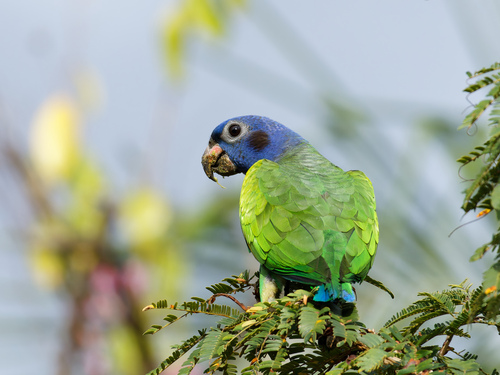
アケボノインコ (Pionus menstruus) アケボノインコ
メキシコシロガシラインコ (Pionus senilis) メキシコシロガシラインコ

メディア

読み込み中…

要点

アケボノインコとメキシコシロガシラインコを区別する最も信頼できるフィールドマークは頭の色です:成鳥のアケボノインコは明るい青い頭と首を持ち、成鳥のメキシコシロガシラインコは鮮明な白い冠、額、そして目の周りを示し、頭の残りは主に緑または青みがかっています。未成熟の鳥はより難しいです:幼鳥のアケボノインコは頭に青が少なく、頭頂の周りに赤みがかったまたはピンクがかった羽毛を示すことがありますが、幼鳥のメキシコシロガシラインコは白い冠が全くなく、代わりに緑の頭と淡い黄色がかった頬と冠を示します。両種は赤い尾羽の覆い羽を持っていますが、翼と体の色合いは詳細に異なります。構造とサイズは似ていますが、アケボノインコはわずかに大きくて重いです。生息地の重複は限られており、アケボノインコは主に南アメリカと中央アメリカ南部に見られ、メキシコシロガシラインコは中央アメリカとメキシコ南部に限定されています。

識別のコツ

  1. Head color (adults): アケボノインコは常に明るい青い頭と首を示し、メキシコシロガシラインコは鮮明で純白の冠、額、そして目の周りを持ち、頭の残りは緑がかったまたは青みがかっています。これは成鳥において最も信頼できるマークです。
  2. Head color (juveniles): 幼鳥のアケボノインコは主に緑の頭を持ち、青は少なく、頭頂の周りに赤みがかったまたはピンクがかった羽毛を示すことがあります。幼鳥のメキシコシロガシラインコは冠に白が全くなく、代わりに緑の頭と淡い黄色がかった頬と冠を示します。両種の未成熟の鳥は混乱を招くことがありますが、冠に白がないことが成鳥のメキシコシロガシラインコを除外します。
  3. Throat and chin: メキシコシロガシラインコは顎と喉の中心に白い斑点を持ち、冠が部分的に隠れていても見えます。アケボノインコはこれがなく、喉は頭の青または体の緑に一致します。
  4. Ear patches: アケボノインコは青い頭と対照的な暗い耳の斑点を持っています;メキシコシロガシラインコの耳の部分は緑がかっており、青または紫の羽毛の先端がありますが、明確に暗くはありません。
  5. Wing coverts: アケボノインコは翼の覆い羽に黄色がかった色合いを示し、メキシコシロガシラインコの小覆い羽と中覆い羽は赤褐色で淡い先端を持ち、止まっている鳥では斑点のある外観を与え、飛行中では茶色の斑点のある外観を与えます。
  6. Back and mantle: メキシコシロガシラインコは赤褐色のマントルと背中を持ち、緑の肩羽と尾羽と対照的です。アケボノインコの背中は緑で、体の残りと一致します。
  7. Bill color: アケボノインコは赤みがかった側を持つ黒い上顎を持ち、メキシコシロガシラインコのくちばしは黄色がかっており、わずかに緑がかった色合いがあります。くちばしの色は微妙ですが、近距離で役立ちます。
  8. Undertail coverts: 両種は赤い尾羽の覆い羽を持っているため、これは安全な区別ではありません。
  9. Flight views: 飛行中、メキシコシロガシラインコは上翼に茶色の斑点を示し、斑点のある効果を持ちますが、アケボノインコの翼はより均一に緑で黄色がかった覆い羽を持っています。両種は飛行中に赤い尾羽の覆い羽を示します。
  10. Juvenile confusion: 未成熟のアケボノインコは青いフードが完全に発達していない場合、メキシコシロガシラインコと間違われることがありますが、冠に白が全くないことと頭頂の周りに赤みがかった羽毛があることがアケボノインコを示します。幼鳥のメキシコシロガシラインコは冠に白がなく、黄色がかった頬を持ち、青はありません。
  11. Size: アケボノインコはわずかに大きくて重いですが、これは鳥が並んでいない限り、明らかではありません。
  12. Habitat and range: 南アメリカ(パナマ/コスタリカ以外)で見られた場合、ほぼ確実にアケボノインコです。メキシコまたは中央アメリカ北部では、メキシコシロガシラインコのみが見られます。パナマとコスタリカでは、両方が可能なので、羽毛のマークを使用してください。
  13. Voice: アケボノインコは高音のきしむような呼び声を出し、メキシコシロガシラインコの呼び声はより厳しい悲鳴です。これは経験によって役立ちますが、常に診断的ではありません。
  14. Sexes: 両種は性別的に単形であり、オスとメスは似ています。
  15. Behavior: 両方とも社交的で警戒心が強く、小さな群れでよく見られるため、行動は信頼できる区別ではありません。

大きさ

アケボノインコは2羽の中で大きくて重い方で、長さは約27〜28 cm、体重は最大245 gに達しますが、メキシコシロガシラインコは約24 cm、212 gと小さいです [wikipedia][wikidata]。両方とも中型で、幅広い体を持つオウムで、短い尾を持っていますが、サイズの違いは微妙で、並んで見ない限り、フィールドで常に信頼できるわけではありません。

羽色

行動

両種は社交的で、小さな群れやペアでよく見られます。アケボノインコは騒がしく、特に止まり木で、夜明けや夕暮れに多く集まることがあります。メキシコシロガシラインコも社交的ですが、より用心深く、驚かされると大きな悲鳴を上げて飛び去ることがよくあります。両方とも餌を食べる際に枝を登り、樹冠の中で警戒しています。フィールドでの区別に診断的な大きな行動の違いはありません。

生息環境

アケボノインコは主に南アメリカの湿潤および半湿潤の森林と半開放の国に見られ、中央アメリカ南部(コスタリカ、パナマ、トリニダード、ベネズエラ、ボリビア、ブラジル)に広がっています。アンデスの脊椎を避け、主にアマゾン地域に生息し、一部の離れた沿岸集団があります。メキシコシロガシラインコは中央アメリカに限定されており、東メキシコから西パナマまで、低地と標高1600 mまでの丘陵に生息し、森林の縁、樹冠、および隣接する二次成長を好みます。重複は中央アメリカ南部(コスタリカ、パナマ)に限られているため、文脈が役立つことがありますが、常に診断的ではありません。

声

アケボノインコは高音のきしむような「スウィンク」という呼び声を出し、一般的に止まり木で騒がしいです。メキシコシロガシラインコはより厳しい悲鳴の呼び声を持ち、「クリーク・クリーク」または「クリー・ア・キー・ア」と表現され、特に飛行中に聞かれます。両方とも樹冠に止まっているときは静かになることがあります。声は経験によって役立ちますが、厳しさと音量の重複により、迅速な区別には常に信頼できるわけではありません。

より良い説明を送る

比較と同じ項目を使ってください。文章はすぐに公開されます。

The most reliable field mark to separate Blue-headed Parrot from White-crowned Parrot is the color of the head: adult Blue-headed Parrots have a bright blue head and neck, while adult White-crowned Parrots show a crisp white crown, forehead, and lores, with the rest of the head mostly green or blue-tinged. Immature birds are trickier: juvenile Blue-headed Parrots have less blue on the head and may show reddish or pinkish feathers around the cere, while juvenile White-crowned Parrots lack the white crown entirely, instead showing a green head with pale yellowish cheeks and crown. Both species have red undertail coverts, but wing and body coloration differ in detail. Structure and size are similar, but Blue-headed is slightly larger and heavier. Habitat overlap is limited, with Blue-headed Parrot found mainly in South America and southern Central America, and White-crowned Parrot restricted to Central America and southern Mexico.

  1. Head color (adults): Blue-headed Parrot always shows a bright blue head and neck, while White-crowned Parrot has a crisp, pure white crown, forehead, and lores with the rest of the head greenish or blue-tinged. This is the single most reliable mark in adults.
  2. Head color (juveniles): Juvenile Blue-headed Parrots have mostly green heads with little blue and may show reddish or pinkish feathers around the cere. Juvenile White-crowned Parrots lack any white on the crown, instead showing a green head with pale yellowish cheeks and crown. Immature birds of both species can be confusing, but the absence of white on the crown rules out adult White-crowned.
  3. Throat and chin: White-crowned Parrot has a white patch on the chin and center of throat, visible even when the crown is partly obscured. Blue-headed Parrot lacks this, with the throat matching the blue of the head or green of the body.
  4. Ear patches: Blue-headed Parrot has dark ear patches contrasting with the blue head; White-crowned Parrot's ear region is greenish with blue or purple feather tips, but not distinctly darker.
  5. Wing coverts: Blue-headed Parrot shows yellowish tones on the wing coverts, while White-crowned Parrot's lesser and median coverts are reddish-brown with pale tips, giving a spotty appearance in perched birds and a brown-patched look in flight.
  6. Back and mantle: White-crowned Parrot has a reddish-brown mantle and back, contrasting with the green scapulars and rump. Blue-headed Parrot's back is green, matching the rest of the body.
  7. Bill color: Blue-headed Parrot has a black upper mandible with reddish sides; White-crowned Parrot's bill is yellowish with a slight greenish tinge. Bill color can be subtle but helps at close range.
  8. Undertail coverts: Both species have red undertail coverts, so this is not a safe separator.
  9. Flight views: In flight, White-crowned Parrot shows brown patches in the upperwing and a spotty effect, while Blue-headed Parrot's wing is more uniformly green with yellowish coverts. Both species show red undertail coverts in flight.
  10. Juvenile confusion: Immature Blue-headed Parrots may be mistaken for White-crowned if the blue hood is not fully developed, but the lack of any white on the crown and presence of reddish feathers around the cere point to Blue-headed. Juvenile White-crowned Parrots lack white on the crown and have yellowish cheeks, not blue.
  11. Size: Blue-headed Parrot is slightly larger and heavier, but this is rarely obvious unless birds are side by side.
  12. Habitat and range: If seen in South America (outside Panama/Costa Rica), it is almost certainly Blue-headed Parrot. In Mexico or northern Central America, only White-crowned Parrot occurs. In Panama and Costa Rica, both are possible, so use plumage marks.
  13. Voice: Blue-headed Parrot gives high-pitched squeaky calls, while White-crowned Parrot's call is a harsher screech. This can help with experience but is not always diagnostic.
  14. Sexes: Both species are sexually monomorphic; male and female look alike.
  15. Behavior: Both are social, wary, and often seen in small flocks, so behavior is not a reliable separator.

Blue-headed Parrot is the larger and heavier of the two, reaching about 27–28 cm in length and weighing up to 245 g, while White-crowned Parrot is smaller at about 24 cm and 212 g [wikipedia][wikidata]. Both are medium-sized, broad-bodied parrots with short tails, but the size difference is subtle and not always reliable in the field unless seen side by side.

  • Juvenile/immature birds:
  • Juvenile Blue-headed Parrots have mostly green heads with only a little blue, and often show red or pinkish feathers around the cere. The blue hood develops gradually, taking up to two years to reach full intensity.
  • Juvenile White-crowned Parrots lack the white crown entirely; their head, hindneck, and breast are green, with light yellowish cheeks and crown.
  • Adults:
  • Blue-headed Parrot: Bright blue head, neck, and upper breast; body mostly green; red undertail coverts; yellowish on wing coverts; dark ear patches; black upper mandible with reddish sides.
  • White-crowned Parrot: Pure white crown, forehead, lores, chin, and center of throat; rest of head green with bluish and purplish feather tips; mantle and back reddish-brown; green belly; red undertail coverts; violet-blue primary coverts and green greater coverts; lesser and median coverts reddish-brown with pale tips, giving a spotty wing appearance; rump and upper tail coverts brighter green.
  • Flight views: Both show red undertail coverts, but White-crowned Parrot's upperwing has brown patches and a spotty look, while Blue-headed Parrot's wing is more uniformly green with yellowish coverts.

Both species are social and often seen in small flocks or pairs. Blue-headed Parrots are noisy, especially at roosts, and may gather in large numbers at dawn and dusk. White-crowned Parrots are also social but more cautious, often flying off with loud screeches when disturbed. Both climb branches while feeding and are wary in the canopy. No major behavioral differences are diagnostic for field separation.

Blue-headed Parrot is mainly found in humid and semi-humid forests and semi-open country in tropical South America, extending into southern Central America (Costa Rica, Panama, Trinidad, Venezuela, Bolivia, Brazil). It avoids the Andes spine and is largely Amazonian, with some disjunct coastal populations. White-crowned Parrot is restricted to Central America, from eastern Mexico to western Panama, in lowlands and foothills up to 1600 m, favoring forest edges, canopy, and adjacent second growth. Overlap is limited to southern Central America (Costa Rica, Panama), so context can help, but is not always diagnostic.

Blue-headed Parrot gives high-pitched, squeaky 'sweenk' calls and is generally noisy at roosts. White-crowned Parrot has a harsher, screeching call, described as 'kreeek-kreeek' or 'kree-ah-kee-ah', especially in flight. Both can be silent while perched in the canopy. Voice can help with experience, but overlap in harshness and volume means it's not always reliable for quick separation.

変更を破棄しますか?

保存していない編集があります。今離れると失われます。

アケボノインコ · メキシコシロガシラインコ · 苦手な鳥