

Motmot

トモエガモ 対 ギンイロシマアジ

Sibirionetta formosa 対 Spatula versicolor

トモエガモとギンイロシマアジのクイズ

トモエガモ (Sibirionetta formosa) トモエガモ
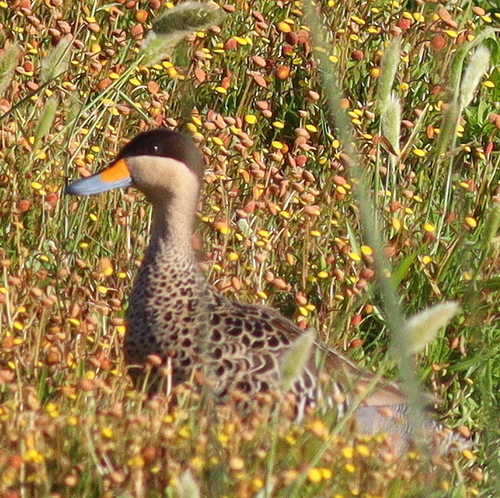
ギンイロシマアジ (Spatula versicolor) ギンイロシマアジ

メディア

読み込み中…

要点

バイカルガモとギンイロシマアジの最も信頼できるフィールドマークは、バイカルガモの独特な顔の模様です。雌や幼鳥でも、くちばしの基部に淡い斑点と、目に向かって後方に傾斜する淡い喉のラインを探してください。ギンイロシマアジにはこれがありません。飛んでいる時や休んでいる時、バイカルガモ(特に雌や幼鳥)は、より長い尾とより複雑で多色の顔を示しますが、ギンイロシマアジは黒い帽子をかぶり、青いくちばしの先が黄色で、強い顔のコントラストがありません。両種は緑のスペキュラムを持っていますが、境界線と顔の模様が重要です。幼鳥と雌のバイカルガモはギンイロシマアジと混同されることがありますが、顔と喉のマーキングに注意を払うことで区別できます。

識別のコツ

  1. 顔の模様が重要: バイカルガモ(雌/幼鳥)は、くちばしの基部に淡い斑点と、目に向かって後方に傾斜する白い喉のラインを示します—ギンイロシマアジはこれを示しません。
  2. 眉と冠: バイカルガモは、暗い冠に囲まれた淡い眉を持っています。ギンイロシマアジは、目の下まで伸びる黒い帽子を持ち、淡い眉はありません。
  3. くちばしの色: ギンイロシマアジは、黄色い先端を持つ青みがかったくちばしを持っていますが、バイカルガモのくちばしは暗く、黄色い先端はありません。
  4. スペキュラムの境界: 両種は緑のスペキュラムを持っていますが、バイカルガモの内側の境界はシナモンクリーム色で不明瞭であり、ギンイロシマアジのものは白で鋭く境界が引かれています。
  5. 飛行中の下翼: バイカルガモは下翼の先端が暗い(すべての年齢)ですが、ギンイロシマアジにはこの特徴はありません。
  6. 尾の長さ: バイカルガモは尾が長く、特に泳いでいる時や飛んでいる時に明らかです。
  7. 成鳥のオスのバイカルガモ(繁殖期): 緑の後頭部、黄色と黒の顔、斑点のある胸で間違いなく、ギンイロシマアジはこれらの色を示しません。
  8. エクリプスのオスのバイカルガモ: 雌に似ていますが、より豊かな赤褐色で、淡いロラルスポットと喉のラインを示します。
  9. 雌のギンイロシマアジ: オスよりも鈍いですが、まだ帽子をかぶっており、淡いロラルスポットや喉のラインはありません。
  10. 幼鳥のバイカルガモ: 常に淡いロラルスポットと淡い喉のラインを示し、ギンイロシマアジに似ている場合でもそうです。
  11. 体のサイズ: バイカルガモは重く、わずかに長いです。混合群では、より長く、より細長い体と尾を探してください。
  12. 生息地の文脈: 原産地では、バイカルガモは東アジア、ギンイロシマアジは南アメリカです。迷鳥や飼育された鳥は他の場所に出現することがあります。
  13. ブライドルマーキングの混乱: 一部のバイカルガモ(特に幼鳥のオス)は「ブライドル」顔のマーキングを示すことがありますが、淡いロラルスポットと喉のラインを探してください。
  14. 胸の斑点: バイカルガモ(オス)は斑点のある胸を持っていますが、ギンイロシマアジは持っていません。
  15. 顔のコントラスト: ギンイロシマアジの顔はより均一に暗い帽子をかぶっていますが、バイカルガモの顔は淡い部分と暗い部分の複雑な模様があります。

大きさ

バイカルガモはギンイロシマアジよりもわずかに大きく、重いです。長さは39〜43 cm、平均体重は500 gで、ギンイロシマアジの410 gと比較されます。バイカルガモはまた、明らかに長い尾を持っており、これは鳥が泳いでいる時や飛んでいる時の有用なフィールドの手がかりです。両者は小型の水面を掻くカモですが、バイカルガモは後部がわずかに長く見える傾向があります。

羽色

行動

両者は水面を掻くカモであり、浅い水で餌を食べたり、葦の間で休んでいるのが見られることがあります。バイカルガモは泳いでいる時や飛んでいる時に、より細長く、尾が長く見えることがあります。情報源には大きな行動の違いは記載されていません。

生息環境

バイカルガモはロシア東部で繁殖し、東アジアで越冬しますが、ギンイロシマアジは南アメリカで繁殖します。フィールドでは、バイカルガモは南アメリカでは非常にあり得ず、その逆も同様ですが、飼育下や迷鳥の状況では、湿地や葦原の環境で生息地の重複が可能です。両者は、出現する植生のある浅い淡水の生息地を好みます。

より良い説明を送る

比較と同じ項目を使ってください。文章はすぐに公開されます。

The most reliable field mark between Baikal Teal and Silver Teal is the Baikal Teal's distinctive face pattern: even in females and juveniles, look for a pale spot at the base of the bill and a pale throat line angling back to the eye, which Silver Teal lacks. In flight or at rest, Baikal Teal (especially females and juveniles) show a longer tail and a more intricate, multi-toned face, while Silver Teal is capped black with a blue bill tipped yellow and lacks strong facial contrasts. Both species have a green speculum, but the bordering and face pattern are key. Juvenile and female Baikal Teal can be confused with Silver Teal, but careful attention to face and throat markings will separate them.

  1. Face pattern is key: Baikal Teal (female/juvenile) shows a pale spot at the base of the bill and a white throat line angling back to the eye—Silver Teal never shows this.
  2. Eyebrow and crown: Baikal Teal has a pale eyebrow bordered by a darker crown; Silver Teal has a black cap extending below the eyes, with no pale eyebrow.
  3. Bill color: Silver Teal has a bluish bill with a yellow tip, while Baikal Teal's bill is dark and lacks a yellow tip.
  4. Speculum border: Both have a green speculum, but Baikal Teal's inner border is cinnamon-cream and indistinct, while Silver Teal's is sharply bordered with white.
  5. Underwing in flight: Baikal Teal has a darker leading edge to the underwing (all ages); Silver Teal does not have this feature.
  6. Tail length: Baikal Teal is longer-tailed, especially obvious in swimming or flying birds.
  7. Adult male Baikal Teal (breeding): Unmistakable with green nape, yellow and black face, and spotted breast—Silver Teal never shows these colors.
  8. Eclipse male Baikal Teal: Resembles female but is richer rufous; still shows the pale loral spot and throat line.
  9. Female Silver Teal: Duller than male but still capped, and lacks any pale loral spot or throat line.
  10. Juvenile Baikal Teal: Always shows pale loral spot and pale throat line, even when otherwise similar to Silver Teal.
  11. Body size: Baikal Teal is heavier and slightly longer; in mixed flocks, look for the longer, more attenuated body and tail.
  12. Habitat context: In native ranges, Baikal Teal is East Asian, Silver Teal is South American; vagrants or captive birds may occur elsewhere.
  13. Bridle marking confusion: Some Baikal Teal (especially juvenile males) may show 'bridle' facial markings—still look for the pale loral spot and throat line.
  14. Breast spotting: Baikal Teal (male) has a spotted breast; Silver Teal does not.
  15. Face contrast: Silver Teal's face is more uniformly dark-capped, while Baikal Teal's is intricately patterned with pale and dark contrasts.

Baikal Teal is slightly larger and heavier than Silver Teal, with a length of 39–43 cm and an average weight of 500 g, compared to Silver Teal's 410 g [wikidata]. Baikal Teal also has a noticeably longer tail, which is a useful field clue when birds are swimming or in flight. Both are small dabbling ducks, but Baikal Teal tends to look a bit longer-bodied and more attenuated at the rear.

  • Juvenile and Female Baikal Teal: Both sexes and ages show a pale spot at the base of the bill, a white throat line that angles back to the eye, and a distinct pale eyebrow bordered by a darker crown. The underwing is similar to Green-winged Teal but with a darker leading edge; the green speculum has an indistinct cinnamon-cream inner border. Juveniles resemble females but always show the pale loral spot.
  • Silver Teal: Has a black cap extending below the eyes, a bluish bill with a yellow tip, and a green speculum with a clear white border. The face lacks the Baikal Teal's pale loral spot and throat line. Female Silver Teal is duller but still capped and lacks the Baikal Teal's intricate face pattern.
  • Adult Male Baikal Teal (breeding): Striking green nape, yellow and black auriculars, dark crown, and spotted light brown breast—unmistakable compared to Silver Teal. In eclipse, Baikal Teal males resemble females but are richer rufous.
  • Flight views: Both species show a green speculum, but Baikal Teal's is bordered less distinctly and the underwing has a darker leading edge, while Silver Teal's speculum is bordered with white.

Both are dabbling ducks and may be seen feeding in shallow water or loafing among reeds. Baikal Teal may appear more elongated and longer-tailed when swimming or in flight. No major behavioral differences are noted in the sources.

Baikal Teal breeds in eastern Russia and winters in East Asia, while Silver Teal is a South American breeder. In the field, Baikal Teal is highly unlikely in South America and vice versa, but in captivity or vagrant situations, habitat overlap is possible in wetland or reedbed settings. Both prefer shallow freshwater habitats with emergent vegetation.

変更を破棄しますか?

保存していない編集があります。今離れると失われます。

トモエガモ · ギンイロシマアジ · 苦手な鳥