

Cerceta del Baikal vs Cerceta Capuchina
Sibirionetta formosa frente a Spatula versicolor
Juega un quiz con Cerceta del Baikal y Cerceta Capuchina
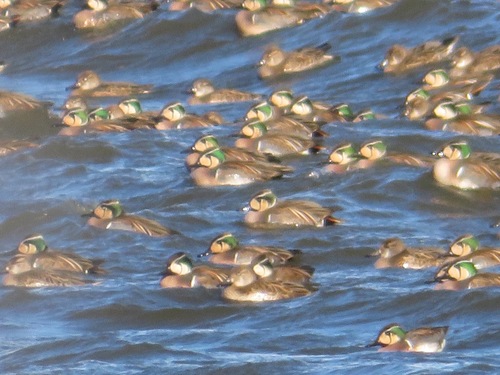 Cerceta del Baikal
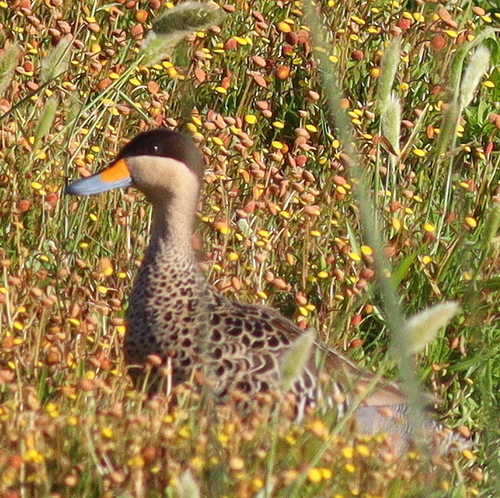 Cerceta Capuchina
En breve
La marca de campo más confiable entre la Cerceta del Baikal y la Cerceta Capuchina es el patrón facial distintivo de la Cerceta del Baikal: incluso en hembras y juveniles, busca una mancha pálida en la base del pico y una línea de garganta pálida que se inclina hacia atrás hasta el ojo, que la Cerceta Capuchina no tiene. En vuelo o en reposo, la Cerceta del Baikal (especialmente hembras y juveniles) muestra una cola más larga y un rostro más intrincado y multicolor, mientras que la Cerceta Capuchina tiene la cabeza negra con un pico azul con punta amarilla y carece de fuertes contrastes faciales. Ambas especies tienen un especulo verde, pero el borde y el patrón facial son clave. La Cerceta del Baikal juvenil y hembra puede confundirse con la Cerceta Capuchina, pero prestar atención cuidadosa a las marcas de la cara y la garganta las separará.
Consejos de identificación
- El patrón facial es clave: La Cerceta del Baikal (hembra/juvenil) muestra una mancha pálida en la base del pico y una línea de garganta blanca que se inclina hacia atrás hasta el ojo—la Cerceta Capuchina nunca muestra esto.
- Cejas y corona: La Cerceta del Baikal tiene una ceja pálida bordeada por una corona más oscura; la Cerceta Capuchina tiene una cabeza negra que se extiende por debajo de los ojos, sin ceja pálida.
- Color del pico: La Cerceta Capuchina tiene un pico azuloso con una punta amarilla, mientras que el pico de la Cerceta del Baikal es oscuro y carece de punta amarilla.
- Borde del especulo: Ambas tienen un especulo verde, pero el borde interno de la Cerceta del Baikal es de color canela-crema e indistinto, mientras que el de la Cerceta Capuchina está claramente bordeado de blanco.
- Bajo el ala en vuelo: La Cerceta del Baikal tiene un borde delantero más oscuro en el ala inferior (todas las edades); la Cerceta Capuchina no tiene esta característica.
- Longitud de la cola: La Cerceta del Baikal tiene una cola más larga, especialmente obvio en aves nadando o volando.
- Cerceta del Baikal macho adulto (cría): Inconfundible con nuca verde, cara amarilla y negra, y pecho manchado—la Cerceta Capuchina nunca muestra estos colores.
- Cerceta del Baikal macho en eclipse: Se asemeja a la hembra pero es de un rufo más rico; aún muestra la mancha loral pálida y la línea de garganta.
- Cerceta Capuchina hembra: Más apagada que el macho pero aún con la cabeza cubierta, y carece de cualquier mancha loral pálida o línea de garganta.
- Cerceta del Baikal juvenil: Siempre muestra mancha loral pálida y línea de garganta pálida, incluso cuando es similar a la Cerceta Capuchina.
- Tamaño del cuerpo: La Cerceta del Baikal es más pesada y ligeramente más larga; en bandadas mixtas, busca el cuerpo y la cola más largos y más atenuados.
- Contexto de hábitat: En sus rangos nativos, la Cerceta del Baikal es de Asia Oriental, la Cerceta Capuchina es de América del Sur; los vagabundos o aves en cautiverio pueden ocurrir en otros lugares.
- Confusión de marcas de brida: Algunas Cercetas del Baikal (especialmente machos juveniles) pueden mostrar marcas faciales de 'brida'—aún busca la mancha loral pálida y la línea de garganta.
- Manchas en el pecho: La Cerceta del Baikal (macho) tiene un pecho manchado; la Cerceta Capuchina no.
- Contraste facial: La cara de la Cerceta Capuchina es más uniformemente oscura, mientras que la de la Cerceta del Baikal está intrincadamente patrón con contrastes pálidos y oscuros.
Tamaño
La Cerceta del Baikal es ligeramente más grande y pesada que la Cerceta Capuchina, con una longitud de 39–43 cm y un peso promedio de 500 g, en comparación con los 410 g de la Cerceta Capuchina [wikidata]. La Cerceta del Baikal también tiene una cola notablemente más larga, lo que es una pista útil de campo cuando las aves están nadando o en vuelo. Ambas son patos de superficie pequeños, pero la Cerceta del Baikal tiende a parecer un poco más larga y más atenuada en la parte trasera.
Plumaje
- Cerceta del Baikal juvenil y hembra: Ambos sexos y edades muestran una mancha pálida en la base del pico, una línea de garganta blanca que se inclina hacia atrás hasta el ojo, y una ceja pálida distinta bordeada por una corona más oscura. El ala inferior es similar a la de la Cerceta Aliverde pero con un borde delantero más oscuro; el especulo verde tiene un borde interno de canela-crema indistinto. Los juveniles se asemejan a las hembras pero siempre muestran la mancha loral pálida.
- Cerceta Capuchina: Tiene una cabeza negra que se extiende por debajo de los ojos, un pico azuloso con una punta amarilla, y un especulo verde con un borde blanco claro. La cara carece de la mancha loral pálida y la línea de garganta de la Cerceta del Baikal. La hembra de la Cerceta Capuchina es más apagada pero aún tiene la cabeza cubierta y carece del intrincado patrón facial de la Cerceta del Baikal.
- Cerceta del Baikal macho adulto (cría): Nuca verde llamativa, auriculares amarillos y negros, corona oscura, y pecho manchado de marrón claro—inconfundible en comparación con la Cerceta Capuchina. En eclipse, los machos de la Cerceta del Baikal se asemejan a las hembras pero son de un rufo más rico.
- Vistas en vuelo: Ambas especies muestran un especulo verde, pero el de la Cerceta del Baikal está bordeado menos distintivamente y el ala inferior tiene un borde delantero más oscuro, mientras que el especulo de la Cerceta Capuchina está bordeado de blanco.
Comportamiento
Ambas son patos de superficie y pueden ser vistos alimentándose en aguas poco profundas o descansando entre juncos. La Cerceta del Baikal puede parecer más alargada y con cola más larga cuando nada o vuela. No se observan diferencias de comportamiento importantes en las fuentes.
Hábitat
La Cerceta del Baikal cría en el este de Rusia y pasa el invierno en Asia Oriental, mientras que la Cerceta Capuchina es una criadora de América del Sur. En el campo, la Cerceta del Baikal es muy poco probable en América del Sur y viceversa, pero en situaciones de cautiverio o vagabundas, la superposición de hábitat es posible en entornos de humedales o cañaverales. Ambas prefieren hábitats de agua dulce poco profundos con vegetación emergente.