

Motmot

アンダマンオナガバト 対 アカオネッタイチョウ

Macropygia rufipennis 対 Phaethon rubricauda

アンダマンオナガバトとアカオネッタイチョウのクイズ

アンダマンオナガバト (Macropygia rufipennis) アンダマンオナガバト
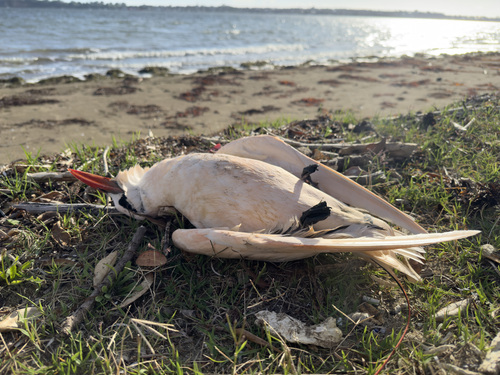
アカオネッタイチョウ (Phaethon rubricauda) アカオネッタイチョウ

メディア

読み込み中…

要点

これら二種を区別する最も信頼できるフィールドマークは、全体の羽色と構造です:アカオネッタイチョウの成鳥(および幼鳥)は、長い赤い尾のストリーマーと明るい赤いくちばしを持つ際立って白い姿をしていますが、アンダマンオナガバトは均一に錆色の茶色で、白や赤のハイライトがない細長い鳩です。幼鳥のアカオネッタイチョウは、上面と上翼の覆いに特徴的な黒い縞模様とスケーリングがあり、これはアンダマンオナガバトには決して見られません。飛行中、アカオネッタイチョウの長く尖った翼とストリーマーの尾は、鳩の短く丸い翼と長く段階的な尾と鋭く対照的です。鳩は地上性で森林に止まり、アカオネッタイチョウは海洋性の種で、内陸ではめったに見られません。鳴き声も全く異なります:鳩は繰り返し「フーウフップ」と鳴き、アカオネッタイチョウは飛行中は一般的に静かです。

識別のコツ

  1. 幼鳥のアカオネッタイチョウは上面と上翼の覆いに目立つ黒い縞模様とスケーリングがあり、アンダマンオナガバトは常に無地の錆色の茶色で、縞模様やスケーリングがありません。
  2. 成鳥のアカオネッタイチョウはほぼ純白で、黒いマスクと長い赤い尾のストリーマーを持ち、アンダマンオナガバトは均一に錆色の茶色で、マスクやストリーマーがありません。
  3. くちばしの色は診断的です:アカオネッタイチョウは明るい赤(成鳥)または青い基部を持つ黒っぽい灰色(幼鳥)のくちばしを持ち、アンダマンオナガバトは典型的な鳩のくちばしで、赤や青ではありません。
  4. 飛行中、アカオネッタイチョウは長く尖った翼と後ろに流れるストリーマーを示し、鳩は短く丸い翼とストリーマーのない長い段階的な尾を持っています。
  5. アカオネッタイチョウの翼は白で、暗い逆V字模様と暗いシャフトがありますが、鳩の翼は均一に錆色の茶色で、対照的なマークはありません。
  6. アカオネッタイチョウは翼幅と長さでずっと大きく、体重は似ているにもかかわらず、飛行中はより細長く、アジサシのように見えます。
  7. アンダマンオナガバトは常に森林の地上性の生息地に見られ、アカオネッタイチョウは厳密に海洋性で、海上や遠隔の島のコロニーで見られます。
  8. アカオネッタイチョウは繁殖地以外ではめったに止まっているのが見られず、鳩はしばしば木に止まっているのが見られます。
  9. 鳩の鳴き声は繰り返し「フーウフップ」で、アカオネッタイチョウは飛行中は静かで、巣で短い鳴き声やうなり声を出すだけです。
  10. アンダマンオナガバトの年齢や性別は、白、黒いマスク、赤いくちばしや尾のストリーマーを示すことはありません。
  11. アカオネッタイチョウの年齢や性別は、錆色の茶色や無地ではなく、幼鳥でさえも黒い縞模様のある白です。
  12. 海の上を低く飛んでいるか、崖の上を舞い上がっているのが見られた場合、それはアカオネッタイチョウです;密林の中にいる場合、それは鳩です。
  13. アカオネッタイチョウの尾のストリーマーは遠くから見るのが難しいことがありますが、白い羽毛と赤いくちばしは依然として特徴的です。
  14. 鳩の飛行は直接的で低く、アカオネッタイチョウの飛行は浮遊感があり、滑空し、しばしば水の上高く飛びます。
  15. **錆色の茶色で鳩の形をした鳥が長い尾を持ち、白がない場合、それはアンダマンオナガバトです;大きな白い海鳥で赤いくちばしとストリーマーが見られた場合、それはアカオネッタイチョウです。

大きさ

アンダマンオナガバトは質量でわずかに重い(260g対219g)ですが、アカオネッタイチョウは全体の寸法でずっと大きく、翼幅は111–119 cm、全長(尾のストリーマーを含む)は95–104 cmです。鳩は小さく細長い鳩ですが、アカオネッタイチョウは大きく、重厚な海鳥で、はるかに長い翼幅と尾を持っています。フィールドでは、アカオネッタイチョウは長い翼と尾のストリーマーのため、はるかに大きく、より細長く見えます。

羽色

行動

アカオネッタイチョウは強く、敏捷な飛行者で、しばしば開けた海の上を滑空したり舞い上がったりしているのが見られ、繁殖地以外ではめったに止まっているのが見られません。その飛行は浮遊感があり、アジサシのようで、長く尖った翼と後ろに流れるストリーマーを持っています。アンダマンオナガバトは地上性の森林に生息する鳩で、通常は木に静かに止まっているか、直接的で低い飛行で短い距離を飛んでいるのが見られます。アカオネッタイチョウのように滑空したり舞い上がったりすることはなく、開けた水域では見られません。

生息環境

アンダマンオナガバトはアンダマン諸島とニコバル諸島に特有で、厳密に地上性で森林の生息地に見られます。海や沿岸では決して見られません。アカオネッタイチョウはインド洋と太平洋の外洋性の海鳥で、繁殖のためにのみ陸に来て、通常は遠隔の島や崖で見られます。森林や内陸の生息地では決して見られません。海上や岩の多い沿岸で見られた場合、ほぼ確実にアカオネッタイチョウであり、深い森林の中にいる場合は鳩です。

声

アンダマンオナガバトは繰り返し、二音の「フーウフップ」と鳴き、最初の音は滑らかで、二番目は短く高音です。アカオネッタイチョウは飛行中は一般的に静かで、巣で短い鳴き声や低いうなり声を出すだけです。彼らの鳴き声は似ておらず、混同されることはほとんどありません。

より良い説明を送る

比較と同じ項目を使ってください。文章はすぐに公開されます。

The most reliable field mark to separate these two is the overall plumage and structure: Red-tailed Tropicbird adults (and immatures) are strikingly white with a long, red tail streamer and a bright red bill, while Andaman Cuckoo-Dove is a uniformly rusty-brown, slim pigeon with no white or red highlights. Juvenile Red-tailed Tropicbirds have distinctive black barring and scaling on the upperparts and upperwing coverts, which never occurs in Andaman Cuckoo-Dove. In flight, the tropicbird's long, pointed wings and streamer tail contrast sharply with the dove's shorter, rounded wings and long, graduated tail. The dove is terrestrial and perches in forest, while the tropicbird is a marine species, rarely seen inland. Calls are also totally different: the dove gives a repeated 'whoo-whup', while the tropicbird is generally silent in flight.

  1. Juvenile Red-tailed Tropicbird has prominent black barring and scaling on the upperparts and upperwing coverts; Andaman Cuckoo-Dove is always plain rusty-brown with no barring or scaling.
  2. Adult Red-tailed Tropicbird is almost pure white with a black mask and a long, red tail streamer; Andaman Cuckoo-Dove is uniformly rusty-brown with no mask or streamer.
  3. Bill color is diagnostic: Red-tailed Tropicbird has a bright red (adult) or blackish-grey with blue base (immature) bill; Andaman Cuckoo-Dove has a typical pigeon bill, never red or blue.
  4. In flight, tropicbird shows long, pointed wings and trailing streamers; dove has short, rounded wings and a long, graduated tail with no streamers.
  5. Tropicbird's wings are white with dark chevrons and dark shafts; dove's wings are uniformly rusty-brown with no contrasting marks.
  6. Red-tailed Tropicbird is much larger in wingspan and length, despite similar body mass; it appears more elongated and tern-like in flight.
  7. Andaman Cuckoo-Dove is always found in forested terrestrial habitats; Red-tailed Tropicbird is strictly marine, seen over ocean or at remote island colonies.
  8. Tropicbird is rarely seen perched except at breeding sites; dove is often seen perched in trees.
  9. The dove's call is a repeated 'whoo-whup'; tropicbird is silent in flight, only giving short squawks or growls at the nest.
  10. No age or sex of Andaman Cuckoo-Dove ever shows white, black mask, or red bill/tail streamer.
  11. No age or sex of Red-tailed Tropicbird is rusty-brown or plain; even juveniles are white with black barring.
  12. If seen flying low over the sea or soaring above cliffs, it is the tropicbird; if in dense forest, it is the dove.
  13. Tropicbird's tail streamers can be hard to see at a distance, but the white plumage and red bill are still distinctive.
  14. Dove's flight is direct and low; tropicbird's flight is buoyant, gliding, and often high above the water.
  15. If you see a rusty-brown, pigeon-shaped bird with a long tail and no white, it is the Andaman Cuckoo-Dove; if you see a large, white seabird with red bill and streamers, it is the Red-tailed Tropicbird.

Despite the Andaman Cuckoo-Dove being slightly heavier by mass (260g vs. 219g), the Red-tailed Tropicbird is much larger in overall dimensions, with a wingspan of 111–119 cm and a total length (including tail streamers) of 95–104 cm. The dove is a small, slim pigeon, while the tropicbird is a large, heavy-set seabird with a much longer wingspan and tail. In the field, the tropicbird appears much larger and more elongated, especially when flying, due to its long wings and tail streamers.

  • Juvenile/immature Red-tailed Tropicbird: Shows prominent black barring and scaling on the crown, nape, mantle, back, rump, and upper wing coverts. Bill is blackish grey with a blue-grey base. No rust or brown tones at all. These marks are never present in any age of Andaman Cuckoo-Dove.
  • Adult Red-tailed Tropicbird: Almost entirely white, sometimes with a pink tinge, with a black mask through the eye and a long, red tail streamer. The bill is bright red. The wings are white with dark chevrons on the tertials and dark shafts on the primaries. No rusty or brown coloration anywhere.
  • Andaman Cuckoo-Dove (all ages): Uniform rusty or rufous-brown throughout, with no white, black mask, or red bill/tail. The plumage is plain, lacking any barring or scaling. The tail is long and graduated but never has streamers or contrasting colors.
  • In flight: Tropicbird shows white upperwings with dark chevrons and long streamers; dove shows uniform rusty-brown wings and tail, with no contrasting marks.

Red-tailed Tropicbird is a strong, agile flier, often seen gliding or soaring over open ocean, rarely perching except at breeding sites. Its flight is buoyant and tern-like, with long, pointed wings and trailing streamers. Andaman Cuckoo-Dove is a terrestrial, forest-dwelling pigeon, usually seen perched quietly in trees or flying short distances with a direct, low flight. It never glides or soars like a tropicbird and is not seen over open water.

Andaman Cuckoo-Dove is endemic to the Andaman and Nicobar Islands and is strictly terrestrial, found in forested habitats. It is never seen at sea or along the coast. Red-tailed Tropicbird is a pelagic seabird of the Indian and Pacific Oceans, coming to land only to breed, usually on remote islands or cliffs. It is never found in forest or inland habitats. If seen at sea or along rocky coasts, it is almost certainly the tropicbird; if deep in forest, it is the dove.

Andaman Cuckoo-Dove gives a repeated, double-noted 'whoo-whup', with the first note slurred and the second shorter and higher-pitched. Red-tailed Tropicbird is generally silent in flight, only giving short squawks at the nest or a low growling call in defense. Their calls are not similar and are unlikely to be confused.

変更を破棄しますか?

保存していない編集があります。今離れると失われます。

アンダマンオナガバト · アカオネッタイチョウ · 苦手な鳥