
Luì grosso vs Luì iberico
Phylloscopus trochilus contro Phylloscopus ibericus
Fai un quiz con Luì grosso e Luì iberico
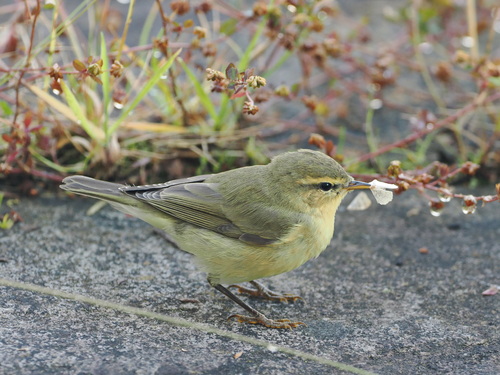 Luì grosso
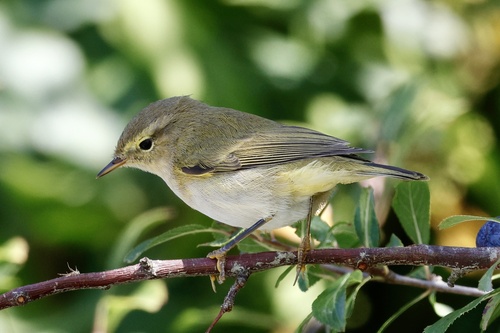 Luì iberico
In breve
Luì grosso e Luì iberico sono notoriamente simili, ma un'attenta osservazione della struttura e dei dettagli del piumaggio può separarli. Il segno di campo più affidabile è la proiezione primaria più lunga del Luì grosso (estensione della punta dell'ala oltre le terziali), che è notevolmente maggiore rispetto al Luì iberico di tutte le età. Il Luì grosso tende anche a sembrare più elegante e snodato, con un becco più lungo e più chiaro e zampe giallo-rosate più chiare, mentre il Luì iberico è leggermente più robusto con una parte superiore verde più pulita e una distintiva striscia scura sugli occhi. Entrambe le specie mancano di barre alari e hanno parti inferiori giallastre, ma il petto del Luì iberico è più fortemente giallo e il ventre è più bianco, creando un contrasto più netto. Le vocalizzazioni sono utili ma variabili; il canto del Luì grosso è un dolce fischio discendente, mentre quello del Luì iberico è più complesso e ronzante.
Consigli di identificazione
- Proiezione primaria (tutte le età): Il Luì grosso mostra una proiezione primaria decisamente più lunga (la punta dell'ala si estende bene oltre le terziali quando è posato), dando un'ala più appuntita. La proiezione del Luì iberico è più corta, rendendo l'ala più rotonda e l'uccello più compatto.
- Forma generale e jizz: Il Luì grosso appare più snodato ed elegante, con un corpo e una coda più lunghi, mentre il Luì iberico è leggermente più robusto e con ali più corte.
- Colore e lunghezza del becco: Il Luì grosso ha un becco più lungo e più chiaro (spesso rosato alla base), mentre il becco del Luì iberico è leggermente più corto e può essere più scuro, anche se non così scuro come il Luì comune.
- Colore delle zampe: Le zampe del Luì grosso sono giallo-rosate chiare. Il colore delle zampe del Luì iberico non è descritto in dettaglio, ma se le zampe appaiono scure, considera il Luì iberico meno probabile (anche se questo non è così affidabile come per il Luì comune).
- Colore della parte superiore: Il Luì grosso è marrone-verdastro sopra, a volte con una tonalità più marrone o grigia a seconda della sottospecie. Il Luì iberico è più pulito, di un verde oliva più chiaro sopra, privo di qualsiasi tonalità marrone.
- Schema delle parti inferiori: Il Luì grosso è bianco sporco a giallastro sotto, con i giovani particolarmente gialli. Il Luì iberico ha un petto fortemente giallo e un ventre bianco, creando una divisione più netta tra petto e ventre.
- Schema facciale: Il Luì iberico ha una striscia scura sugli occhi più distintiva, rendendo il viso più contrastante. Il viso del Luì grosso è più semplice.
- Barre alari: Entrambe le specie mancano di barre alari; non utilizzare questa caratteristica.
- Piumaggio giovanile: I giovani del Luì grosso sono più gialli sotto rispetto agli adulti, il che può essere un indizio a fine estate e autunno. I giovani del Luì iberico non sono specificamente descritti ma probabilmente assomigliano agli adulti.
- Canto: Il canto del Luì grosso è un dolce fischio discendente, molto diverso dal canto complesso, ronzante e ripetitivo del Luì iberico. Usa il canto se sentito bene.
- Richiamo: Il richiamo del Luì grosso è un 'hoo-eet' disillabico, mentre quello del Luì iberico è più veloce e monotono, ma i richiami sono meno affidabili per la separazione.
- Habitat e distribuzione: Il Luì grosso è diffuso in Europa settentrionale e temperata; il Luì iberico è limitato all'Europa sud-occidentale e all'Africa nord-occidentale. Fuori dalla gamma, considera la comune presenza di ciascuna specie.
- Stagione: Entrambi sono migratori e possono sovrapporsi durante il passaggio, quindi non fare affidamento solo sulla data, tranne che agli estremi delle loro gamme.
- Sesso: Nessun dimorfismo sessuale; tutti i segni si applicano a entrambi i sessi.
- Trappole: Entrambi sono facilmente confusi con il Luì comune, ma i segni sopra sono più utili quando si confrontano direttamente il Luì grosso e il Luì iberico. Controlla sempre più caratteristiche, poiché la variazione individuale e la luce possono fuorviare.
Taglia
Entrambe le specie sono molto simili in dimensioni, con il Luì grosso che misura 11–12,5 cm di lunghezza e pesa 7–15 g [wikipedia]. Il Luì iberico è descritto come leggermente più grande, ma questa differenza è minima e non affidabile sul campo. La struttura è più utile: il Luì grosso appare più allungato a causa delle sue ali più lunghe e della proiezione primaria, mentre il Luì iberico è leggermente più compatto.
Piumaggio
- Uccelli giovanili/immaturi: Entrambe le specie mancano di barre alari e hanno ali superiori semplici, quindi il modello di volo non è utile. Tuttavia, i giovani del Luì grosso sono visibilmente più gialli sotto rispetto agli adulti, mentre i giovani del Luì iberico non sono specificamente descritti ma probabilmente mostrano un modello simile agli adulti: petto giallo e ventre bianco con una pronunciata striscia scura sugli occhi.
- Adulti: Il Luì grosso è marrone-verdastro sopra con parti inferiori bianche a giallastre, e le ali sono semplici marrone-verdastre. Il Luì iberico ha parti superiori più pulite e di un verde oliva più chiaro senza tonalità marrone, un petto giallo e un ventre bianco, creando una divisione più netta tra petto e ventre. Entrambe le specie mancano di barre alari. Le zampe del Luì grosso sono di un giallo-rosato più chiaro, mentre quelle del Luì iberico non sono descritte in dettaglio ma sono più scure nel Luì comune, quindi potrebbero essere intermedie. La striscia sugli occhi è più pronunciata nel Luì iberico, migliorando il contrasto facciale.
Comportamento
Entrambe le specie sono foraggiatori attivi e irrequieti tra gli alberi e i cespugli, spesso muovendo ali e code. Il Luì grosso può apparire leggermente più grazioso e allungato nei movimenti, riflettendo le sue ali più lunghe e la forma generale. Non sono state notate differenze comportamentali significative che possano separarle in modo affidabile sul campo.
Habitat
Il Luì grosso nidifica in un'ampia gamma nell'Europa settentrionale e temperata e nel Paleartico, preferendo boschi aperti con betulle, ontani e salici. Il Luì iberico è limitato come nidificante all'Europa sud-occidentale e all'Africa nord-occidentale, spesso in boschi di querce, cespugli e foreste fluviali. L'overlap è minimo tranne durante la migrazione, ma l'habitat da solo non è diagnostico dove entrambe le specie possono verificarsi.
Voce
Il canto del Luì grosso è un fischio semplice, dolce e ripetitivo, e il suo richiamo è un 'hoo-eet' disillabico. Il canto del Luì iberico è più complesso, con frasi ripetute 'chiff-chiff-chiff-chiff-dr-dr-dr-dr-swit-swit-swit', inclusi ronzio e fischi prolungati. Il richiamo è più veloce e monotono rispetto al Luì comune, ma i richiami di entrambe le specie possono essere confusi senza esperienza. Il canto del Luì grosso è il più facile da separare; i richiami sono meno affidabili.