

White-throated Mountain-gem vs Ruby-throated Hummingbird
Lampornis castaneoventris contro Archilochus colubris
Fai un quiz con White-throated Mountain-gem e Ruby-throated Hummingbird
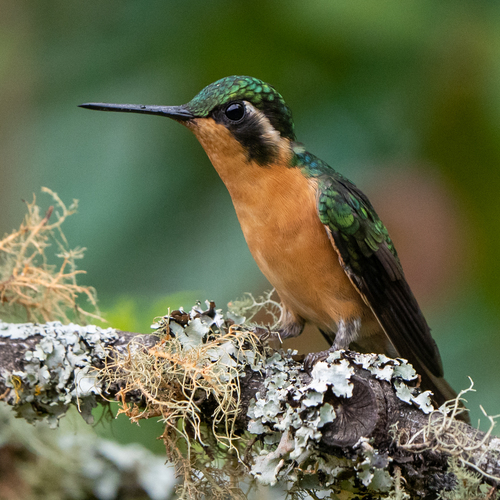 White-throated Mountain-gem
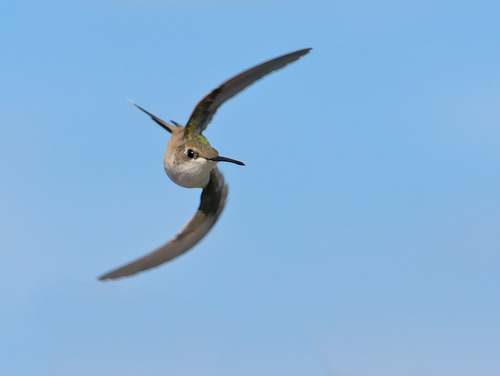 Ruby-throated Hummingbird
In breve
Il segno di campo più affidabile è il colore della gola: il maschio adulto di White-throated Mountain-gem mostra una gola bianca nitida bordata da lati verdi brillanti, mentre il maschio adulto di Ruby-throated Hummingbird ha un gorget rubino-rosso iridescente (che può apparire nero da alcuni angoli). Le femmine e gli immaturi sono più difficili da distinguere, ma la femmina e i giovani di Mountain-gem hanno una pancia e una gola rugginose ricche, a differenza delle parti inferiori pallide e leggermente macchiate della femmina/immatura di Ruby-throated. Anche la forma e il motivo della coda differiscono: le femmine di Mountain-gem hanno piume centrali della coda verdi metalliche, mentre le femmine di Ruby-throated hanno code intagliate con punte bianche. La struttura e il contesto aiutano: Mountain-gem è una specialità montana dell'America Centrale, Ruby-throated è diffuso in Nord America. Il motivo delle ali giovanili/immature non è un separatore chiave secondo le fonti attuali.
Consigli di identificazione
- Colore della gola del maschio adulto: White-throated Mountain-gem ha una gola bianca nitida con lati verdi brillanti; Ruby-throated ha un gorget rubino-rosso iridescente (che appare nero da alcuni angoli). Questo è il segno più affidabile per i maschi adulti.
- Parti inferiori femminili/immature: La femmina di Mountain-gem mostra una gola e una pancia rugginose scure, mentre la femmina di Ruby-throated ha una gola bianca (a volte leggermente macchiata) e parti inferiori pallide. L'immaturo di Ruby-throated può avere segni di gola più marcati ma mai rugginosi sotto.
- Motivo della coda (femminile/immatura): Le femmine di Mountain-gem hanno piume centrali della coda verdi metalliche e quelle esterne più chiare; le femmine di Ruby-throated hanno una coda intagliata con punte bianche sulle piume esterne e bande verdi, nere e bianche. Questo è meglio visibile quando la coda è aperta.
- Forma della coda (maschio): Il maschio di Ruby-throated ha una coda nera biforcuta con una leggera lucentezza violacea; il maschio di Mountain-gem ha una coda nera a bluastro-nera, non distintamente biforcuta.
- Parte superiore (femminile): Entrambe le specie sono verdi sopra, ma Mountain-gem è descritto come 'interamente verde brillante' sopra, mentre Ruby-throated è meno intensamente colorato.
- Colore della pancia (femminile/immatura): Mountain-gem ha una pancia rugginosa scura; Ruby-throated è pallido sotto.
- Forma e lunghezza del becco: Entrambi hanno becchi neri di lunghezza media e dritti; non è un separatore.
- Motivo della guancia e del viso: Mountain-gem ha guance scure e una striscia bianca dietro l'occhio; Ruby-throated non ha una forte striscia facciale.
- Colore della corona (maschio): Il maschio di Mountain-gem ha una corona verde smeraldo; la corona del maschio di Ruby-throated non è distintamente colorata.
- Habitat e distribuzione: Mountain-gem si trova solo nelle foreste montane di Costa Rica e Panama; Ruby-throated è diffuso in Nord America e migra in America Centrale in inverno. Usa la posizione come un forte indizio.
- Comportamento ai fiori: I maschi di Mountain-gem sono più aggressivi e territoriali, specialmente negli interni delle foreste; Ruby-throated è meno dominante.
- Voce: Mountain-gem emette richiami acuti 'ziit' o 'ziip' e una canzone frizzante; Ruby-throated è per lo più silenzioso con lievi suoni.
- Dimensione: Mountain-gem è leggermente più grande e pesante, ma questo è sottile e non è un segno di campo affidabile a meno che entrambi non siano insieme.
- Contesto stagionale: Se vedi un colibrì in Nord America in estate, è quasi certamente Ruby-throated; nelle alture della Costa Rica/Panama, è probabile che sia Mountain-gem.
- Nessun motivo distintivo delle ali giovanili: Nessuna delle due specie ha un motivo specifico per l'età delle ali superiori descritto che sia diagnostico in volo, quindi concentrati su gola, pancia e coda per gli uccelli immaturi.
Taglia
White-throated Mountain-gem è lungo circa 12 cm (4,7 in) e pesa 5–6 g, mentre Ruby-throated Hummingbird è leggermente più piccolo e leggero in media (soprattutto i maschi), ma la differenza è sottile e non sempre affidabile sul campo. Entrambi sono colibrì di dimensioni medio-piccole. La lunghezza e la forma del becco sono simili: di lunghezza media, dritti e neri. La dimensione non è un separatore primario a meno che tu non abbia entrambe le specie affiancate.
Piumaggio
Per i maschi adulti, il colore della gola è diagnostico: Mountain-gem ha una gola bianca con lati verdi brillanti del collo e del petto superiore, in contrasto con un petto inferiore grigio scuro e un vent; il maschio di Ruby-throated ha un gorget rubino-rosso iridescente (che può apparire nero quando non cattura la luce), bordato di nero vellutato sopra, e una coda nera biforcuta. La femmina di Mountain-gem è verde brillante sopra, con una gola e una pancia rugginose scure, e piume centrali della coda verdi metalliche; la femmina di Ruby-throated è verde sopra ma ha una gola bianca (a volte con lievi macchie scure), parti inferiori pallide, e una coda intagliata con punte bianche sulle piume esterne. L'immaturo di Ruby-throated assomiglia alla femmina ma può mostrare segni di gola più marcati; gli immaturi di Mountain-gem non sono descritti in dettaglio, ma ci si aspetta che abbiano parti inferiori rugginose. Non sono descritti motivi distintivi delle ali superiori giovanili o segni di volo per nessuna delle due specie.
Comportamento
Entrambe le specie si nutrono di nettare e piccoli artropodi, ma i maschi di White-throated Mountain-gem sono più territoriali e dominanti nei fiori, specialmente negli interni delle foreste, mentre le femmine utilizzano i bordi cespugliosi. Ruby-throated Hummingbird è meno aggressivo e più probabile da vedere mentre si nutre in giardini, boschi aperti e mangiatoie. Lo stile di volo è simile: rapido, agile e in sospensione, con entrambe le specie in grado di posarsi ma scivolando lungo i rami piuttosto che camminare. Il comportamento di corteggiamento non è un separatore sul campo.
Habitat
White-throated Mountain-gem è limitato a foreste di querce montane e radure cespugliose nelle montagne della Costa Rica e del Panama occidentale, di solito sopra i 1.500 m. Ruby-throated Hummingbird nidifica in una vasta gamma di habitat nell'America del Nord orientale, inclusi giardini, bordi boschivi e foreste aperte, e trascorre l'inverno in America Centrale e Florida. Se sei in un giardino nordamericano, stai quasi certamente vedendo Ruby-throated; se sei in una foresta pluviale ad alta quota in Costa Rica o Panama, è probabile che sia Mountain-gem.
Voce
White-throated Mountain-gem emette richiami acuti 'ziit' o 'ziip' e una canzone frizzante. Ruby-throated Hummingbird è generalmente silenzioso, con solo lievi suoni e squeaks, e non ha una canzone distintiva. In pratica, le vocalizzazioni non sono un separatore affidabile per la maggior parte degli osservatori di uccelli.
White-throated Mountain-gem · Ruby-throated Hummingbird · I miei uccelli difficili