

Colibrí Ventricastaño vs Colibrí Gorjirrubí
Lampornis castaneoventris frente a Archilochus colubris
Juega un quiz con Colibrí Ventricastaño y Colibrí Gorjirrubí
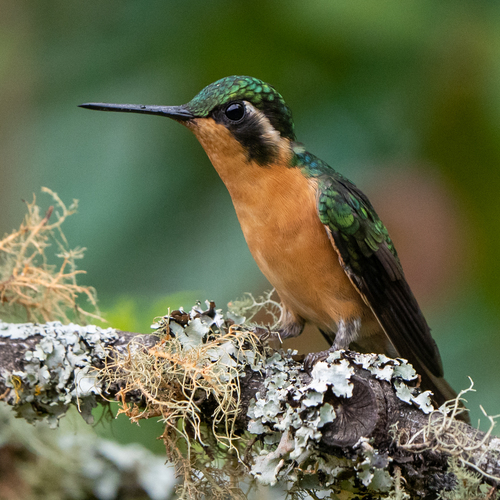 Colibrí Ventricastaño
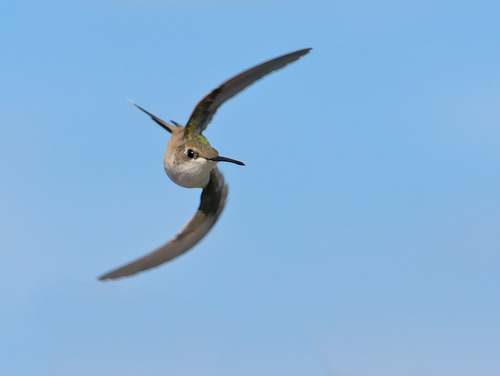 Colibrí Gorjirrubí
En breve
La marca de campo más confiable es el color de la garganta: el macho adulto de Colibrí Ventricastaño muestra una garganta blanca nítida bordeada por lados verdes brillantes, mientras que el macho adulto de Colibrí Gorjirrubí tiene un gorjeo rubí iridiscente (que puede parecer negro desde algunos ángulos). Las hembras y los inmaduros son más complicados, pero la hembra y los jóvenes de Colibrí Ventricastaño tienen un vientre y una garganta rufo ricos, a diferencia de las partes inferiores pálidas y ligeramente marcadas de la hembra/inmaduro de Colibrí Gorjirrubí. La forma y el patrón de la cola también difieren: las hembras de Colibrí Ventricastaño tienen plumas centrales de cola verde metálico, mientras que las hembras de Colibrí Gorjirrubí tienen colas con muescas y puntas blancas. La estructura y el contexto ayudan: Colibrí Ventricastaño es una especialidad montañosa de América Central, Colibrí Gorjirrubí es común en América del Norte. El patrón de alas de los juveniles/inmaduros no es un separador clave según las fuentes actuales.
Consejos de identificación
- Color de la garganta del macho adulto: Colibrí Ventricastaño tiene una garganta blanca nítida con lados verdes brillantes; Colibrí Gorjirrubí tiene un gorjeo rubí iridiscente (que aparece negro desde algunos ángulos). Esta es la marca más confiable para los machos adultos.
- Partes inferiores de hembras/inmaduros: La hembra de Colibrí Ventricastaño muestra una garganta y un vientre rufo oscuros, mientras que la hembra de Colibrí Gorjirrubí tiene una garganta blanca (a veces ligeramente manchada) y partes inferiores pálidas. El juvenil de Colibrí Gorjirrubí puede tener marcas de garganta más pesadas, pero nunca rufo por debajo.
- Patrón de cola (hembra/inmaduro): Las hembras de Colibrí Ventricastaño tienen plumas centrales de cola verde metálico y plumas exteriores más pálidas; las hembras de Colibrí Gorjirrubí tienen una cola con muescas y puntas blancas en las plumas exteriores y bandas en verde, negro y blanco. Esto se ve mejor cuando la cola está extendida.
- Forma de la cola (macho): El macho de Colibrí Gorjirrubí tiene una cola negra bifurcada con un leve brillo violeta; el macho de Colibrí Ventricastaño tiene una cola negra a negro azulado, no distintivamente bifurcada.
- Partes superiores (hembra): Ambas especies son verdes por encima, pero Colibrí Ventricastaño se describe como 'totalmente verde brillante' por encima, mientras que Colibrí Gorjirrubí es menos intensamente coloreado.
- Color del vientre (hembra/inmaduro): Colibrí Ventricastaño tiene un vientre rufo oscuro; Colibrí Gorjirrubí es pálido por debajo.
- Forma y longitud del pico: Ambas tienen picos negros de longitud media y rectos; no es un separador.
- Patrón de mejilla y cara: Colibrí Ventricastaño tiene mejillas oscuras y una franja blanca detrás del ojo; Colibrí Gorjirrubí carece de una franja facial fuerte.
- Color de la corona (macho): El macho de Colibrí Ventricastaño tiene una corona verde esmeralda; la corona del macho de Colibrí Gorjirrubí no está distintivamente coloreada.
- Hábitat y distribución: Colibrí Ventricastaño se encuentra solo en los bosques montañosos de Costa Rica y Panamá; Colibrí Gorjirrubí es común en América del Norte y migra a América Central en invierno. Usa la ubicación como una pista fuerte.
- Comportamiento en flores: Los machos de Colibrí Ventricastaño son más agresivos y territoriales, especialmente en interiores de bosques; Colibrí Gorjirrubí es menos dominante.
- Voz: Colibrí Ventricastaño emite llamados agudos 'ziit' o 'ziip' y una canción burbujeante; Colibrí Gorjirrubí es mayormente silencioso con débiles chirridos.
- Tamaño: Colibrí Ventricastaño es ligeramente más grande y pesado, pero esto es sutil y no es una marca de campo confiable a menos que ambos estén juntos.
- Contexto estacional: Si ves un colibrí en América del Norte en verano, es casi seguro que es Colibrí Gorjirrubí; en las tierras altas de Costa Rica/Panamá, es probable que sea Colibrí Ventricastaño.
- Sin patrón de alas juvenil distintivo: Ninguna de las especies tiene un patrón de alas superior específico de edad que sea diagnóstico en vuelo, así que concéntrate en la garganta, el vientre y la cola para los pájaros inmaduros.
Tamaño
Colibrí Ventricastaño mide aproximadamente 12 cm (4.7 in) de largo y pesa entre 5 y 6 g, mientras que Colibrí Gorjirrubí es ligeramente más pequeño y ligero en promedio (especialmente los machos), pero la diferencia es sutil y no siempre confiable en el campo. Ambos son colibríes de tamaño mediano-pequeño. La longitud y forma del pico son similares: de longitud media, recto y negro. El tamaño no es un separador primario a menos que tengas ambas especies lado a lado.
Plumaje
Para los machos adultos, el color de la garganta es diagnóstico: Colibrí Ventricastaño tiene una garganta blanca con lados verdes brillantes en el cuello y el pecho superior, contrastando con un pecho inferior gris oscuro y un ventrículo; el macho de Colibrí Gorjirrubí tiene un gorjeo rubí iridiscente (que puede parecer negro cuando no capta la luz), bordeado por negro aterciopelado arriba, y una cola negra bifurcada. La hembra de Colibrí Ventricastaño es verde brillante por encima, con una garganta y un vientre rufo oscuros, y plumas centrales de cola verde metálico; la hembra de Colibrí Gorjirrubí es verde por encima pero tiene una garganta blanca (a veces con manchas oscuras débiles), partes inferiores pálidas y una cola con muescas y puntas blancas en las plumas exteriores. El juvenil de Colibrí Gorjirrubí se asemeja a la hembra pero puede mostrar marcas de garganta más pesadas; los inmaduros de Colibrí Ventricastaño no se describen en detalle, pero se espera que tengan partes inferiores rufo. No se describen marcas de patrón de alas o vuelo juveniles distintivos para ninguna de las especies.
Comportamiento
Ambas especies se alimentan de néctar y pequeños artrópodos, pero los machos de Colibrí Ventricastaño son más territoriales y dominantes en parches de flores, especialmente en interiores de bosques, mientras que las hembras utilizan bordes arbustivos. Colibrí Gorjirrubí es menos agresivo y más probable que se vea alimentándose en jardines, bosques abiertos y comederos. El estilo de vuelo es similar: rápido, ágil y en suspensión, con ambas especies capaces de posarse pero moviéndose a lo largo de las ramas en lugar de caminar. El comportamiento de cortejo no es un separador de campo.
Hábitat
Colibrí Ventricastaño está restringido a bosques de roble en tierras altas y claros arbustivos en las montañas de Costa Rica y Panamá occidental, generalmente por encima de 1,500 m. Colibrí Gorjirrubí se reproduce en una amplia gama de hábitats en el este de América del Norte, incluidos jardines, bordes de bosques y bosques abiertos, y pasa el invierno en América Central y Florida. Si estás en un jardín de América del Norte, casi seguro que estás viendo Colibrí Gorjirrubí; si estás en un bosque nuboso de alta elevación en Costa Rica o Panamá, es probable que sea Colibrí Ventricastaño.
Voz
Colibrí Ventricastaño emite llamados agudos 'ziit' o 'ziip' y una canción burbujeante. Colibrí Gorjirrubí es generalmente silencioso, con solo débiles chirridos y chillidos, y no tiene una canción distintiva. En la práctica, las vocalizaciones no son un separador confiable para la mayoría de los observadores de aves.
Colibrí Ventricastaño · Colibrí Gorjirrubí · Mis aves difíciles