

White-crested Elaenia vs Hammond's Flycatcher
Elaenia albiceps contro Empidonax hammondii
Fai un quiz con White-crested Elaenia e Hammond's Flycatcher
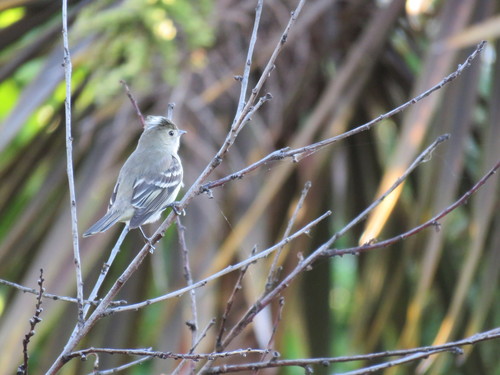 White-crested Elaenia
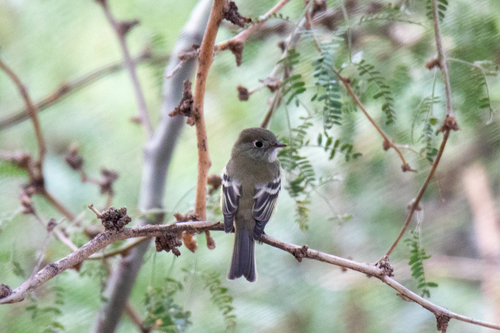 Hammond's Flycatcher
In breve
Il segno distintivo più affidabile tra White-crested Elaenia e Hammond's Flycatcher è la struttura generale: l'elaenia è più robusta con una cresta folta e un becco più robusto, mentre Hammond's Flycatcher è più compatto, con un becco più piccolo e sottile e una coda corta. Entrambe le specie mostrano parti superiori grigio-oliva, parti inferiori chiare e due barre alari chiare, rendendo il piumaggio da solo difficile da interpretare, specialmente negli immaturi. Tuttavia, la striscia bianca della cresta parzialmente nascosta dell'elaenia (a volte visibile quando è sollevata) è unica, mentre Hammond's Flycatcher ha un anello oculare bianco costantemente evidente e nessuna cresta. L'habitat e l'areale sono anche indizi forti: White-crested Elaenia è un uccello sudamericano delle zone boschive e delle valli, mentre Hammond's Flycatcher è strettamente una specie nordamericana delle foreste conifere mature.
Consigli di identificazione
- Crest presence: Solo White-crested Elaenia ha una cresta folta con una striscia bianca o crema parzialmente nascosta; questa può essere visibile quando l'uccello è agitato o solleva le piume della corona. Hammond's Flycatcher non mostra mai una cresta.
- Eyering: Hammond's Flycatcher ha sempre un anello oculare bianco, rotondo e audace. White-crested Elaenia può mostrare un anello oculare chiaro, ma è meno nitido e può essere indistinto, specialmente in alcune sottospecie.
- Bill structure: L'elaenia ha un becco più robusto e largo con una base chiara per la mandibola; Hammond's Flycatcher ha un becco piccolo, sottile e completamente scuro (le femmine sono leggermente più corte e larghe dei maschi, ma sempre piccole per un uccello da caccia).
- Wing bars: Entrambe le specie hanno due barre alari chiare, ma in Hammond's Flycatcher, specialmente negli immaturi, queste sono più larghe e possono essere color crema. In elaenia, le barre alari sono bianche o biancastre, a volte meno distinte in alcune sottospecie.
- Upperpart color: Entrambi sono grigio-oliva sopra, ma l'elaenia è più opaca e più oliva, mentre Hammond's può apparire leggermente più grigio, specialmente sulla testa.
- Underparts: White-crested Elaenia ha un ventre e copritail più bianchi, con un petto grigio chiaro o marrone grigiastro; Hammond's mostra un petto grigio e fianchi giallastri, dando un aspetto più attenuato e mescolato sotto.
- Tail: La coda dell'elaenia è scura con bordi oliva stretti; quella di Hammond's è scura con poco contrasto, e la coda è più corta e più squadrata.
- Size and shape: L'elaenia è più robusta e lunga (13.5–15 cm, 15.6 g) rispetto alla costruzione più piccola e compatta di Hammond's (12–14 cm, 8–12 g). L'elaenia appare spesso più robusta nel complesso.
- Jizz in flight: Hammond's Flycatcher è più attivo, spesso lanciandosi da posatoi alti, con voli rapidi e fluttuanti. L'elaenia è meno acrobatica, cercando cibo in modo più deliberato, spesso a livello medio o ai margini.
- Habitat: Se vista in una foresta conifera matura in Nord America, è quasi certamente Hammond's. Nella zona boschiva, nella valle o nel cespuglio sudamericano, specialmente sopra gli 800 m, è probabile che si tratti di White-crested Elaenia.
- Geographic range: White-crested Elaenia non si trova mai in Nord America; Hammond's non si trova mai in Sud America.
- Vocalization: Il canto di Hammond's è una serie rauca e multiverso con un richiamo acuto 'peek'; quello dell'elaenia è una serie di note modulate e richiamo di starnuti. I richiami sono diagnostici se ben uditi.
- Sex and age: Entrambi i sessi sono simili in entrambe le specie. Gli immaturi di Hammond's hanno barre alari più larghe e color crema, ma altrimenti sembrano adulti. Non è descritto alcun modello specifico per l'età nell'ala dell'elaenia; tutte le età sono simili.
- Pitfalls: In scarsa illuminazione, entrambi possono apparire grigio-oliva con barre alari chiare e anello oculare. La cresta (anche se nascosta) e la forma del becco sono i migliori segni di fallback. Se vedi un piccolo uccello da caccia con una cresta folta, è un'elaenia; se l'uccello è minuscolo, con coda corta, un anello oculare bianco rotondo e senza cresta, è Hammond's.
- When marks fail: Se la cresta è appiattita e l'anello oculare è debole (come in alcune sottospecie di elaenia), fai affidamento sulla struttura del becco, sulla massa corporea e sul contesto dell'habitat.
Taglia
White-crested Elaenia è nettamente più grande e pesante (massa corporea ~15.6 g, lunghezza 13.5–15 cm) rispetto a Hammond's Flycatcher (8–12 g, 12–14 cm). L'elaenia appare più robusta e più robusta, mentre Hammond's è visibilmente più delicata e compatta, con una coda più corta e un becco più piccolo. Se viste fianco a fianco, la maggiore massa dell'elaenia e il corpo leggermente più lungo sono evidenti, ma sul campo, la struttura è un indizio più affidabile rispetto alla lunghezza da sola.
Piumaggio
Per tutte le età, entrambe le specie hanno parti superiori grigio-oliva, parti inferiori chiare e due barre alari chiare, ma ci sono differenze sottili. La White-crested Elaenia ha una testa grigio-oliva opaca con una striscia di cresta bianca o crema parzialmente nascosta (a volte visibile quando la cresta è sollevata), lore e anello oculare bianchi (variabili per sottospecie), e una coda scura con bordi oliva stretti. Le sue barre alari sono bianche o biancastre, e le piume di volo hanno bordi chiari stretti. Hammond's Flycatcher, adulto e immaturo, mostra un anello oculare bianco più consistente e evidente, barre alari bianche e un becco piccolo. Gli immaturi di Hammond's hanno barre alari più larghe e color crema rispetto agli adulti, ma non sviluppano una cresta. Le parti inferiori dell'elaenia sono generalmente più bianche, specialmente sul ventre e sul sottocoda, mentre Hammond's ha un petto grigio e fianchi giallastri. La cresta (anche se non sempre visibile) è unica per l'elaenia; Hammond's non mostra mai questa caratteristica.
Comportamento
White-crested Elaenia spesso cerca cibo da sola, a volte muovendosi attraverso il medio-canopy o il margine, e può essere vista in habitat più aperti o cespugliosi. Hammond's Flycatcher preferisce posarsi nelle parti superiori di foreste conifere dense o miste, spesso lanciandosi per catturare insetti in volo (hawking) o raccogliendo foglie mentre è in sospensione. Hammond's appare tipicamente più attivo e acrobatico nel canopy, mentre l'elaenia può sembrare più deliberata e meno arborea. Entrambe le specie possono essere viste mentre cacciano insetti in volo, ma il contesto e l'altezza di foraggiamento possono aiutare.
Habitat
L'habitat è un forte separatore. White-crested Elaenia abita le zone boschive subtropicali e temperate, le foreste aperte, le foreste secondarie e i cespugli in Sud America (Bolivia, Cile, Colombia, Ecuador, Perù), spesso favorendo le valli intermontane più secche. Hammond's Flycatcher è limitato alle foreste conifere e miste del nord-ovest dell'America, specialmente in dense foreste di abete, pioppo e corniolo. Se ti trovi in una foresta conifera matura in Nord America, è probabile che sia Hammond's; in habitat più secchi, aperti o ai margini delle Ande, specialmente al di fuori del Nord America, è probabile che tu stia osservando White-crested Elaenia.
Voce
Le vocalizzazioni differiscono notevolmente. White-crested Elaenia emette una serie di note modulate e in crescendo con richiami di starnuti o discendenti, variando per sottospecie ma generalmente a tono più basso e più ricco. Hammond's Flycatcher produce un canto rauco e multiverso (ssilit, greeep, silit, pweet) e un richiamo acuto 'peek', con frequenza più alta e una qualità più brusca e meno modulata. Hammond's non canta durante la migrazione o nei terreni invernali, quindi il canto è più utile nel territorio di nidificazione. I richiami sono diagnostici se ben uditi: quelli dell'elaenia sono più ricchi e più modulati, quelli di Hammond's più acuti e più bruschi.
White-crested Elaenia · Hammond's Flycatcher · I miei uccelli difficili