

Veraguan Mango vs Hispaniolan Mango
Anthracothorax veraguensis contro Anthracothorax dominicus
Fai un quiz con Veraguan Mango e Hispaniolan Mango
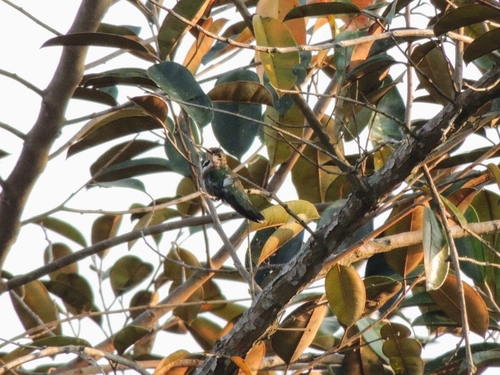 Veraguan Mango
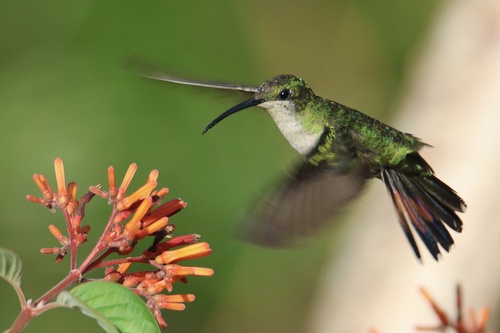 Hispaniolan Mango
In breve
Il segno di campo più affidabile per separare il Veraguan Mango dall'Hispaniolan Mango è il colore e il motivo delle parti inferiori, specialmente nei maschi adulti: i maschi di Veraguan Mango hanno un petto e una pancia bluastre, mentre i maschi di Hispaniolan Mango mostrano una gola e un mento verde metallico con il resto delle parti inferiori di un nero vellutato con una sfumatura blu. Anche le femmine differiscono: le femmine di Veraguan Mango hanno una pancia bianco-crema con una striscia centrale verde scuro, mentre le femmine di Hispaniolan Mango hanno parti inferiori grigiastre che si schiariscono a bianco pallido sull'addome, senza alcuna striscia centrale scura. La colorazione e il motivo della coda forniscono ulteriori indizi, specialmente nelle femmine e nei giovani. Entrambe le specie sono colibrì di dimensioni medie, verdi metallici, ma i loro areali non si sovrappongono: il Veraguan Mango si trova in Panama e Costa Rica, mentre l'Hispaniolan Mango è endemico di Hispaniola.
Consigli di identificazione
- Adult male underparts: Cerca un petto e una pancia bluastre nei maschi di Veraguan Mango, rispetto a una gola e un mento verdi metallici con ampie parti inferiori nere vellutate nei maschi di Hispaniolan Mango. Questo è il segno più affidabile in buona luce.
- Adult female underparts: Le femmine di Veraguan Mango hanno una pancia bianco-crema con una striscia centrale verde scuro (non nera); le femmine di Hispaniolan Mango sono grigiastre sotto, schiarendosi a bianco sull'addome, e non hanno alcuna striscia centrale.
- Juvenile Hispaniolan Mango: I giovani somigliano alle femmine ma mostrano una linea nera lungo il centro delle parti inferiori, che potrebbe essere confusa con la striscia verde scuro della femmina di Veraguan Mango. Controlla il colore (verde scuro vs nero) e il tono generale delle parti inferiori (grigiastro vs bianco-crema).
- Tail pattern (female/immature): Il Veraguan Mango ha piume della coda nere con un cerchio rosso centrale su ciascuna piuma. Le femmine di Hispaniolan Mango hanno una coda viola rossastra con ampie macchie nere vicino alla fine e punte bianche sulle piume più esterne. Le code dei maschi di Hispaniolan Mango sono per lo più viola con web interni ramei e punte blu-nerastre.
- Upperparts: Entrambe le specie sono verdi metalliche sopra, quindi questo non è un separatore utile.
- Bill: Entrambi hanno un becco leggermente ricurvo e scuro; la forma e il colore del becco non sono diagnostici.
- Range: Se visto in Panama o Costa Rica, è Veraguan Mango; se su Hispaniola, è Hispaniolan Mango. Non c'è sovrapposizione.
- Behavior: Entrambe le specie si nutrono di nettare e insetti, e i maschi difendono territori. L'Hispaniolan Mango può cercare cibo più in alto nella chioma (fino a 20 m), ma questo non è un segno di campo affidabile.
- Sexual dimorphism: Entrambe le specie mostrano chiare differenze tra maschi e femmine, ma il motivo e il colore delle parti inferiori sono i migliori indizi.
- Tail color in flight: In buona luce, nota il colore generale della coda—nero con cerchi rossi (Veraguan) vs viola/viola rossastro con nero e bianco (Hispaniolan, specialmente femmina).
- Central ventral stripe: Solo le femmine di Veraguan Mango hanno una striscia centrale verde scuro (non nera); le femmine di Hispaniolan Mango e la maggior parte dei giovani non hanno questa, eccetto per la linea nera nei giovani.
- Underpart tone: Le femmine di Veraguan Mango sono distintamente bianco-crema sotto, mentre le femmine di Hispaniolan Mango sono grigiastre, schiarendosi a bianco solo sull'addome.
- No black throat in Veraguan Mango: Se vedi nero sulla gola o nero esteso sulle parti inferiori, non è Veraguan Mango.
- No vocal differences described: La voce non è un separatore affidabile con le informazioni attuali.
- Overall impression: Se vedi un colibrì con una forte striscia centrale scura su una pancia pallida in America Centrale, pensa a Veraguan Mango; se vedi un colibrì con una pancia per lo più scura o nerastra e una gola verde metallica nei Caraibi, pensa a Hispaniolan Mango.
Taglia
Entrambe le specie sono simili in dimensioni, con il Veraguan Mango che raggiunge 11–12 cm di lunghezza e l'Hispaniolan Mango leggermente più grande a 11.5–13.5 cm. I maschi adulti di Hispaniolan Mango sono più pesanti (6.0–8.2 g) delle femmine (4.0–7.0 g), ma non ci sono dati sul peso per il Veraguan Mango. Sul campo, la dimensione non è un separatore affidabile tra questi due.
Piumaggio
- Juvenile/Immature: I giovani di Hispaniolan Mango somigliano alle femmine ma con una linea nera lungo il centro delle parti inferiori. Non c'è una specifica livrea giovanile descritta per il Veraguan Mango, ma le femmine e i giovani sono probabilmente simili.
- Adult Males: I maschi di Veraguan Mango hanno un petto e una pancia bluastre, senza alcun nero sulla gola o sulla pancia. I maschi di Hispaniolan Mango hanno verde metallico sul mento e sulla gola, con il resto delle parti inferiori di un nero vellutato con una sfumatura blu.
- Adult Females: Le femmine di Veraguan Mango mostrano una pancia bianco-crema con una distintiva striscia verde scuro (non nera) lungo il petto. Le femmine di Hispaniolan Mango hanno parti inferiori grigiastre che si schiariscono a bianco pallido sull'addome, senza striscia centrale. Le loro code sono viola rossastre con ampie macchie nere vicino alla fine e punte bianche sulle piume più esterne, mentre le femmine di Veraguan Mango hanno code nere con un cerchio rosso centrale su ciascuna piuma.
- Tail: Il Veraguan Mango ha piume della coda nere con un cerchio rosso centrale; l'Hispaniolan Mango ha una coda per lo più viola (viola rossastra nelle femmine), con web interni ramei e punte blu-nerastre nei maschi, e ampie macchie nere vicino alla fine nelle femmine.
Comportamento
Entrambe le specie si nutrono di nettare e artropodi, con i maschi che difendono territori ricchi di nettare. L'Hispaniolan Mango è noto per cercare cibo fino a 20 m ed è un importante impollinatore per alcune specie di Heliconia. Non ci sono differenze comportamentali specifiche notate per il Veraguan Mango che possano aiutare nella separazione sul campo.
Habitat
Il Veraguan Mango si trova in Panama e recentemente in Costa Rica, mentre l'Hispaniolan Mango è strettamente endemico di Hispaniola (Repubblica Dominicana e Haiti). Se ti trovi al di fuori di questi areali, la specie può essere esclusa di conseguenza. Entrambe si trovano in habitat dove sono presenti piante fiorite, ma l'areale è il separatore chiave.
Veraguan Mango · Hispaniolan Mango · I miei uccelli difficili