

Townsend's Warbler vs Black-throated Green Warbler
Setophaga townsendi contro Setophaga virens
Fai un quiz con Townsend's Warbler e Black-throated Green Warbler
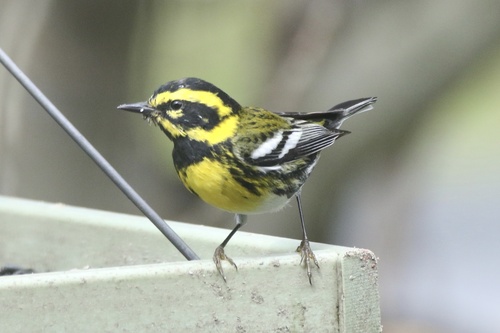 Townsend's Warbler
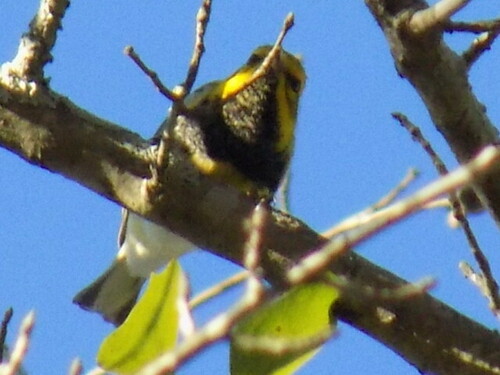 Black-throated Green Warbler
In breve
Il segno di campo più affidabile per separare il Townsend's Warbler dal Black-throated Green Warbler è il pattern del viso: il Townsend's mostra una netta macchia nera sulla guancia (area malare/orecchio) nettamente distinta contro un viso giallo brillante, mentre il Black-throated Green ha un viso giallo con solo marcature olivastre diffuse e nessuna guancia nera solida. Entrambe le specie hanno due barre alari bianche e dimensioni simili, ma il Townsend's è più fortemente marcato sul viso e sui fianchi. I maschi adulti di entrambe le specie possono mostrare gole nere, ma l'estensione e il contrasto del nero sul viso e sul cappuccio sono fondamentali. Gli immaturi e le femmine sono più difficili da distinguere, ma il pattern della guancia rimane un indizio forte.
Consigli di identificazione
- Cheek Patch (All Ages): Il Townsend's Warbler mostra sempre una netta macchia nera sulla guancia (area malare/orecchio) in netto contrasto con un viso giallo. Il Black-throated Green Warbler non ha mai una guancia nera solida; il suo viso è giallo con marcature olivastre diffuse. Questo è il segno di campo più affidabile in tutte le livree.
- Face Pattern (All Ages): Il Townsend's ha un viso giallo più brillante e pulito con una guancia nera netta, mentre il viso giallo del Black-throated Green è più attenuato con macchie olivastre ma senza nero netto.
- Cap Color (Adults): Il maschio adulto del Townsend's ha un cappuccio nero, mentre il cappuccio del Black-throated Green è verde oliva. La femmina del Townsend's ha un cappuccio scuro (non nero), e gli immaturi del Townsend's hanno un cappuccio e guance verde scuro.
- Throat Color (Sex/Age): Entrambi i maschi adulti possono mostrare una gola nera, ma solo il Townsend's estende il nero sul cappuccio e sulla guancia, creando un aspetto incappucciato. La femmina del Townsend's ha una gola gialla, mentre la femmina/immatura del Black-throated Green ha una gola pallida con striature nere sul petto.
- Flank Streaking (All Ages): Il Townsend's Warbler ha striature nere più pesanti e più estese sui fianchi rispetto al Black-throated Green, che ha striature nere più leggere.
- Wing Bars (All Ages): Entrambi hanno due barre alari bianche; questo non è un separatore.
- Back Color (All Ages): Entrambi sono di colore oliva sopra con striature nere, ma il Townsend's può apparire più contrastante a causa delle marcature più forti sul viso e sui fianchi.
- Underparts (All Ages): Entrambi hanno pance bianche, ma il Townsend's mostra spesso un contrasto più netto tra la pancia bianca e i fianchi striati.
- Bill Shape and Structure: Entrambi hanno becchi sottili e appuntiti tipici dei warbler del genere Setophaga; la forma del becco non è un separatore affidabile.
- Flight/Jizz: Non sono state notate differenze distintive nel pattern di volo o nella struttura tra questi due; entrambi sono piccoli, attivi e agili.
- Juvenile/Immature Upperwing: Non sono state descritte differenze specifiche per età nel pattern dell'ala superiore o nel volo nelle fonti; concentrarsi sul pattern del viso e della guancia per gli immaturi.
- Habitat/Range: Il Townsend's è più probabile trovarlo nelle foreste di conifere del Nord-Ovest, ma entrambi possono sovrapporsi durante la migrazione e l'inverno. Non fare affidamento solo sull'habitat.
- Voice: I canti sono simili e non sono separabili in modo affidabile sul campo in base alle note fornite.
- Sex/Age Pitfalls: Le femmine e gli immaturi del Townsend's possono essere confusi con il Black-throated Green, ma la macchia sulla guancia rimane un indizio forte. Controlla sempre la presenza o l'assenza di una guancia nera solida.
- Hybrid Zone: Il Townsend's può ibridarsi con l'Hermit Warbler, ma non con il Black-throated Green; gli ibridi non sono una preoccupazione per questa coppia.
Taglia
Entrambe le specie sono molto simili in dimensioni e struttura, senza differenze significative per l'identificazione sul campo. Il Black-throated Green Warbler misura 11–12 cm di lunghezza, pesa 8.5–11.3 g e ha un'apertura alare di 17–20 cm [wikipedia]. Il Townsend's Warbler è descritto come un piccolo uccello canoro della stessa famiglia, e non è stata notata alcuna differenza di dimensioni significativa nelle fonti comparative.
Piumaggio
Per tutte le età, il pattern della guancia e del viso è il più diagnostico: il Townsend's Warbler (adulti e immaturi) ha un viso giallo brillante con una netta macchia nera sulla guancia che si estende nelle copritrici auricolari, mentre il Black-throated Green Warbler ha un viso giallo con marcature olivastre diffuse ma mai una guancia nera solida. Il maschio adulto del Townsend's mostra anche un cappuccio nero e una gola nera, con giallo sul petto inferiore; le femmine hanno un cappuccio scuro (non nero) e una gola gialla. Gli immaturi del Townsend's somigliano alle femmine ma con un cappuccio e guance verde scuro. I maschi del Black-throated Green hanno una gola nera e un petto superiore nero, ma il viso rimane giallo con marcature olivastre, non nere. Le femmine e gli immaturi del Black-throated Green hanno una gola pallida e striature nere sul petto, ma mai una macchia nera sulla guancia. Entrambe le specie hanno due barre alari bianche e parti superiori olivastre con striature nere sulla schiena e sui fianchi, ma il Townsend's ha striature nere più estese sui fianchi. Le parti inferiori sono bianche in entrambe, ma il Townsend's tende a mostrare un contrasto maggiore tra la pancia bianca e i fianchi striati.
Comportamento
Entrambe le specie sono cercatori attivi nella chioma, raccogliendo insetti dal fogliame e talvolta sospendendosi o catturando in volo. Il Townsend's Warbler è noto per cercare cibo più in alto nelle conifere e unirsi a stormi misti al di fuori della stagione riproduttiva. Il Black-throated Green Warbler ha abitudini di foraggiamento simili. Il comportamento non è fortemente diagnostico tra questi due.
Habitat
Il Townsend's Warbler nidifica nelle foreste di conifere con grandi alberi lungo la costa nord-occidentale del Nord America. L'habitat del Black-throated Green Warbler non è dettagliato nelle note fornite, ma entrambi sono associati a habitat forestali. In inverno, il Townsend's può essere trovato più a sud, inclusi Messico e America Centrale. È possibile una sovrapposizione degli habitat durante la migrazione e l'inverno, quindi il contesto da solo non è un separatore affidabile.
Voce
Il canto del Townsend's Warbler è un 'zee-zee-zee-bzz-zee' o 'weazy weazy weazy weazy twea,' simile al canto del Black-throated Green Warbler, ma le note non forniscono una chiara distinzione. Entrambi hanno note di richiamo acute. La voce non è un segno di campo affidabile per la separazione in base alle informazioni disponibili.
Townsend's Warbler · Black-throated Green Warbler · I miei uccelli difficili