

Summer Tanager vs Scarlet Tanager
Piranga rubra contro Piranga olivacea
Fai un quiz con Summer Tanager e Scarlet Tanager
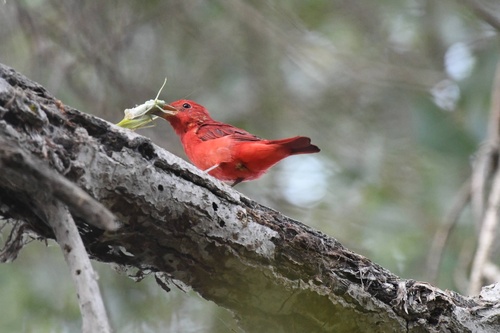 Summer Tanager
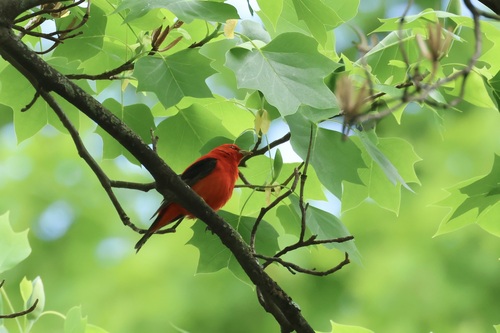 Scarlet Tanager
In breve
Il segno distintivo più affidabile tra il Tanager Estivo e il Tanager Scarlatto è il colore delle ali e della coda nei maschi adulti: i maschi di Tanager Scarlatto hanno ali e coda nere che contrastano con il loro corpo rosso profondo, mentre i maschi di Tanager Estivo sono completamente rosso-rosato, senza nero. Le femmine e gli immaturi sono più difficili da distinguere, ma le femmine di Tanager Scarlatto sono giallo-oliva con ali e coda giallo-olive, mentre le femmine di Tanager Estivo sono arancioni sotto, olive sopra e hanno ali e coda più opache, di colore oliva-marrone. In volo o posati, controlla la presenza di nero nelle ali/nella coda (mai presente nel Tanager Estivo). La voce è anche un utile supporto: il Tanager Scarlatto emette un richiamo aspro 'chip-burr', mentre il richiamo del Tanager Estivo è un 'pi-tuk' più acuto. Dimensione e struttura sono molto simili, quindi concentrati sul piumaggio e sulla voce.
Consigli di identificazione
- Colore delle ali e della coda nei maschi adulti: I maschi di Tanager Scarlatto hanno ali e coda nere che contrastano con il loro corpo rosso; i maschi di Tanager Estivo sono completamente rosso-rosato, comprese le ali e la coda. Questo è il segno distintivo più affidabile per i maschi adulti in qualsiasi stagione.
- Colore delle ali nelle femmine e negli immaturi: Le femmine di Tanager Scarlatto e i maschi non in riproduzione/immaturi hanno ali e coda giallo-olive, che corrispondono alla loro parte superiore oliva. Le femmine/immaturi di Tanager Estivo hanno ali e coda più opache, di colore oliva-marrone, non giallo-olive.
- Parte inferiore delle femmine: Le femmine di Tanager Scarlatto sono giallastre sotto; le femmine di Tanager Estivo sono più arancioni sotto. Questo può essere sottile e varia con la luce, ma è utile in buone viste.
- Schema dei maschi immaturi: I giovani maschi di Tanager Scarlatto possono mostrare un patchwork di rosso e giallo-olive con ali e coda nerastre; i giovani Tanager Estivi possono mostrare arancione e oliva a macchie, ma non mostrano mai nero nelle ali o nella coda.
- Colore e forma del becco: Entrambe le specie hanno becchi robusti e appuntiti. Il becco del Tanager Scarlatto è chiaro, color corno e dalla texture liscia; il becco del Tanager Estivo è simile, ma questo non è un segno distintivo forte.
- Canto: Entrambi hanno canti simili a quelli dei merli, ma il canto del Tanager Scarlatto è più rauco e più ronzante, mentre quello del Tanager Estivo è più chiaro e più monotono. Usa questo come indizio secondario.
- Note di richiamo: Il richiamo del Tanager Scarlatto è un aspro 'chip-burr' o 'chip-churr', molto diverso dal richiamo più acuto del Tanager Estivo 'pi-tuk'. I richiami sono spesso il miglior indizio quando gli uccelli sono nascosti.
- Confusione stagionale: In autunno e inverno, i maschi di Tanager Scarlatto mutano in un piumaggio simile a quello delle femmine ma mantengono ali e coda più scure. I maschi di Tanager Estivo rimangono rossastri, senza nero in nessuna stagione.
- Nessuna striscia sulle ali: Nessuna delle due specie mostra strisce sulle ali a qualsiasi età; se vedi strisce bianche audaci, considera il Tanager Occidentale o un'altra specie.
- Habitat: Il Tanager Scarlatto preferisce grandi foreste decidue mature; il Tanager Estivo è più comune in boschi aperti e bordi, ma entrambi possono sovrapporsi, specialmente durante la migrazione.
- Dimensione e struttura: Entrambi sono simili in dimensione e forma; non fare affidamento sulla dimensione per la separazione.
- Jizz in volo: Nessuna forte differenza; entrambi si muovono attraverso la chioma e si lanciano per gli insetti.
- Variazione di colore legata alla dieta: I toni rossi e arancioni di entrambe le specie derivano dalla dieta, quindi l'intensità può variare, ma la presenza o l'assenza di nero nelle ali/nella coda è sempre affidabile.
- Confusione con altri Piranga: Il Tanager Scarlatto è di un rosso più profondo rispetto al Tanager Estivo e al Cardinal Nord, ma solo il Tanager Scarlatto ha ali e coda nere. Il Tanager Estivo non mostra mai ali/coda nere.
- Quando hai dubbi: Se vedi un uccello rosso con ali/coda nere, è un Tanager Scarlatto. Se l'uccello è completamente rosso o arancione senza nero, è un Tanager Estivo.
Taglia
Entrambe le specie sono uccelli canori di dimensioni medie con proporzioni e massa molto simili. Il Tanager Estivo pesa in media circa 29 g, mentre il Tanager Scarlatto pesa leggermente meno durante la riproduzione (25 g) ma può raggiungere pesi simili o superiori prima della migrazione. Lunghezza e apertura alare si sovrappongono: il Tanager Estivo è lungo circa 17 cm con un'apertura alare di 28–30 cm, mentre il Tanager Scarlatto varia da 16–19 cm di lunghezza e 25–30 cm di apertura alare. Sul campo, la dimensione non è un separatore affidabile.
Piumaggio
- Maschi adulti (riproduzione): I maschi di Tanager Scarlatto sono di un rosso cremisi profondo con ali e coda nere, un contrasto drammatico. I maschi di Tanager Estivo sono completamente rosso-rosato, comprese le ali e la coda, senza nero.
- Femmine: Le femmine di Tanager Scarlatto sono giallastre sotto e olive sopra, con ali e coda giallo-olive. Le femmine di Tanager Estivo sono arancioni sotto, olive sopra e hanno ali e coda più opache, di colore oliva-marrone (non giallo-olive).
- Immaturi e maschi non in riproduzione: I maschi non in riproduzione/immaturi di Tanager Scarlatto somigliano alle femmine ma mantengono ali e coda più scure, mentre gli immaturi di Tanager Estivo sono più uniformemente marroni o olive, privi dei forti contrasti gialli o neri. I giovani maschi di Tanager Scarlatto possono mostrare una mescolanza a macchie di rosso e giallo-olive con ali e coda nerastre, mentre i giovani Tanager Estivi transitano attraverso arancione e oliva a macchie, ma non mostrano mai ali/coda nere.
- Schema delle ali in volo: Non è presente alcun schema distintivo nella parte superiore delle ali (come strisce o pannelli) in nessuna delle due specie a qualsiasi età, ma le ali/coda nere dei maschi di Tanager Scarlatto si distinguono anche in volo; il Tanager Estivo manca sempre di nero.
Comportamento
Entrambe le specie si comportano in modo simile, foraggiando nella chioma e rimanendo spesso nascoste nel fogliame. Possono lanciarsi per gli insetti o muoversi metodicamente attraverso le foglie. Non è stata notata alcuna forte distinzione comportamentale nelle fonti.
Habitat
Entrambe le specie nidificano in foreste mature, ma il Tanager Scarlatto è più strettamente associato a grandi tratti di foresta decidua nell'est del Nord America, mentre il Tanager Estivo può essere trovato in boschi più aperti, specialmente con alberi sparsi o lungo i bordi delle foreste. Tuttavia, la sovrapposizione degli habitat è comune durante la migrazione, quindi l'habitat da solo non è diagnostico.
Voce
Entrambe le specie hanno canti simili a quelli dei merli, ma il canto del Tanager Scarlatto è più rauco e più ronzante, mentre quello del Tanager Estivo è più chiaro e più monotono. I richiami sono più distintivi: il Tanager Scarlatto emette un aspro, ronzante 'chip-burr' o 'chip-churr', mentre il Tanager Estivo emette un 'pi-tuk' o 'pik-i-tuk-i-tuk' più acuto e agitato. Questi richiami sono spesso il miglior indizio quando gli uccelli sono nascosti.