

Saffron-cowled Blackbird vs Brown-and-yellow Marshbird
Xanthopsar flavus contro Pseudoleistes virescens
Fai un quiz con Saffron-cowled Blackbird e Brown-and-yellow Marshbird
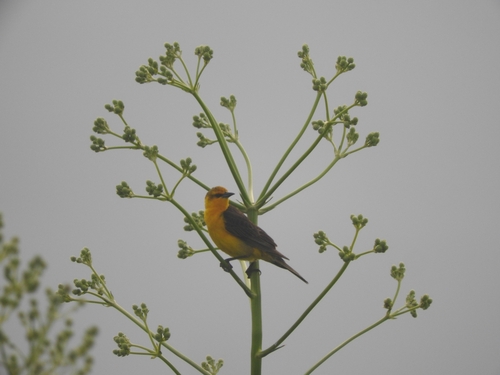 Saffron-cowled Blackbird
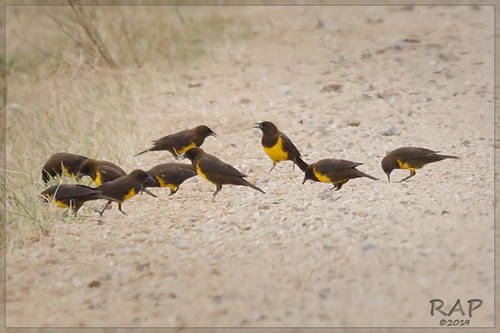 Brown-and-yellow Marshbird
In breve
Il segno distintivo più affidabile tra il Saffron-cowled Blackbird e il Brown-and-yellow Marshbird è la distribuzione e l'intensità del giallo sul corpo e sulle ali, specialmente in volo e tra i giovani. I maschi di Saffron-cowled Blackbird mostrano un giallo-arancio sorprendente sulla testa, sul ventre e sulla coda, con un forte contrasto rispetto alla parte superiore nera e una macchia gialla sulla spalla; le femmine e i giovani sono più opachi ma mostrano comunque una coda gialla. Al contrario, il Brown-and-yellow Marshbird è complessivamente di un marrone scuro con un giallo ricco limitato alla parte inferiore del petto, alla pancia e a una macchia gialla nascosta sull'ala che è più visibile in volo. Il Marshbird è anche molto più grande e pesante, e entrambi i sessi si somigliano. Le piume giovanili differiscono nel motivo e nell'estensione del giallo, specialmente sul petto e sulla gola. Entrambe le specie possono verificarsi in campi aperti simili, ma il Blackbird è molto più raro e localizzato.
Consigli di identificazione
- Colore della coda dei giovani: I giovani di Saffron-cowled Blackbird mostrano una coda giallo limone distintiva, assente nei giovani di Marshbird, che invece hanno una gola giallastra e un petto striato giallo-marrone.
- Testa e parte inferiore del maschio adulto: I maschi di Saffron-cowled Blackbird hanno una testa, una parte inferiore e una coda giallo-arancio brillante, nettamente distinte rispetto alla parte superiore nera e alla coda. Gli adulti di Marshbird non sono mai così brillanti o contrastanti.
- Confusione femmina/immatura: La femmina di Saffron-cowled Blackbird è più opaca ma mostra comunque una parte inferiore e una coda gialla, con una parte superiore grigio-marrone e una pancia chiara. Le femmine di Marshbird sono identiche ai maschi e non presentano giallo brillante sulla testa o sulla coda.
- Motivo dell'ala in volo: Il Saffron-cowled Blackbird mostra epaulette gialle (copritrici marginali e minori) e una coda gialla in volo. Il Brown-and-yellow Marshbird lampeggia una ricca macchia gialla all'angolo dell'ala (copritrici superiori) e una pancia gialla, ma il resto dell'ala e della schiena rimane marrone.
- Struttura del becco e della testa: Il Marshbird è più massiccio con un becco e una testa più pesanti e robusti; il Saffron-cowled Blackbird è più snello e delicato nel complesso.
- Dimorfismo sessuale: Il Saffron-cowled Blackbird è sessualmente dimorfico (i maschi sono molto più brillanti delle femmine); i sessi del Marshbird sono identici.
- Dimensione del corpo: Il Marshbird è molto più grande e pesante (24 cm, ~80 g) rispetto al Saffron-cowled Blackbird (20 cm, ~41 g). Utilizza questo quando entrambe le specie sono presenti o quando la dimensione è evidente rispetto a specie conosciute.
- Colore dell'iride: Il Saffron-cowled Blackbird ha un'iride di colore marrone-arancio a marrone rosso scuro; l'iride del Marshbird è marrone. Questo è sottile e potrebbe non essere visibile sul campo.
- Colore delle gambe e del becco: Entrambe le specie hanno becchi e gambe di colore nerastro, quindi questo non è utile per la separazione.
- Piumaggio sulla schiena e sulla coda: I maschi di Saffron-cowled Blackbird hanno la parte superiore nera e la coda; il Marshbird è marrone a marrone oliva sopra e sulla coda.
- Giallo sulla pancia: Il giallo del Marshbird è per lo più limitato alla parte inferiore del petto e alla pancia, senza estendersi alla testa o alla coda come nel Saffron-cowled Blackbird.
- Contesto dell'habitat: Il Saffron-cowled Blackbird è raro e locale, preferendo praterie aperte con aree umide sparse; il Marshbird è più comune in paludi e pampas.
- Composizione del gruppo: Il Saffron-cowled Blackbird spesso si unisce a stormi misti con altri uccelli di campagna aperta; il Marshbird può trovarsi in piccole colonie, a volte con aiutanti nei nidi.
- Viste in perching vs. volo: L'epaulette gialla del Saffron-cowled Blackbird è visibile anche quando è posato; la macchia gialla dell'ala del Marshbird è per lo più nascosta a riposo e meglio vista in volo.
- Trappole: Le femmine e i giovani di Saffron-cowled Blackbirds possono essere confusi con Marshbird a causa del piumaggio più opaco, ma controlla sempre per il giallo sulla coda (Blackbird) rispetto al giallo solo sulla pancia e sulla macchia dell'ala (Marshbird).
Taglia
Il Brown-and-yellow Marshbird è significativamente più grande, con una lunghezza media di 24 cm e quasi il doppio della massa del Saffron-cowled Blackbird (maschi adulti ~80 g contro ~42,5 g). Il Saffron-cowled Blackbird è più compatto a 20 cm e 41 g. Sul campo, il Marshbird apparirà più massiccio e con un corpo più lungo, con una struttura più pesante e una testa e un becco proporzionalmente più grandi. Il Saffron-cowled Blackbird è visibilmente più snello e delicato, specialmente quando visto fianco a fianco.
Piumaggio
- Giovani: I giovani di Saffron-cowled Blackbird somigliano a femmine adulte ma hanno una coda giallo limone distintiva. I giovani di Brown-and-yellow Marshbird hanno una gola giallastra, un petto striato giallo e marrone, e un mandibola inferiore giallastra, mancando della pulita coda gialla del Blackbird.
- Maschi adulti: I maschi di Saffron-cowled Blackbird sono nettamente contrassegnati: parte superiore nera (crown posteriore, nuca, schiena, coda), lore neri, e una testa, una coda e una parte inferiore giallo-arancio vividi, con copritrici di coda nere con punte gialle. Le loro ali sono per lo più nere ma mostrano un'epaulette gialla (copritrici marginali e minori) anche quando sono posati. Gli adulti di Brown-and-yellow Marshbird di entrambi i sessi sono di un marrone scuro a marrone oliva nel complesso, con un giallo ricco solo sulla parte inferiore del petto e sulla pancia, e una macchia gialla sull'ala (copritrici superiori e angolo) che è per lo più nascosta quando è posata ma lampeggia in volo.
- Femmine adulte: Le femmine di Saffron-cowled Blackbird sono molto più opache, con una parte superiore grigio-marrone e una parte inferiore gialla, più chiara sulla pancia, e una striscia oculare grigio-marrone. Tuttavia, mantengono più giallo nel complesso rispetto al Marshbird, specialmente sulla coda. Le femmine di Marshbird sembrano identiche ai maschi.
- In volo: Il Saffron-cowled Blackbird mostra epaulette e coda gialle; il Marshbird mostra una ampia macchia gialla all'angolo dell'ala e una pancia gialla, ma il resto della parte superiore rimane marrone.
Comportamento
Il Saffron-cowled Blackbird si nutre in stormi mobili, spesso con altre specie di campagna aperta, ed è più probabile che venga visto a frugare nel terreno per insetti e ragni. Il Brown-and-yellow Marshbird è anche una specie gregaria, a volte nidificando colonialmente ed esibendo una riproduzione cooperativa. Entrambe le specie si nutrono a terra o in vegetazione bassa, ma il Marshbird è più probabile che venga visto in o vicino a praterie umide e pampas, a volte in piccoli gruppi con aiutanti nei nidi. Il Saffron-cowled Blackbird è più probabile che si trovi in praterie aperte più secche o in aree leggermente paludose, spesso in stormi di specie miste.
Habitat
Entrambe le specie si sovrappongono nell'areale (Argentina, Brasile, Uruguay e Paraguay), ma il Saffron-cowled Blackbird è molto più raro e localizzato, preferendo praterie aperte e aree leggermente paludose, a volte vicino all'acqua ma non in paludi profonde. Il Brown-and-yellow Marshbird è più diffuso e comune, preferendo paludi, praterie pampas e prati umidi, spesso in vegetazione più densa o umida rispetto al Blackbird. Se ti trovi in una vera palude o pampas, è più probabile che tu veda il Marshbird; in praterie più secche o a macchie, specialmente nel sud del Brasile o in Uruguay, controlla attentamente per il Saffron-cowled Blackbird.
Saffron-cowled Blackbird · Brown-and-yellow Marshbird · I miei uccelli difficili