

Tordo Amarillo vs Tordo Pechiamarillo
Xanthopsar flavus frente a Pseudoleistes virescens
Juega un quiz con Tordo Amarillo y Tordo Pechiamarillo
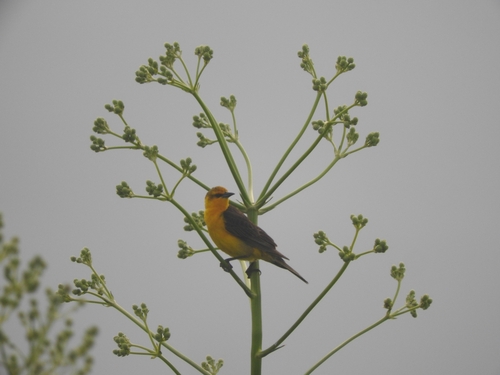 Tordo Amarillo
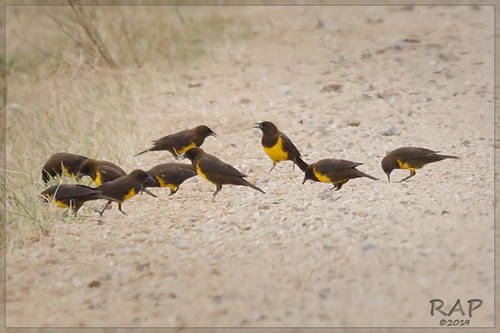 Tordo Pechiamarillo
En breve
La marca de campo más confiable entre el Tordo Amarillo y el Tordo Pechiamarillo es la distribución e intensidad del amarillo en el cuerpo y las alas, especialmente en vuelo y entre los juveniles. Los machos del Tordo Amarillo muestran un llamativo amarillo-naranja en la cabeza, partes inferiores y rabadilla, con un fuerte contraste contra las partes superiores negras y una mancha amarilla en el hombro; las hembras y los juveniles son más apagados pero aún muestran una rabadilla amarilla. En contraste, el Tordo Pechiamarillo es en general de un marrón profundo con un rico amarillo restringido al pecho inferior, abdomen y una mancha amarilla oculta en el ala que es más visible en vuelo. El Tordo Pechiamarillo también es mucho más grande y pesado, y ambos sexos se parecen. Los plumajes juveniles difieren en el patrón y la extensión del amarillo, especialmente en el pecho y la garganta. Ambas especies pueden ocurrir en campos abiertos similares, pero el Tordo Amarillo es mucho más raro y más localizado.
Consejos de identificación
- Color de la rabadilla juvenil: Los juveniles del Tordo Amarillo muestran una rabadilla de un distintivo amarillo limón, que falta en los juveniles del Tordo Pechiamarillo, que en su lugar tienen una garganta amarillenta y un pecho estriado amarillo-marrón.
- Cabeza y partes inferiores del macho adulto: Los machos del Tordo Amarillo tienen una cabeza, partes inferiores y rabadilla de un brillante amarillo-naranja, marcadamente contrastante con las partes superiores negras y la cola. Los adultos del Tordo Pechiamarillo nunca son tan brillantes o contrastantes.
- Confusión hembra/inmaduro: La hembra del Tordo Amarillo es más apagada pero aún muestra un lado inferior y rabadilla amarillos, con partes superiores grisáceas y un abdomen pálido. Las hembras del Tordo Pechiamarillo son idénticas a los machos y carecen de cualquier amarillo brillante en la cabeza o rabadilla.
- Patrón de alas en vuelo: El Tordo Amarillo muestra epauletes amarillos (cobertoras marginales y menores) y una rabadilla amarilla en vuelo. El Tordo Pechiamarillo destella una rica mancha amarilla en el pliegue del ala (cobertoras del ala superior) y un abdomen amarillo, pero el resto del ala y la espalda permanecen marrones.
- Estructura del pico y cabeza: El Tordo Pechiamarillo es más robusto con un pico y cabeza más pesados; el Tordo Amarillo es más esbelto y delicado en general.
- Dimorfismo sexual: El Tordo Amarillo es dimórfico sexualmente (los machos son mucho más brillantes que las hembras); los sexos del Tordo Pechiamarillo son idénticos.
- Tamaño del cuerpo: El Tordo Pechiamarillo es mucho más grande y pesado (24 cm, ~80 g) que el Tordo Amarillo (20 cm, ~41 g). Usa esto cuando ambas especies están presentes o cuando el tamaño es evidente en comparación con especies conocidas.
- Color del iris: El Tordo Amarillo tiene un iris de marrón-naranja a marrón-rojo profundo; el iris del Tordo Pechiamarillo es marrón. Esto es sutil y puede no ser visible en el campo.
- Color de las patas y pico: Ambas especies tienen picos y patas negruzcas, por lo que esto no es útil para la separación.
- Plumaje en la espalda y cola: Los machos del Tordo Amarillo tienen partes superiores y cola negras; el Tordo Pechiamarillo es marrón a marrón-oliva por encima y en la cola.
- Amarillo en el abdomen: El amarillo del Tordo Pechiamarillo está mayormente restringido al pecho inferior y abdomen, sin extenderse a la cabeza o rabadilla como en el Tordo Amarillo.
- Contexto de hábitat: El Tordo Amarillo es raro y local, favoreciendo praderas abiertas con áreas húmedas dispersas; el Tordo Pechiamarillo es más común en pantanos y pampas.
- Composición de bandadas: El Tordo Amarillo a menudo se une a bandadas mixtas con otras aves de campo abierto; el Tordo Pechiamarillo puede estar en pequeñas colonias, a veces con ayudantes en los nidos.
- Vistas posadas vs. en vuelo: El epaulete amarillo del Tordo Amarillo es visible incluso cuando está posado; la mancha amarilla del ala del Tordo Pechiamarillo está mayormente oculta en reposo y se ve mejor en vuelo.
- Trampas: Las hembras y juveniles del Tordo Amarillo pueden confundirse con el Tordo Pechiamarillo debido a su plumaje más apagado, pero siempre verifica el amarillo en la rabadilla (Tordo Amarillo) frente al amarillo solo en el abdomen y la mancha del ala (Tordo Pechiamarillo).
Tamaño
El Tordo Pechiamarillo es significativamente más grande, promediando 24 cm de longitud y casi el doble de la masa del Tordo Amarillo (machos adultos ~80 g vs. ~42.5 g). El Tordo Amarillo es más compacto con 20 cm y 41 g. En el campo, el Tordo Pechiamarillo parecerá más robusto y con un cuerpo más largo, con una construcción más pesada y una cabeza y pico proporcionalmente más grandes. El Tordo Amarillo es notablemente más esbelto y delicado, especialmente cuando se ve uno al lado del otro.
Plumaje
- Juveniles: Los juveniles del Tordo Amarillo se asemejan a las hembras adultas pero tienen una rabadilla de un distintivo amarillo limón. Los juveniles del Tordo Pechiamarillo tienen una garganta amarillenta, un pecho amarillo y marrón estriado, y un mandí... inferior amarillento, careciendo de la limpia rabadilla amarilla del Tordo Amarillo.
- Machos adultos: Los machos del Tordo Amarillo están marcados de manera nítida: partes superiores negras (cabeza posterior, nuca, espalda, cola), loretes negros, y una cabeza, rabadilla y partes inferiores de un vívido amarillo-naranja, con cobertoras de la cola negra con puntas amarillas. Sus alas son mayormente negras pero muestran un epaulete amarillo (cobertoras marginales y menores) incluso cuando están posados. Los adultos del Tordo Pechiamarillo de ambos sexos son de un marrón profundo a marrón-oliva en general, con un rico amarillo solo en el pecho inferior y abdomen, y una mancha amarilla en el ala (cobertoras del ala superior y pliegue) que está mayormente oculta cuando están posados pero destella en vuelo.
- Hembras adultas: Las hembras del Tordo Amarillo son mucho más apagadas, con partes superiores grisáceas y un lado inferior amarillo, más pálido en el abdomen, y una franja ocular grisácea. Aún así, retienen más amarillo en general que el Tordo Pechiamarillo, especialmente en la rabadilla. Las hembras del Tordo Pechiamarillo lucen idénticas a los machos.
- En vuelo: El Tordo Amarillo muestra epauletes y rabadilla amarillos; el Tordo Pechiamarillo muestra una amplia mancha amarilla en el pliegue del ala y un abdomen amarillo, pero el resto de las partes superiores permanece marrón.
Comportamiento
El Tordo Amarillo forrajea en bandadas rodantes, a menudo con otras especies de campo abierto, y es más probable que se le vea hurgando en el suelo en busca de insectos y arañas. El Tordo Pechiamarillo también es una especie gregaria, a veces anidando colonialmente y exhibiendo cría cooperativa. Ambas especies forrajean en el suelo o en vegetación baja, pero el Tordo Pechiamarillo es más probable que se le vea en o cerca de praderas pantanosas y pampas, a veces en pequeños grupos con ayudantes en los nidos. El Tordo Amarillo es más probable que se encuentre en praderas abiertas más secas o áreas ligeramente pantanosas, a menudo en bandadas de especies mixtas.
Hábitat
Ambas especies se superponen en su rango (Argentina, Brasil, Uruguay y Paraguay), pero el Tordo Amarillo es mucho más raro y más localizado, prefiriendo praderas abiertas y áreas ligeramente pantanosas, a veces cerca del agua pero no en pantanos profundos. El Tordo Pechiamarillo es más extendido y común, favoreciendo pantanos, praderas de pampas y prados húmedos, a menudo en vegetación más densa o húmeda que el Tordo Amarillo. Si estás en un verdadero pantano o pampas, es más probable que encuentres al Tordo Pechiamarillo; en praderas más secas o parcheadas, especialmente en el sur de Brasil o Uruguay, verifica cuidadosamente por el Tordo Amarillo.