

Rufescent Imperial-Pigeon vs Pinon's Imperial-Pigeon
Ducula chalconota contro Ducula pinon
Fai un quiz con Rufescent Imperial-Pigeon e Pinon's Imperial-Pigeon
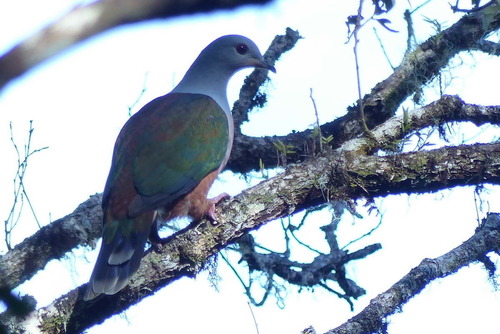 Rufescent Imperial-Pigeon
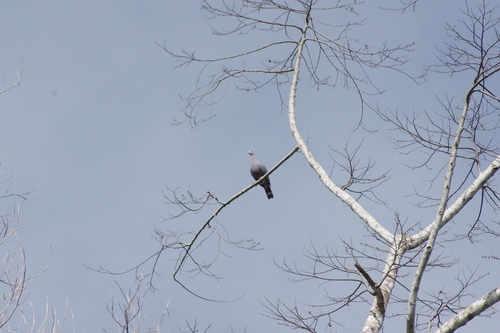 Pinon's Imperial-Pigeon
In breve
Il modo più affidabile per separare il Rufescent Imperial-Pigeon dal Pinon's Imperial-Pigeon è concentrarsi sul piumaggio distintivo del Rufescent: cerca una combinazione di testa grigio-ardesia, dorso e ali verde metallici, e un ventre castano unico con un petto arancione pallido. Il Rufescent mostra anche una coda nerastra con una lucentezza blu e, in alcune sottospecie, iridescenza rosso-viola sul mantello. Il Pinon's Imperial-Pigeon manca di questi contrasti di colore specifici ed è generalmente meno riccamente colorato. I giovani Rufescent Imperial-Pigeons hanno una testa e un collo più chiari e un petto vagamente grigiastro, il che può essere un inganno se non controllato attentamente. Entrambe le specie sono simili in dimensioni e forma, ma il Rufescent è leggermente più grande e massiccio. Sul campo, concentrati sui toni rugginosi e vinati del Rufescent, specialmente sulle parti inferiori, e sulle parti superiori metalliche, che il Pinon's non eguaglia.
Consigli di identificazione
- Juvenile plumage: I giovani Rufescent Imperial-Pigeons hanno una testa e un collo più chiari e un petto vagamente grigiastro, privi dei ricchi toni vinati e castani degli adulti. Se vedi un'imperial-pigeon immatura con una testa e un petto sbiaditi, considera il Rufescent.
- Head color: Il Rufescent adulto mostra una testa grigio-ardesia, che contrasta con il dorso verde metallico. Il Pinon's manca di questo forte contrasto ed è generalmente più semplice.
- Upperparts: Il dorso e le copritrici delle ali del Rufescent sono verdi metallici con riflessi bronzati e blu, a volte con iridescenza rosso-viola (sottospecie chalconota). Il Pinon's non mostra questo effetto metallico o iridescente.
- Tail: Il Rufescent ha una coda nerastra con una lucentezza blu, che può essere sorprendente in buona luce. La coda del Pinon's non è descritta come avente questa lucentezza o intensità.
- Underparts: Il Rufescent ha una gola e un petto arancione pallido, un petto vinato e un ventre e fianchi castani profondi. Le parti inferiori del Pinon's sono meno riccamente colorate e mancano dei toni rugginosi/castani.
- Feet and eye color: Il Rufescent ha piedi rossi e un occhio rossastro, che possono essere visibili a distanza ravvicinata. Il Pinon's non è descritto come avente colori così forti.
- Sex differences: La femmina del Rufescent è simile al maschio ma con meno iridescenza rossastra. Il dimorfismo sessuale del Pinon's non è descritto, quindi non fare affidamento sulle differenze sessuali per quella specie.
- Flight views: In volo, cerca la parte superiore dell'ala metallica e la coda lucida blu del Rufescent. Il Pinon's manca di queste caratteristiche e apparirà più uniforme.
- Size and bulk: Il Rufescent è leggermente più grande e massiccio, specialmente il maschio, ma questo è utile solo se hai un confronto diretto.
- Behavior: Il Rufescent è più probabile che venga trovato in profondità nella foresta, seduto tranquillamente a livelli medi. Il Pinon's può essere più visibile ai margini della foresta o in aree meno dense.
- Vocalizations: Se senti un ronzio lento e mesto o un colpo cavo 'woo', considera il Rufescent, ma entrambe le specie sono solitamente silenziose e non possono essere affidabilmente separate dalla voce.
- Rarity: Il Rufescent è molto più raro e più locale del Pinon's. Se ti trovi in un'area in cui entrambe le specie si trovano, il default è il Pinon's a meno che tu non veda il piumaggio distintivo del Rufescent.
- Pitfalls: Il giovane Rufescent può apparire sbiadito e mancare dei ricchi colori degli adulti, il che può causare confusione con il Pinon's. Controlla sempre la combinazione di colore della testa, delle parti superiori e delle parti inferiori.
- Context: Entrambe le specie sono piccioni di foresta della Nuova Guinea, ma la preferenza rigorosa del Rufescent per l'interno della foresta e la sua rarità sono indizi se l'habitat è noto.
- Checklist: Per qualsiasi grande imperial-pigeon, controlla prima la presenza di verde metallico e lucentezza blu sulle parti superiori e sulla coda, poi cerca parti inferiori castane e una testa grigio-ardesia. L'assenza di queste caratteristiche indica il Pinon's.
Taglia
Il Rufescent Imperial-Pigeon è leggermente più grande, con maschi che raggiungono i 41–42 cm (16–17 in) e femmine 37–39 cm (15 in), entrambi i sessi pesano circa 21–22 once. Il Pinon's Imperial-Pigeon è simile in dimensioni ma tipicamente non è robusto o lungo come i più grandi individui di Rufescent. In pratica, la dimensione da sola non è un forte separatore a meno che entrambe le specie non siano viste fianco a fianco, ma un'imperial-pigeon notevolmente grande e pesante nelle foreste della Nuova Guinea è più probabile che sia un Rufescent.
Piumaggio
I giovani Rufescent Imperial-Pigeons possono essere identificati dalla loro testa e collo più chiari e un petto che appare vagamente grigiastro, privi dei forti toni vinati e castani degli adulti. Gli adulti (entrambi i sessi) del Rufescent mostrano una testa grigio-ardesia, dorso verde metallico e copritrici delle ali con riflessi bronzati e blu, una coda nerastra con una lucentezza blu, una gola e un petto arancione pallido, un petto vinato e un ventre e fianchi castani profondi. La sottospecie chalconota aggiunge iridescenza rosso-viola sul mantello e sul dorso. Le femmine sono simili ma con meno iridescenza rossastra. Il Pinon's Imperial-Pigeon manca di questi specifici toni metallici e rugginosi e non mostra la combinazione di testa grigio-ardesia, parti superiori verdi metalliche e parti inferiori castane. La coda nerastra con lucentezza blu e i piedi rossi e l'occhio del Rufescent sono anche più pronunciati rispetto al Pinon's. In volo, il modello della parte superiore dell'ala e della coda del Rufescent (soprattutto il metallico e la lucentezza blu) è distintivo se visto bene.
Comportamento
Il Rufescent Imperial-Pigeon si trova spesso seduto tranquillamente a livelli medi in foreste dense e raramente viene visto al di fuori delle aree forestali. Di solito è silenzioso, ma quando è allarmato, emette un colpo cavo o un suono 'woo' slurato. Il Pinon's Imperial-Pigeon condivide abitudini forestali simili ma non è descritto come essendo così rigorosamente legato alla foresta o così silenzioso. Entrambe le specie si nutrono di fichi e frutti e sono generalmente poco appariscenti, ma la tendenza del Rufescent a rimanere in profondità nella foresta e la sua rarità lo rendono meno probabile da incontrare.
Habitat
Entrambe le specie si trovano nelle foreste della Nuova Guinea, ma il Rufescent Imperial-Pigeon è descritto come raro e strettamente legato alla foresta, raramente lasciando la copertura densa. Il Pinon's Imperial-Pigeon è anche una specie di foresta ma non è notato come così raro o così ristretto all'interno della foresta. Se incontri un'imperial-pigeon in profondità nella foresta indisturbata, specialmente a livelli medi, è più probabile che sia un Rufescent, ma l'habitat da solo non è diagnostico.
Voce
Il Rufescent Imperial-Pigeon è solitamente silenzioso, ma quando vocalizza, produce un ronzio lento e mesto, un 'hoo' basso, o un colpo cavo che può suonare come un 'woo' slurato. Sono stati osservati duetti. Il Pinon's Imperial-Pigeon non è descritto nelle fonti come avente vocalizzazioni distintive, e in pratica, nessuna delle due specie è probabile che venga identificata solo dalla voce sul campo.
Rufescent Imperial-Pigeon · Pinon's Imperial-Pigeon · I miei uccelli difficili