

Voltapietre vs Great Crested Tern
Arenaria interpres contro Thalasseus bergii
Fai un quiz con Voltapietre e Great Crested Tern
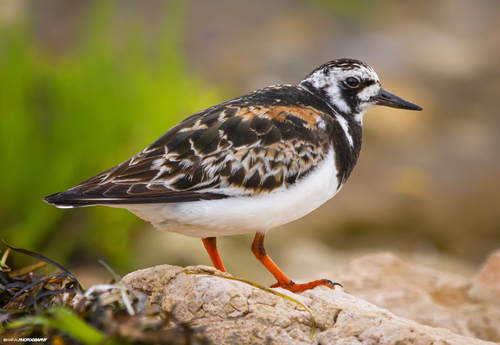 Voltapietre
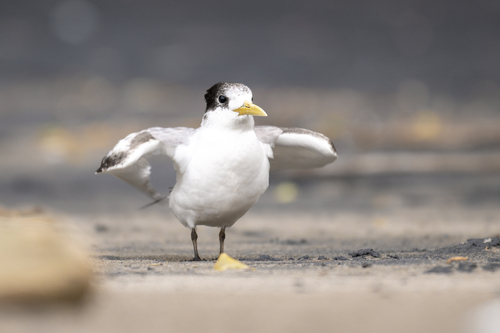 Great Crested Tern
In breve
Il segno distintivo più affidabile per separare il Voltapietre dal Great Crested Tern è la struttura generale e il becco: i voltapietre sono uccelli costieri tozzi e con gambe corte, con un becco corto, scuro e leggermente ricurvo, mentre i Great Crested Terns sono molto più grandi, con ali lunghe e sono uccelli marini con un becco giallo lungo e dritto e una cresta nera e ispida. In volo, i voltapietre giovani e non in riproduzione mostrano una banda bianca audace sulle ali e una parte bassa e un sopracciglio bianco, mentre i giovani terns hanno un'ala superiore variegata con barre scure e mancano del motivo arlecchino del voltapietre. I voltapietre vengono spesso visti correre su spiagge rocciose o sabbiose, girando detriti, mentre i terns volano di solito sopra l'acqua o si posano su spiagge e isole. Se vedi gambe arancioni, è un voltapietre; se vedi un lungo becco giallo e una cresta nera, è un tern.
Consigli di identificazione
- Bill shape and color: Il voltapietre ha un becco corto, scuro e leggermente ricurvo; il Great Crested Tern ha un becco lungo, dritto e giallo (con una sfumatura verdognola). Questo è visibile in tutte le età e stagioni.
- Leg color: Le gambe del voltapietre sono di un arancione brillante (tutte le età, tutte le stagioni); le gambe del tern sono nere. Se vedi gambe arancioni, è un voltapietre.
- Overall structure: Il voltapietre è tozzo, con gambe corte e compatto; il tern è con ali lunghe, coda lunga e snodato, con un collo e un becco molto più lunghi. In volo, i terns hanno ali appuntite e un volo galleggiante, mentre i voltapietre hanno ali corte e larghe e un volo diretto e rapido.
- Crest: L'adulto Great Crested Tern ha una cresta nera e ispida nella parte posteriore della testa (in riproduzione e non in riproduzione); il voltapietre non mostra mai una cresta.
- Plumage pattern (adults): Il voltapietre in riproduzione ha un motivo arlecchino (nero, bianco, marrone-rossiccio, con una banda nera sul petto e parti inferiori bianche); il tern è grigio sopra, bianco sotto, con una fronte bianca e una cresta nera. Il voltapietre non in riproduzione è più opaco ma ha ancora un motivo; il tern diventa più chiaro con una corona bianca e una cresta pepata.
- Juvenile/immature plumage: I giovani voltapietre sono squamosi sopra, con una testa chiara e una banda bianca audace sulle ali in volo; i giovani terns hanno ali superiori barrate e una corona bianca, ma nessuna banda audace. Se vedi un uccello squamoso con una testa chiara e una banda bianca sulle ali, è un voltapietre.
- Flight pattern: Il tern ha ali lunghe e appuntite e una coda profondamente biforcuta, dando un volo galleggiante e planato; il voltapietre ha ali corte e larghe e una coda corta, con un volo rapido e diretto.
- White in wing and tail (in flight): Il voltapietre mostra una banda bianca audace sulle ali, una parte bassa bianca, un sopracciglio e una coda con bande scure; il tern manca di questi, mostrando ali superiori grigie uniformi con alcune barre scure nei giovani.
- Habitat and behavior: Il voltapietre è quasi sempre a terra, correndo e girando oggetti; il tern di solito vola sopra l'acqua o si posiziona con altri terns, raramente a terra tranne che nelle colonie.
- Size: Il tern è più di due volte più pesante e molto più lungo in apertura alare; la confusione è più probabile a distanza o con uccelli solitari, ma la dimensione è ovvia se entrambi sono presenti.
- Voice: Il richiamo del voltapietre è un forte rumore; il tern emette richiami forti, simili a quelli di un corvo o di un gabbiano. Se senti un forte 'kerrak', è un tern.
- Sex and seasonal variation: Entrambe le specie hanno poco dimorfismo sessuale; le femmine di voltapietre sono leggermente più opache, ma questo è sottile. I sessi del tern sono identici.
- Pitfalls: Uccelli lontani e solitari su una spiaggia possono confondere per dimensione; controlla sempre il becco, il colore delle gambe e la forma del corpo. I terns immaturi possono sembrare motivati sopra, ma mancano della banda bianca del voltapietre e delle gambe arancioni.
- Associations: I voltapietre possono mescolarsi con altri piccoli limicoli; i terns sono di solito con altri terns o gabbiani.
- When in doubt: Concentrati sulla lunghezza e il colore del becco, il colore delle gambe e la presenza o assenza di una cresta. Questi sono visibili anche a distanza con i binocoli.
Taglia
Il Voltapietre è un limicolo piccolo e tozzo: 22–24 cm di lunghezza, 50–57 cm di apertura alare, 85–150 g. Il Great Crested Tern è molto più grande e più snodato: 46–49 cm di lunghezza, 125–130 cm di apertura alare, 325–397 g. Il tern è più di due volte la massa e ha un'apertura alare molto più lunga, rendendo improbabile la confusione se visti fianco a fianco. Le lunghe ali appuntite e la lunga coda del tern contrastano con le ali corte e larghe e la corta coda del voltapietre.
Piumaggio
-
Juvenile/immature birds: I giovani Voltapietre hanno una testa marrone chiaro e parti superiori dall'aspetto squamoso a causa delle frange chiare, con una banda bianca audace, una parte bassa bianca, un sopracciglio e una coda in volo. I giovani Great Crested Tern hanno un motivo sulla testa simile agli adulti in inverno (corona bianca, maschera scura), e le ali superiori sono fortemente motivate con grigio, marrone e bianco, mostrando barre scure ma non una singola banda bianca audace; l'ala chiusa appare barrata, non squamosa.
-
Adult non-breeding: I voltapietre sono più opachi, con parti superiori grigio-marrone scuro e una testa scura con poco bianco, ma mostrano ancora la banda bianca e il sopracciglio in volo. I terns in piumaggio non riproduttivo hanno una corona e una fronte bianche, una cresta nera pepata e parti superiori grigie più chiare, ma mantengono sempre il lungo becco giallo e le gambe nere.
-
Adult breeding: I voltapietre sono sorprendentemente motivati con parti superiori marrone-rossiccio, testa e petto bianco e nero, e parti inferiori bianche. I terns hanno una cresta nera lucida e ispida, una fronte bianca e un dorso e ali grigio corazzato. Il becco del tern è sempre giallastro, mai scuro o arancione, e le gambe sono nere, mai arancioni.
Comportamento
I Voltapietre si nutrono correndo lungo la riva, girando pietre, alghe e detriti con il loro becco per trovare invertebrati. Possono scavare, sondare o battere la preda e vengono spesso visti in piccoli gruppi su coste rocciose o sabbiose. I Great Crested Terns sono pescatori aerei, volando sopra l'acqua e tuffandosi per pesci, o riposando in colonie dense su banchi di sabbia, isole o spiagge. I terns raramente camminano o corrono a terra e non vengono quasi mai visti girare oggetti o cercare cibo sulla riva come i voltapietre.
Habitat
I voltapietre si trovano quasi sempre su coste rocciose o sabbiose, pianure di marea e spiagge, spesso vicino alla linea di acqua e tra i detriti. I Great Crested Terns si trovano lungo coste e isole, ma è molto più probabile vederli volare sopra acque aperte, posati su banchi di sabbia o in grandi colonie di riproduzione. Se l'uccello sta cercando attivamente cibo tra le rocce o le alghe, è quasi certamente un voltapietre; se sta volando sopra il mare o posato con altri terns, è un tern.
Voce
Il Voltapietre ha un richiamo staccato e rattling e un richiamo d'allerta chiacchieroso, specialmente nella stagione di riproduzione. Il Great Crested Tern è molto vocale nelle colonie, emettendo un forte e rauco 'kerrak', un 'korrkorrkorr' nel nido e un duro 'wep wep' in volo. I richiami del tern sono molto più forti e simili a quelli di un gabbiano, mentre quelli del voltapietre sono più acuti e rattling.