

Vuelvepiedras Común vs Charrán Piquigualdo
Arenaria interpres frente a Thalasseus bergii
Juega un quiz con Vuelvepiedras Común y Charrán Piquigualdo
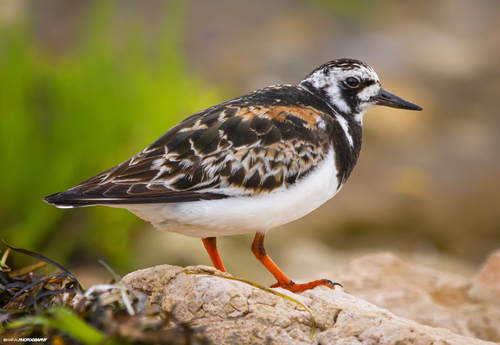 Vuelvepiedras Común
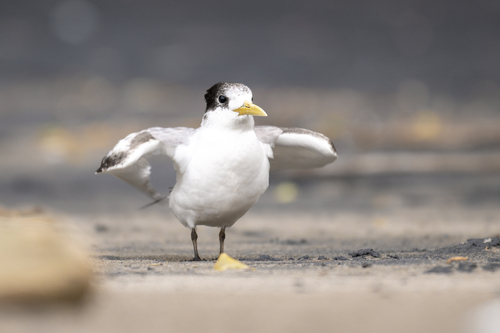 Charrán Piquigualdo
En breve
La marca de campo más confiable para separar la Vuelvepiedras Común del Charrán Piquigualdo es la estructura general y el pico: las vuelvepiedras son aves playeras robustas y de patas cortas con un pico corto, oscuro y ligeramente curvado hacia arriba, mientras que los Charranes Piquigualdos son mucho más grandes, con alas largas y son aves marinas con un pico amarillo largo y recto y una cresta negra desaliñada. En vuelo, las vuelvepiedras juveniles y no reproductoras muestran una banda alar blanca audaz y una parte baja y rabadilla blancas, mientras que los charranes juveniles tienen un ala superior variegada con bandas oscuras y carecen del patrón arlequín de la vuelvepiedras. Las vuelvepiedras a menudo se ven corriendo en costas rocosas o arenosas, volteando escombros, mientras que los charranes suelen volar sobre el agua o posarse en playas e islas. Si ves patas naranjas, es una vuelvepiedras; si ves un pico amarillo largo y una cresta negra, es un charrán.
Consejos de identificación
- Forma y color del pico: La vuelvepiedras tiene un pico corto, oscuro y ligeramente curvado hacia arriba; el Charrán Piquigualdo tiene un pico largo, recto y amarillo (con un tinte verdoso). Esto es visible en todas las edades y estaciones.
- Color de las patas: Las patas de la vuelvepiedras son de un brillante color naranja (todas las edades, todas las estaciones); las patas del charrán son negras. Si ves patas naranjas, es una vuelvepiedras.
- Estructura general: La vuelvepiedras es robusta, de patas cortas y compacta; el charrán es de alas largas, cola larga y esbelto, con un cuello y pico mucho más largos. En vuelo, los charranes tienen alas puntiagudas y un vuelo ligero, mientras que las vuelvepiedras tienen alas cortas y anchas y un vuelo directo y rápido.
- Cresta: El Charrán Piquigualdo adulto tiene una cresta negra desaliñada en la parte posterior de la cabeza (reproductora y no reproductora); la vuelvepiedras nunca muestra una cresta.
- Patrón del plumaje (adultos): La vuelvepiedras reproductora tiene un patrón arlequín (negro, blanco, marrón rojizo, con una banda negra en el pecho y partes inferiores blancas); el charrán es gris arriba, blanco abajo, con una frente blanca y cresta negra. La vuelvepiedras no reproductora es más apagada pero aún tiene patrón; el charrán se vuelve más pálido con una corona blanca y cresta moteada.
- Plumaje juvenil/inmaduro: Las vuelvepiedras juveniles son escamosas arriba, con una cabeza pálida y una banda alar blanca audaz en vuelo; los juveniles de charrán tienen alas superiores con bandas y una corona blanca, pero no tienen una banda alar audaz. Si ves un ave escamosa con cabeza pálida y una banda alar blanca, es una vuelvepiedras.
- Patrón de vuelo: El charrán tiene alas largas y puntiagudas y una cola profundamente ahorquillada, lo que le da un vuelo ligero y planeador; la vuelvepiedras tiene alas cortas y anchas y una cola corta, con un vuelo rápido y directo.
- Blanco en el ala y la cola (en vuelo): La vuelvepiedras muestra una banda alar blanca audaz, parte baja blanca, rabadilla y cola con bandas oscuras; el charrán carece de estas, mostrando alas superiores grises uniformes con algunas bandas oscuras en juveniles.
- Hábitat y comportamiento: La vuelvepiedras está casi siempre en el suelo, corriendo y volteando objetos; el charrán suele volar sobre el agua o posarse con otros charranes, rara vez en el suelo excepto en colonias.
- Tamaño: El charrán es más de dos veces más pesado y mucho más largo en envergadura; la confusión es más probable a distancia o con aves solitarias, pero el tamaño es obvio si ambos están presentes.
- Voz: El llamado de la vuelvepiedras es un fuerte traqueteo; el charrán emite llamados fuertes, similares a los de un cuervo o gaviota. Si oyes un fuerte 'kerrak', es un charrán.
- Variación sexual y estacional: Ambas especies tienen poco dimorfismo sexual; las hembras de vuelvepiedras son ligeramente más apagadas, pero esto es sutil. Los sexos del charrán son idénticos.
- Trampas: Aves distantes y solitarias en una playa pueden confundir por tamaño; siempre verifica el pico, el color de las patas y la forma del cuerpo. Los charranes inmaduros pueden parecer tener patrón arriba, pero carecen de la banda alar blanca de la vuelvepiedras y de patas naranjas.
- Asociaciones: Las vuelvepiedras pueden mezclarse con otros limícolas pequeños; los charranes suelen estar con otros charranes o gaviotas.
- Cuando tengas dudas: Concéntrate en la longitud y color del pico, el color de las patas y la presencia o ausencia de una cresta. Estos son visibles incluso a distancia con binoculares.
Tamaño
La Vuelvepiedras Común es un limícola pequeño y robusto: 22–24 cm de largo, 50–57 cm de envergadura, 85–150 g. El Charrán Piquigualdo es mucho más grande y esbelto: 46–49 cm de largo, 125–130 cm de envergadura, 325–397 g. El charrán es más de dos veces la masa y tiene una envergadura mucho más larga, lo que hace que la confusión sea poco probable si se ven uno al lado del otro. Las largas y puntiagudas alas del charrán y su larga cola contrastan con las alas cortas y anchas de la vuelvepiedras y su cola corta.
Plumaje
-
Aves juveniles/inmaduras: Las vuelvepiedras juveniles tienen una cabeza marrón pálido y partes superiores con aspecto escamoso debido a los bordes pálidos, con una banda alar blanca audaz, parte baja blanca, rabadilla y cola en vuelo. Los juveniles del Charrán Piquigualdo tienen un patrón de cabeza como los adultos de invierno (corona blanca, máscara oscura), y las alas superiores están fuertemente marcadas con gris, marrón y blanco, mostrando bandas oscuras pero no una sola banda alar audaz; el ala cerrada parece con bandas, no escamosa.
-
Adulto no reproductor: Las vuelvepiedras son más apagadas, con partes superiores de un gris marrón oscuro y una cabeza oscura con poco blanco, pero aún muestran la banda alar blanca y la rabadilla en vuelo. Los charranes en plumaje no reproductor tienen una corona y frente blancas, cresta negra moteada y partes superiores grises más pálidas, pero siempre retienen el pico amarillo largo y las patas negras.
-
Adulto reproductor: Las vuelvepiedras tienen un patrón notablemente llamativo con partes superiores marrón rojizo, cabeza y pecho en blanco y negro, y partes inferiores blancas. Los charranes tienen una cresta negra brillante y desaliñada, frente blanca y espalda y alas de un gris acorazado. El pico del charrán es siempre amarillento, nunca oscuro o naranja, y las patas son negras, nunca naranjas.
Comportamiento
Las Vuelvepiedras Comunes buscan alimento corriendo a lo largo de la costa, volteando piedras, algas y escombros con su pico para encontrar invertebrados. Pueden cavar, sondear o golpear a su presa, y a menudo se ven en pequeños grupos en costas rocosas o arenosas. Los Charranes Piquigualdos son pescadores aéreos, volando sobre el agua y zambulléndose para pescar, o descansando en densas colonias en bancos de arena, islas o playas. Los charranes rara vez caminan o corren en el suelo y casi nunca se ven volteando objetos o buscando alimento en la costa como las vuelvepiedras.
Hábitat
Las vuelvepiedras se encuentran casi siempre en costas rocosas o arenosas, llanuras intermareales y playas, a menudo cerca de la línea de agua y entre escombros. Los Charranes Piquigualdos se encuentran a lo largo de costas e islas, pero es mucho más probable verlos volando sobre aguas abiertas, posados en bancos de arena o en grandes colonias reproductoras. Si el ave está buscando activamente entre rocas o algas, es casi seguro que es una vuelvepiedras; si está volando sobre el mar o posada con otros charranes, es un charrán.
Voz
La Vuelvepiedras Común tiene un llamado de traqueteo estaccato y un llamado de alarma parloteante, especialmente en la temporada de reproducción. El Charrán Piquigualdo es muy vocal en colonias, emitiendo un fuerte y ruidoso 'kerrak', un 'korrkorrkorr' en el nido, y un fuerte 'wep wep' en vuelo. Los llamados del charrán son mucho más fuertes y similares a los de una gaviota, mientras que los de la vuelvepiedras son más agudos y traqueteantes.
Vuelvepiedras Común · Charrán Piquigualdo · Mis aves difíciles