

Tordo golarossa vs Indochinese Blue Flycatcher
Turdus ruficollis contro Cyornis sumatrensis
Fai un quiz con Tordo golarossa e Indochinese Blue Flycatcher
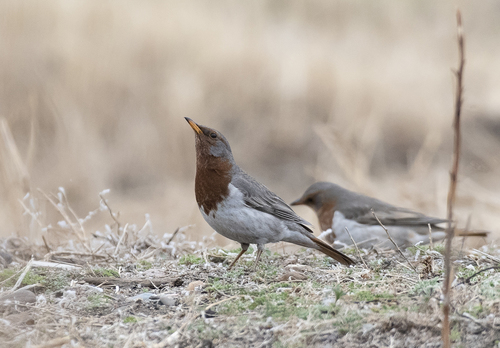 Tordo golarossa
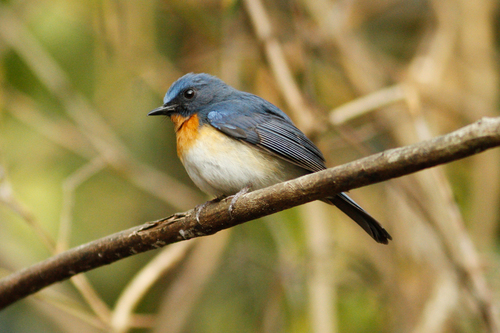 Indochinese Blue Flycatcher
In breve
Il segno distintivo più affidabile per separare il Tordo golarossa dall'Indochinese Blue Flycatcher è la struttura generale e il piumaggio: il Tordo golarossa è un grande tordo grigio semplice con ali inferiori rossastre e, nei maschi adulti, una distintiva gola rossa, mentre l'Indochinese Blue Flycatcher è un uccello molto più piccolo e compatto con parti superiori blu e arancione sul petto. I Tordi golarossa immaturi e femminili non hanno la gola rossa ma mostrano parti inferiori striate di nero, mai blu. In volo, la dimensione del tordo e le ali inferiori rossastre contrastano nettamente con la silhouette molto più piccola e delicata del flycatcher e l'assenza di toni rufous. Se vedi un grande uccello con dorso semplice e toni rossastri nelle ali o nella gola, è il tordo; un piccolo uccello blu e arancione è il flycatcher.
Consigli di identificazione
- Size and Structure: Il Tordo golarossa è molto più grande e massiccio dell'Indochinese Blue Flycatcher. Se l'uccello appare delle dimensioni di un tordo, non è il flycatcher.
- Bill Shape: Il tordo ha un becco forte e dritto; il becco del flycatcher è più fine e delicato, adatto per catturare insetti.
- Tail Length and Shape: Il tordo ha una coda più lunga e squadrata; la coda del flycatcher è più corta e può apparire leggermente arrotondata.
- Adult Male Plumage: Cerca una gola rossa nel maschio adulto del Tordo golarossa—questo non è mai presente nel flycatcher.
- Female/Immature Plumage: Le femmine e i tordi immaturi non hanno la gola rossa ma mostrano parti inferiori striate di nero e parti superiori grigie semplici; i flycatcher non mostrano mai questa combinazione.
- Underwing Color in Flight: Il Tordo golarossa mostra ali inferiori rossastre, specialmente visibili in volo o quando l'uccello sbatte le ali; l'ala inferiore del flycatcher non è rossastra.
- Upperparts Color: I tordi sono grigi semplici sopra; i flycatcher (soprattutto i maschi) sono blu sopra, con femmine/immaturi che mostrano almeno alcune tonalità blu o bluastro-grigie.
- Breast Color: I flycatcher hanno arancione sul petto (soprattutto i maschi), mai visto nel tordo. I tordi hanno parti inferiori chiare o striate.
- Behavior: I tordi spesso camminano o saltellano a terra; i flycatcher catturano insetti da posatoi e sono più irrequieti.
- Habitat: Se visti in foreste dense e umide, è più probabile che si tratti di un flycatcher; gli habitat di bosco aperto o di margine favoriscono il tordo.
- Posture: I tordi stanno eretti e all'erta; i flycatcher sono più orizzontali, spesso sbattendo coda e ali.
- Flight Style: I tordi hanno un volo forte e diretto; i flycatcher sono più svolazzanti e agili.
- Context: Il Tordo golarossa è un raro vagrante in Europa occidentale—controlla attentamente qualsiasi registrazione lì.
- No Blue or Orange in Thrush: Se vedi parti superiori blu o arancione sul petto, escludi il Tordo golarossa.
- No Red Throat in Flycatcher: Se vedi una gola rossa, non è il flycatcher, indipendentemente dall'età o dal sesso.
Taglia
Il Tordo golarossa è un grande tordo, sostanzialmente più grande e massiccio dell'Indochinese Blue Flycatcher. Il tordo ha un corpo robusto, una coda più lunga e un becco forte e dritto tipico dei tordi del genere Turdus. Al contrario, l'Indochinese Blue Flycatcher è molto più piccolo, con una struttura compatta simile a quella dei flycatcher, una coda più corta e un becco più fine. Anche a distanza, la differenza di dimensioni è sorprendente: il tordo è più vicino a un Merlo per dimensioni, mentre il flycatcher è più simile a un Pettirosso o addirittura più piccolo.
Piumaggio
Per tutte le età, il Tordo golarossa mostra un dorso grigio semplice e ali inferiori rossastre, visibili in volo o quando l'uccello sbatte le ali. I maschi adulti hanno una gola rossa diagnostica; le femmine e gli immaturi non hanno questa ma hanno parti inferiori striate di nero, mai blu o arancione. L'Indochinese Blue Flycatcher, indipendentemente dall'età o dal sesso, non mostra mai parti superiori grigie o ali inferiori rufous. Invece, i maschi hanno parti superiori blu e arancione sul petto, mentre le femmine e gli immaturi sono più opachi ma mantengono alcune sfumature blu e arancioni. Non c'è sovrapposizione nella presenza di blu o arancione sulle parti superiori o sul petto tra le due specie. L'ala inferiore del tordo è rossastra, un segno distintivo in volo assente nel flycatcher.
Comportamento
Il Tordo golarossa di solito cerca cibo a terra o in arbusti bassi, spesso saltellando e muovendosi con la postura eretta e allerta di un tordo del genere Turdus. Può posarsi in aree aperte o su rami esposti. L'Indochinese Blue Flycatcher è più attivo e agile, spesso catturando insetti da posatoi bassi, sbattendo le ali e la coda, e comportandosi generalmente con i rapidi movimenti tipici dei flycatcher. È più probabile vedere il tordo camminare o rimanere fermo; il flycatcher è irrequieto e si sposta frequentemente tra i posatoi.
Habitat
Il Tordo golarossa nidifica in boschi aperti e margini forestali della Siberia orientale e del nord Asia, svernando nella Cina occidentale, in Myanmar e nel nord-est dell'India; è un raro vagrante in Europa occidentale. L'Indochinese Blue Flycatcher si trova in habitat forestali dal sud del Myanmar e dalla Penisola Malese all'Indocina e al nord-est di Sumatra, spesso in foreste più dense e umide o in crescita secondaria. I loro areali si sovrappongono solo nelle aree di svernamento, e le preferenze di habitat differiscono: i tordi preferiscono habitat aperti o di margine, i flycatcher foreste più dense o cespugli.
Tordo golarossa · Indochinese Blue Flycatcher · I miei uccelli difficili