

Red-throated Sunbird vs Copper-throated Sunbird
Anthreptes rhodolaemus contro Leptocoma calcostetha
Fai un quiz con Red-throated Sunbird e Copper-throated Sunbird
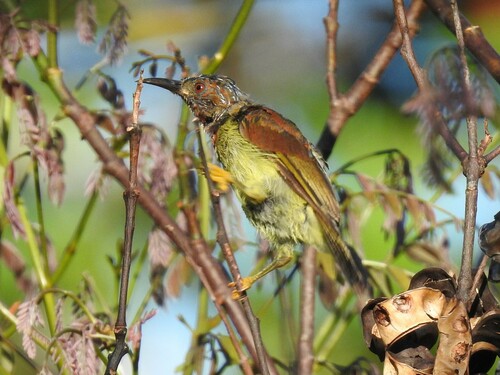 Red-throated Sunbird
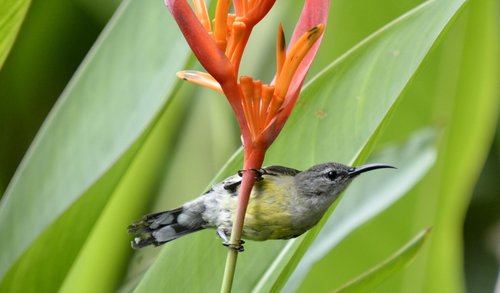 Copper-throated Sunbird
In breve
Il modo più affidabile per separare il Red-throated Sunbird dal Copper-throated Sunbird è concentrarsi sul colore della gola dei maschi adulti: il Red-throated mostra una gola rossa, mentre il Copper-throated ha una gola di rame metallico bordata di blu-porpora. Per le femmine e gli immaturi, cerca l'anello oculare bianco incompleto (presente nella femmina Copper-throated ma non in quella Red-throated) e il colore delle parti inferiori. I giovani Copper-throated Sunbirds hanno una gola gialla, che non si verifica mai nel Red-throated. Entrambe le specie condividono una forma di sunbird generalmente simile e un comportamento alimentare, ma prestare attenzione ai dettagli della gola e degli occhi è fondamentale, specialmente al di fuori del piumaggio dei maschi adulti.
Consigli di identificazione
- Colore della gola dei maschi adulti: I maschi del Red-throated Sunbird hanno una gola rossa; i maschi del Copper-throated mostrano una gola di rame metallico bordata di blu-porpora. Questo è il segno più semplice per i maschi adulti.
- Parti superiori dei maschi: I maschi Copper-throated hanno un verde scintillante sulla testa, sulle spalle, sulla parte superiore della schiena e sul coda, in contrasto con il piumaggio altrimenti nero. I maschi Red-throated mancano di questa combinazione.
- Anello oculare delle femmine: Le femmine di Copper-throated Sunbird hanno un anello oculare bianco incompleto, che è assente nelle femmine di Red-throated. Questo è un segno chiave quando si osserva la testa in buona luce.
- Gola e parti inferiori delle femmine: Le femmine di Copper-throated Sunbird hanno una gola bianco-grigia e una testa grigia, con parti inferiori giallo-oliva e parti superiori grigio-olive. Le femmine di Red-throated non mostrano questo schema.
- Colore della gola dei giovani: I giovani Copper-throated Sunbirds hanno una gola gialla con squame scure, mai viste nel Red-throated. Qualsiasi sunbird con una gola gialla in questa regione è probabilmente un giovane Copper-throated.
- Colore del becco e delle gambe: Entrambe le specie hanno becchi neri curvi verso il basso e gambe nere, quindi queste caratteristiche non aiutano nella separazione.
- Ciuffi pettorali nascosti: Il Copper-throated Sunbird ha ciuffi pettorali gialli nascosti sotto l'ala, ma questi sono raramente visibili sul campo e non sono un segno pratico.
- Colore degli occhi: Entrambe le specie hanno occhi neri, ma solo le femmine Copper-throated mostrano l'anello oculare bianco incompleto.
- Dimensioni e struttura: Entrambi sono piccoli sunbirds con proporzioni simili; la dimensione non è un segno affidabile.
- Comportamento di volo e alimentazione: Entrambe le specie si comportano in modo simile, nutrendosi di nettare e piccoli invertebrati, e non differiscono in jizz o stile di volo.
- Sovrapposizione dell'habitat: Entrambi possono essere trovati in foreste di pianura e regioni sovrapposte nel sud-est asiatico, quindi l'habitat da solo non li separa.
- Variazione stagionale: Non sono descritte differenze di piumaggio stagionali che aiutino nella separazione; concentrati sui segni legati al sesso e all'età.
- Trappole: I giovani Copper-throated Sunbirds possono essere confusi con i Red-throated, ma la gola gialla nei giovani e l'anello oculare bianco incompleto nelle femmine sono diagnostici per il Copper-throated.
- Contesto: Se vedi un sunbird con una gola rossa, è un Red-throated; se la gola è rame con un bordo blu-porpora (maschio), o se l'uccello ha una gola giovanile gialla o un anello oculare bianco incompleto (femmina/immaturo), è un Copper-throated.
- Quando i segni falliscono: In scarsa luce o visioni distanti, concentrati sulla gola e sull'anello oculare il prima possibile. Se nessuno dei due è visibile, l'identificazione potrebbe non essere possibile senza migliori visioni.
Taglia
Il Red-throated Sunbird è leggermente più pesante (massa corporea ~13.1g [wikidata]), ma entrambe le specie sono piccoli sunbirds e si sovrappongono in dimensioni complessive. La lunghezza del Copper-throated Sunbird è di 12.2–13 cm, con un'apertura alare di circa 57.5 mm e una lunghezza della coda di circa 45.5 mm [wikipedia]. Sul campo, la differenza di dimensione è sottile e non è un punto di separazione affidabile.
Piumaggio
- Maschi adulti: I maschi del Red-throated Sunbird hanno una gola rossa distintiva, mentre i maschi del Copper-throated mostrano una gola di rame metallico con un bordo blu-porpora che si estende al petto. I maschi Copper-throated sono altrimenti per lo più neri con verde scintillante sulla testa, sulle spalle, sulla parte superiore della schiena e sul coda.
- Femmine adulte: Le femmine di Copper-throated Sunbird hanno un anello oculare bianco incompleto, parti inferiori giallo-oliva e parti superiori grigio-olive con una gola bianco-grigia e una testa grigia. Le femmine di Red-throated Sunbird mancano dell'anello oculare bianco e hanno una colorazione delle parti inferiori diversa (dettagli non specificati, ma non corrispondenti allo schema del Copper-throated).
- Giovani: I giovani Copper-throated Sunbirds assomigliano alle femmine ma hanno una gola gialla con alcune squame scure—un segno unico non trovato nel Red-throated. Il piumaggio del giovane Red-throated Sunbird non è descritto nelle note, ma l'assenza di una gola gialla è diagnostica.
- Tratti condivisi: Entrambi hanno becchi neri curvi verso il basso e gambe nere. Il Copper-throated Sunbird ha ciuffi pettorali gialli nascosti (non visibili a meno che l'ala non venga sollevata).
Comportamento
Entrambe le specie si nutrono di nettare e piccoli invertebrati, utilizzando i loro becchi curvi verso il basso per sondare i fiori. Il loro comportamento di alimentazione e volo è tipico per i sunbirds e non è affidabilmente diverso sul campo.
Habitat
Il Red-throated Sunbird si trova in foreste umide di pianura subtropicali o tropicali in Brunei, Indonesia, Malesia, Myanmar, Filippine, Singapore e Thailandia [wikipedia]. L'habitat del Copper-throated Sunbird non è specificato in dettaglio qui, ma entrambe si trovano in regioni simili del sud-est asiatico e possono sovrapporsi in gamma e habitat, specialmente in foreste di pianura e habitat di margine.
Red-throated Sunbird · Copper-throated Sunbird · I miei uccelli difficili