

Suimanga Gorjirrojo vs Suimanga de Macklot
Anthreptes rhodolaemus frente a Leptocoma calcostetha
Juega un quiz con Suimanga Gorjirrojo y Suimanga de Macklot
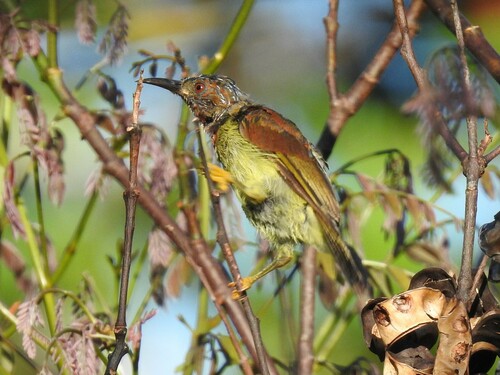 Suimanga Gorjirrojo
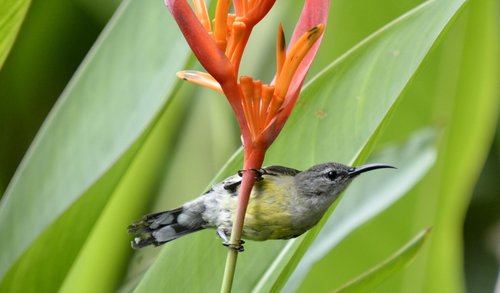 Suimanga de Macklot
En breve
La forma más confiable de separar la Suimanga Gorjirrojo de la Suimanga de Macklot es enfocándose en el color de la garganta del macho adulto: la Gorjirrojo muestra una garganta roja, mientras que la de Macklot tiene una garganta de cobre metálico bordeada de azul purpúreo. Para las hembras y los inmaduros, busque el anillo ocular blanco incompleto (presente en la hembra de Macklot pero no en la Gorjirrojo) y el color de las partes inferiores. Los juveniles de la Suimanga de Macklot tienen una garganta amarilla, que nunca ocurre en la Gorjirrojo. Ambas especies comparten una forma de suimanga y un comportamiento alimenticio generalmente similar, pero la atención cuidadosa a los detalles de la garganta y los ojos es clave, especialmente fuera del plumaje del macho adulto.
Consejos de identificación
- Color de la garganta del macho adulto: Los machos de la Suimanga Gorjirrojo tienen una garganta roja; los machos de la Suimanga de Macklot muestran una garganta de cobre metálico bordeada de azul purpúreo. Esta es la marca de campo más sencilla para los machos adultos.
- Partes superiores del macho: Los machos de la Suimanga de Macklot tienen un brillo verde en la cabeza, los hombros, la parte superior de la espalda y el rabadilla, contrastando con el plumaje negro en el resto. Los machos de la Gorjirrojo carecen de esta combinación.
- Anillo ocular de la hembra: Las hembras de la Suimanga de Macklot tienen un anillo ocular blanco incompleto, que está ausente en las hembras de la Gorjirrojo. Esta es una marca clave al observar la cabeza con buena luz.
- Garganta y partes inferiores de la hembra: Las hembras de la Suimanga de Macklot tienen una garganta grisácea-blanca y cabeza gris, con partes inferiores de color amarillo-oliva y partes superiores grisáceo-oliva. Las hembras de la Gorjirrojo no muestran este patrón.
- Color de la garganta del juvenil: Los juveniles de la Suimanga de Macklot tienen una garganta amarilla con escamas oscuras, nunca se ve en la Gorjirrojo. Cualquier suimanga con una garganta amarilla en esta región es probablemente un juvenil de Macklot.
- Color del pico y las patas: Ambas especies tienen picos negros y curvados hacia abajo y patas negras, por lo que estas características no ayudan en la separación.
- Mechones pectorales ocultos: La Suimanga de Macklot tiene mechones pectorales amarillos ocultos bajo el ala, pero estos rara vez son visibles en el campo y no son una marca de campo práctica.
- Color de los ojos: Ambas especies tienen ojos negros, pero solo las hembras de la Suimanga de Macklot muestran el anillo ocular blanco incompleto.
- Tamaño y estructura: Ambas son suimangas pequeñas con proporciones similares; el tamaño no es una marca de campo confiable.
- Comportamiento de vuelo y forrajeo: Ambas especies se comportan de manera similar, alimentándose de néctar y pequeños invertebrados, y no difieren en jizz o estilo de vuelo.
- Superposición de hábitats: Ambas se pueden encontrar en bosques de tierras bajas y regiones superpuestas en el sudeste asiático, por lo que el hábitat por sí solo no las separa.
- Variación estacional: No se describen diferencias de plumaje estacional que ayuden a la separación; enfóquese en las marcas relacionadas con el sexo y la edad.
- Trampas: Los inmaduros de la Suimanga de Macklot pueden confundirse con la Gorjirrojo, pero la garganta amarilla en los juveniles y el anillo ocular blanco incompleto en las hembras son diagnósticos para la de Macklot.
- Contexto: Si ve una suimanga con una garganta roja, es la Gorjirrojo; si la garganta es cobriza con un borde azul purpúreo (macho), o si el ave tiene una garganta juvenil amarilla o un anillo ocular blanco incompleto (hembra/inmaduro), es la de Macklot.
- Cuando las marcas fallan: En condiciones de poca luz o vistas distantes, enfóquese en la garganta y el anillo ocular tan pronto como sea posible. Si ninguno es visible, la identificación puede no ser posible sin mejores vistas.
Tamaño
La Suimanga Gorjirrojo es ligeramente más pesada (masa corporal ~13.1g [wikidata]), pero ambas especies son suimangas pequeñas y se superponen en tamaño general. La longitud de la Suimanga de Macklot es de 12.2–13 cm, con una envergadura de alrededor de 57.5 mm y una longitud de cola de aproximadamente 45.5 mm [wikipedia]. En el campo, la diferencia de tamaño es sutil y no es un punto de separación confiable.
Plumaje
- Machos adultos: Los machos de la Suimanga Gorjirrojo tienen una garganta roja distintiva, mientras que los machos de la Suimanga de Macklot muestran una garganta de cobre metálico con un borde azul purpúreo que se extiende hasta el pecho. Los machos de Macklot son en su mayoría negros con un brillo verde en la cabeza, los hombros, la parte superior de la espalda y el rabadilla.
- Hembras adultas: Las hembras de la Suimanga de Macklot tienen un anillo ocular blanco incompleto, partes inferiores de color amarillo-oliva y partes superiores grisáceo-oliva con una garganta grisácea-blanca y cabeza gris. Las hembras de la Suimanga Gorjirrojo carecen del anillo ocular blanco y tienen una coloración diferente en las partes inferiores (detalles no especificados, pero no coinciden con el patrón de la de Macklot).
- Juveniles: Los juveniles de la Suimanga de Macklot se asemejan a las hembras pero tienen una garganta amarilla con algunas escamas oscuras, una marca única que no se encuentra en la Gorjirrojo. El plumaje del juvenil de la Suimanga Gorjirrojo no se describe en las notas, pero la ausencia de una garganta amarilla es diagnóstica.
- Rasgos compartidos: Ambas tienen picos negros curvados hacia abajo y patas negras. La Suimanga de Macklot tiene mechones pectorales amarillos ocultos (no visibles a menos que se levante el ala).
Comportamiento
Ambas especies se alimentan de néctar y pequeños invertebrados, utilizando sus picos curvados hacia abajo para sondear flores. Su comportamiento de forrajeo y vuelo es típico de las suimangas y no es confiablemente diferente en el campo.
Hábitat
La Suimanga Gorjirrojo se encuentra en bosques húmedos de tierras bajas subtropicales o tropicales en Brunei, Indonesia, Malasia, Myanmar, Filipinas, Singapur y Tailandia [wikipedia]. El hábitat de la Suimanga de Macklot no se especifica en detalle aquí, pero ambas ocurren en regiones similares del sudeste asiático y pueden superponerse en rango y hábitat, especialmente en bosques de tierras bajas y hábitats de borde.
Suimanga Gorjirrojo · Suimanga de Macklot · Mis aves difíciles