

Marangone minore vs Marangone dal ciuffo
Microcarbo pygmaeus contro Gulosus aristotelis
Fai un quiz con Marangone minore e Marangone dal ciuffo
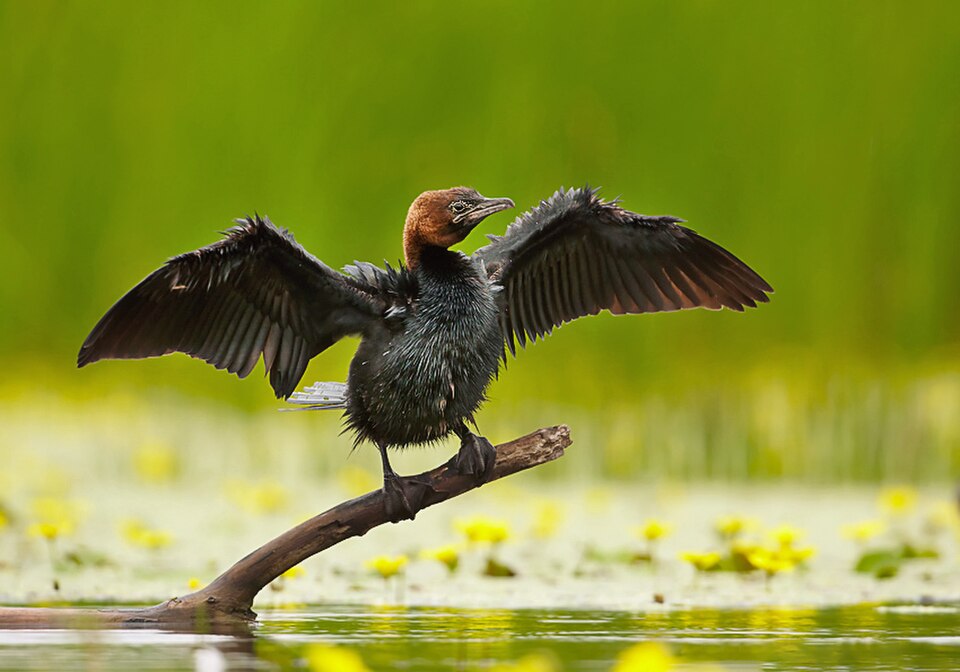 Marangone minore
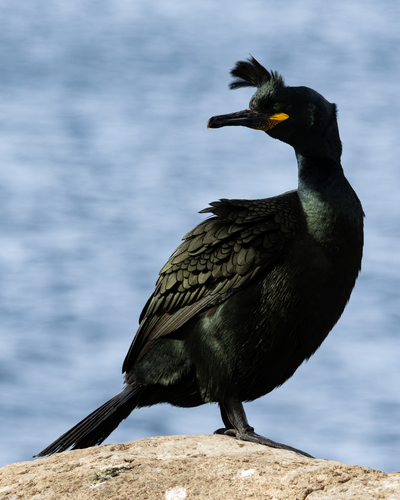 Marangone dal ciuffo
In breve
Il segno distintivo più affidabile tra il Marangone minore e il Marangone dal ciuffo è la struttura complessiva: il Marangone minore è nettamente più piccolo e compatto, con una coda notevolmente più lunga e un becco più corto e tozzo, mentre il Marangone dal ciuffo è più grande, più snello e mostra un becco più lungo e sottile e una lucentezza verdognola negli adulti. Gli uccelli giovani e immaturi possono essere particolarmente confusi, ma la coda proporzionalmente lunga del Marangone minore e l'assenza di una macchia gialla sulla gola sono elementi chiave. In volo, il Marangone minore appare con collo corto e coda lunga, mentre il Marangone dal ciuffo appare più elegante con un becco più appuntito. L'habitat può aiutare: il Marangone minore si trova all'interno su laghi e fiumi, mentre il Marangone dal ciuffo è strettamente costiero.
Consigli di identificazione
- Dimensioni e struttura: Il Marangone minore è nettamente più piccolo, più compatto e ha una coda proporzionalmente più lunga e un collo più corto rispetto al Marangone dal ciuffo. Questo è più evidente quando è posato o in volo.
- Forma del becco: Il Marangone minore ha un becco corto e tozzo; il Marangone dal ciuffo ha un becco più lungo, sottile e appuntito. La forma del becco è un segno distintivo affidabile in tutte le età.
- Lunghezza della coda: La coda del Marangone minore è notevolmente più lunga e a forma di cuneo, spesso si estende ben oltre le ali ripiegate quando è posato. La coda del Marangone dal ciuffo è più corta e più squadrata.
- Macchia sulla gola: Il Marangone dal ciuffo mostra sempre una macchia gialla sulla gola alla base del becco, anche nei giovani. Il Marangone minore non ha alcun giallo sul viso o sulla gola in tutte le età.
- Lucentezza del piumaggio: I Marangoni dal ciuffo adulti hanno una lucentezza verde metallica nel loro piumaggio, specialmente in stagione di riproduzione, a volte chiamati 'cormorano verde'. Il Marangone minore è di un marrone scuro opaco senza lucentezza verdognola.
- Cresta: In stagione di riproduzione, i Marangoni dal ciuffo adulti mostrano una piccola cresta sulla corona. Il Marangone minore non ha mai una cresta.
- Parte inferiore (giovani): I giovani Marangoni dal ciuffo hanno parti inferiori più scure, mentre i giovani Marangoni minori sono più uniformemente marrone-nerastri.
- Comportamento di posarsi: Il Marangone minore spesso si posa su alberi o vegetazione densa vicino all'acqua. Il Marangone dal ciuffo quasi sempre si posa su rocce o scogliere, raramente sugli alberi.
- Habitat: Il Marangone minore si trova all'interno su laghi, paludi e fiumi lenti; il Marangone dal ciuffo è strettamente costiero, su coste rocciose e scogliere. Gli avvistamenti all'interno sono quasi sempre di Marangone minore.
- Volo: Il Marangone minore in volo appare con collo corto, coda lunga e compatto. Il Marangone dal ciuffo è più lungo di collo, più snello e mostra un becco più appuntito e una macchia gialla sulla gola se visto bene.
- Associazioni: Il Marangone minore è spesso visto con aironi, garzette e spatole in habitat d'acqua dolce. Il Marangone dal ciuffo è solitamente con altri uccelli marini sulla costa.
- Contesto stagionale: Se visto in inverno su una scogliera costiera o su un'isola rocciosa, entrambi sono possibili, ma l'habitat e la struttura rimangono affidabili. All'interno in qualsiasi stagione, il Marangone dal ciuffo è estremamente improbabile.
- Confusione con il Cormorano: Entrambe le specie sono più piccole e più leggere del Cormorano, ma il Marangone dal ciuffo è più snello e ha un becco più sottile rispetto sia al Cormorano che al Marangone minore.
- Comportamento di gruppo: Il Marangone minore spesso caccia e si posa in gruppi, a volte con altri uccelli acquatici. Il Marangone dal ciuffo è più solitario o in piccoli gruppi su rocce.
- Trappole: I Marangoni dal ciuffo immaturi possono apparire opachi e scuri, ma la macchia gialla sulla gola e il becco più snello e lungo sono sempre presenti. Il Marangone minore non mostra mai giallo sul viso o un becco lungo e sottile.
Taglia
Il Marangone minore è molto più piccolo e leggero rispetto al Marangone dal ciuffo. Il Marangone minore misura 64–78 cm di lunghezza [wikipedia], mentre il Marangone dal ciuffo è lungo 68–78 cm [wikipedia], ma il Marangone dal ciuffo è più robusto con un'apertura alare più lunga (95–110 cm). Sul campo, il Marangone minore appare nettamente più compatto e meno allungato, con un collo più corto e una massa complessiva più piccola. Il corpo e il collo più lunghi e snelli del Marangone dal ciuffo, e il becco più lungo e sottile, sono evidenti quando i due sono visti fianco a fianco.
Piumaggio
- Giovani/immaturi: Entrambe le specie sono scure nel complesso, ma i giovani Marangoni dal ciuffo hanno parti inferiori più scure, mentre i giovani Marangoni minori mancano della macchia gialla sulla gola e hanno un tono marrone-nerastro più uniforme. Non è notato alcun modello distintivo della parte superiore dell'ala per entrambe le specie nelle fonti, quindi la struttura e il colore delle parti nude sono più utili per i giovani uccelli.
- Adulti: Il Marangone minore è di un marrone scuro opaco nel complesso senza lucentezza verde e non ha alcun giallo sul viso. Gli adulti del Marangone dal ciuffo hanno una lucentezza verde metallica (specialmente nel piumaggio di riproduzione) e una macchia gialla sulla gola in tutte le età. I Marangoni dal ciuffo in riproduzione mostrano anche una piccola cresta, assente nel Marangone minore. Le penne della coda differiscono: la coda del Marangone minore è più lunga e a forma di cuneo, mentre quella del Marangone dal ciuffo è più corta e più squadrata.
- Volo: Il Marangone minore in volo appare con collo corto e coda lunga, senza evidenti macchie chiare o gialle sul viso. Il Marangone dal ciuffo in volo ha un collo più lungo, è più snello e mostra una macchia gialla sulla gola se visto bene.
Comportamento
Il Marangone minore spesso si posa su alberi o vegetazione densa vicino a acque interne, a volte in gruppi, ed è frequentemente visto con aironi e garzette. Caccia in gruppi ed è adattato a zone umide alterate dall'uomo. Il Marangone dal ciuffo è strettamente costiero, quasi sempre visto su coste rocciose, scogliere o in mare, e raramente si posa sugli alberi. I Marangoni dal ciuffo spesso si siedono su rocce o basse scogliere e sono meno probabili da vedere all'interno. Entrambe le specie si tuffano per pesci, ma il Marangone minore è più probabile da vedere in habitat d'acqua dolce e posato sopra l'acqua.
Habitat
L'habitat è un forte separatore: il Marangone minore si trova su laghi interni, fiumi lenti, paludi e a volte campi di riso o aree allagate con alberi e arbusti, evitando regioni montuose, fredde o secche. È raramente costiero tranne in inverno, e in tal caso preferisce estuari o laghi di barriera. Il Marangone dal ciuffo è strettamente una specie marina/costiera, nidificando e svernando su coste rocciose, isole e scogliere marine dell'Europa occidentale e meridionale, dell'Asia sud-occidentale e del nord Africa. Non si trova all'interno. Se vedi un cormorano all'interno, è quasi certamente non un Marangone dal ciuffo.
Marangone minore · Marangone dal ciuffo · I miei uccelli difficili