

Parasitic Weaver vs Parrot-billed Sparrow
Anomalospiza imberbis contro Passer gongonensis
Fai un quiz con Parasitic Weaver e Parrot-billed Sparrow
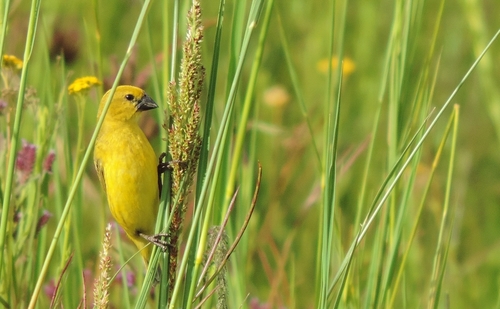 Parasitic Weaver
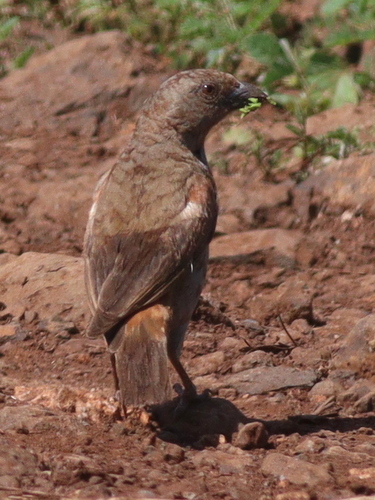 Parrot-billed Sparrow
In breve
Il segno di campo più affidabile tra Parasitic Weaver e Parrot-billed Sparrow è la dimensione: Parasitic Weaver è un uccello piccolo, simile a un fringillide, mentre Parrot-billed Sparrow è molto più grande e massiccio, il più grande passero della sua famiglia. I maschi adulti di Parasitic Weaver sono di un giallo brillante e verde oliva, in netto contrasto con le tonalità più sobrie, grigiastre o brune del passero. Le femmine e gli immaturi possono essere più difficili da distinguere, ma il piumaggio striato color sabbia del tessitore e il viso color sabbia uniforme si differenziano dalla corporatura più pesante e dalle tonalità probabilmente più grigie del passero. Anche la forma del becco è fondamentale: il tessitore ha un becco profondo e conico, mentre il becco del passero è ancora più massiccio e simile a quello di un pappagallo. L'habitat e il comportamento aiutano anche: osserva i movimenti pesanti e simili a quelli di un passero del passero rispetto alle azioni più leggere e simili a quelle di un fringillide del tessitore.
Consigli di identificazione
- Size is the quickest separator: Parasitic Weaver è piccolo (11–13 cm), mentre Parrot-billed Sparrow è molto grande per un passero (18 cm, quasi 40 g). Se l'uccello appare massiccio e grande, è il passero.
- Bill shape and size: Entrambi hanno beccucci robusti, ma quello di Parrot-billed Sparrow è eccezionalmente spesso, profondo e simile a quello di un pappagallo, ancora più di quello conico profondo del tessitore. A distanze ravvicinate, il becco del passero è quasi sovradimensionato per la sua testa.
- Adult male plumage: La testa e le parti inferiori di un maschio adulto di Parasitic Weaver sono di un giallo brillante con parti superiori striate di verde oliva e un becco nero, caratteristiche diagnostiche per il maschio di Parasitic Weaver. Parrot-billed Sparrow non mostra mai giallo.
- Female/immature plumage: La femmina di Parasitic Weaver è color sabbia con pesanti striature nere sopra, striature più chiare sui fianchi e un viso color sabbia uniforme. Parrot-billed Sparrow è più uniformemente grigiastro o bruno, con poche o nessuna striatura e un aspetto più pesante e semplice.
- Face pattern: Le femmine di Parasitic Weaver hanno un viso color sabbia uniforme e una gola color sabbia-bianca, mentre il viso di Parrot-billed Sparrow è più uniforme e privo di marcature forti.
- Upperparts: Pesanti striature nere sulla schiena e sulle parti superiori sono una caratteristica delle femmine/immaturi di Parasitic Weaver, ma non del passero.
- Yellow tones: Qualsiasi giallo nel piumaggio indica Parasitic Weaver; Parrot-billed Sparrow non è mai giallastro.
- General jizz: Parasitic Weaver è veloce, agile e simile a un fringillide. Parrot-billed Sparrow è pesante, deliberato e simile a un passero nei suoi movimenti.
- Habitat context: Parasitic Weaver preferisce le praterie, mentre Parrot-billed Sparrow si trova nelle pianure aride. L'habitat può aiutare, ma fai attenzione alla sovrapposizione nelle zone di transizione.
- Vocalizations: Canti chiacchierini e nasali sono emessi da Parasitic Weaver, specialmente dai maschi in mostra. Le chiamate di Parrot-billed Sparrow non sono descritte ma sono probabilmente tipiche dei cinguettii dei passeri.
- Tail and wing shape: Non sono state notate differenze distintive, ma la coda del tessitore può apparire più corta e più simile a quella di un fringillide.
- Flock association: Parasitic Weaver può essere trovato con altri piccoli fringillidi, mentre Parrot-billed Sparrow è spesso con altri passeri.
- Sexual dimorphism: Solo Parasitic Weaver mostra un forte dimorfismo sessuale (maschi brillanti, femmine striate); i sessi di Parrot-billed Sparrow sono simili.
- Seasonal variation: Il giallo del maschio di Parasitic Weaver diventa più brillante man mano che le piume si consumano prima della riproduzione; Parrot-billed Sparrow non mostra tale cambiamento stagionale.
- Quiz pitfalls: I tessitori immaturi/femmine di Parasitic Weaver possono essere confusi con piccoli passeri, ma dimensione, striature e forma del becco dovrebbero chiarire. In caso di dubbio, usa una combinazione di dimensione, becco e qualsiasi accenno di giallo o striature.
Taglia
Parasitic Weaver è un uccello piccolo, lungo circa 11–13 cm e molto più leggero di Parrot-billed Sparrow. Al contrario, Parrot-billed Sparrow è molto grande per un passero, raggiungendo i 18 cm e quasi 40 grammi di massa, rendendolo oltre due volte più pesante e sostanzialmente più lungo del tessitore. Questa differenza di dimensione è solitamente ovvia sul campo, specialmente quando visti fianco a fianco o con specie familiari per scala.
Piumaggio
Il maschio adulto di Parasitic Weaver è inconfondibile: testa e parti inferiori di un giallo brillante, parti superiori striate di verde oliva e un becco nero. Le femmine sono color sabbia con pesanti striature nere sopra e striature più chiare sui fianchi, con un viso color sabbia uniforme e una gola color sabbia-bianca. Parrot-billed Sparrow, al contrario, non presenta alcun giallo; entrambi i sessi sono generalmente grigi o bruni, con una colorazione molto più uniforme e sobria. Il piumaggio del passero è meno striato e più solido, specialmente sulla testa, e il suo becco è ancora più massiccio e simile a quello di un pappagallo rispetto a quello del tessitore. Non ci sono note su schemi distintivi delle ali per i giovani o gli immaturi di nessuna delle due specie, quindi i segni di volo specifici per età non sono un separatore chiave qui. Se vedi un uccello piccolo, giallastro e striato, è il tessitore; un grande uccello semplice e con un becco pesante è il passero.
Comportamento
Parasitic Weaver si comporta come un piccolo fringillide: veloce, agile e spesso visto in praterie o aree aperte. Parrot-billed Sparrow si muove con azioni più pesanti e deliberate tipiche dei grandi passeri, spesso nutrendosi a terra o in cespugli bassi. La massa e la dimensione del passero influenzano il suo comportamento, facendolo apparire più robusto e meno agile rispetto al tessitore.
Habitat
Parasitic Weaver si trova in habitat di prateria in tutta l'Africa subsahariana, mentre Parrot-billed Sparrow preferisce le pianure aride dell'Africa orientale. Se ti trovi in un'area bassa, aperta e secca, specialmente nell'Africa orientale, è più probabile che tu incontri Parrot-billed Sparrow. Il tessitore è più associato a zone erbose, possibilmente più umide, e non è legato a zone aride.
Voce
Parasitic Weaver emette vari richiami chiacchierini e, quando si esibisce, un canto nasale. Non sono forniti dettagli vocali per Parrot-billed Sparrow, ma le vocalizzazioni dei passeri sono tipicamente cinguettii o chiamate semplici. Se senti un canto nasale e chiacchieroso, potrebbe indicare il tessitore, ma la voce non è il separatore più affidabile qui.
Parasitic Weaver · Parrot-billed Sparrow · I miei uccelli difficili