

New Britain Sparrowhawk vs White Hawk
Tachyspiza brachyura contro Pseudastur albicollis
Fai un quiz con New Britain Sparrowhawk e White Hawk
 New Britain Sparrowhawk
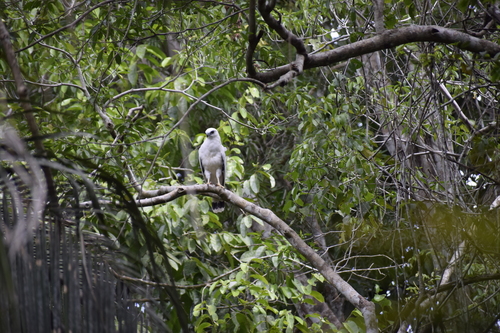 White Hawk
In breve
La separazione più affidabile tra New Britain Sparrowhawk e White Hawk è il sorprendente piumaggio bianco e nero dell'adulto White Hawk, specialmente le parti inferiori e le ali inferiori bianche con ali superiori nere e una banda di coda in contrasto, rispetto al New Britain Sparrowhawk, che è molto meno contrastante, più scuro e con un motivo più uniforme. I giovani White Hawk mostrano ampie macchie nere sopra e parti inferiori striate di bianco, un pattern che non è mai eguagliato dal falco. Strutturalmente, White Hawk è molto più grande e con ali più larghe, con una coda molto corta, mentre New Britain Sparrowhawk è un piccolo accipiter compatto. Anche l'areale è diagnostico: White Hawk si trova solo nelle Americhe, mentre New Britain Sparrowhawk è endemico a New Britain e New Ireland in Papua Nuova Guinea. Se vedi un grande rapace per lo più bianco con ali superiori nere e una banda di coda audace, stai guardando un White Hawk.
Consigli di identificazione
- Il giovane White Hawk mostra ampie macchie nere sopra e parti inferiori striate di bianco—nessuna età del New Britain Sparrowhawk ha questo pattern. Se vedi un grande rapace con questi segni, è un White Hawk.
- L'adulto White Hawk è per lo più bianco sotto con ali superiori nere e una larga banda di coda nera; il New Britain Sparrowhawk non mostra mai questo audace contrasto bianco e nero.
- White Hawk è molto più grande e massiccio, con ali molto larghe e una coda molto corta; il New Britain Sparrowhawk è piccolo, compatto e ha le proporzioni tipiche di un accipiter (coda più lunga rispetto al corpo, ali più strette).
- In volo, White Hawk appare sorprendentemente bianco da sotto con punte nere delle ali e banda di coda; il New Britain Sparrowhawk non ha alcun pattern bianco sotto le ali o di coda.
- White Hawk si posiziona in aperto e plana frequentemente; il New Britain Sparrowhawk è più riservato e raramente visto in aperto.
- Becco e zampe: White Hawk ha un becco nero e zampe gialle; i dettagli per il New Britain Sparrowhawk non sono forniti, ma gli accipitri tipicamente hanno un becco più delicato e zampe meno robuste.
- Colore degli occhi: Alcune sottospecie di White Hawk hanno occhi gialli (ghiesbreghti), altri marroni; il colore degli occhi non è descritto per il New Britain Sparrowhawk, ma è improbabile che sia così sorprendente come in White Hawk.
- Pattern della coda: White Hawk ha una coda molto corta con una larga banda subterminale nera e una base bianca; il New Britain Sparrowhawk ha una coda più lunga, più tipica di un accipiter, senza tale marcatura audace.
- La posizione geografica è critica: White Hawk si trova solo nelle Americhe, mentre il New Britain Sparrowhawk è ristretto a due isole in Papua Nuova Guinea. Qualsiasi avvistamento al di fuori di queste regioni esclude l'altra specie.
- Vocalizzazione: Se sentito, un lamentoso 'kerwee' indica White Hawk; il richiamo del New Britain Sparrowhawk non è descritto ed è improbabile che sia simile.
- Dimorfismo sessuale: Entrambe le specie hanno piumaggio simile tra i sessi, ma le femmine di White Hawk sono più grandi; questo non è un segno utile sul campo a meno che la dimensione non sia evidente.
- Variazione delle sottospecie in White Hawk: Alcune forme hanno più nero sulle ali e sulla coda, ma tutte rimangono per lo più bianche da sotto; il New Britain Sparrowhawk non si avvicina mai a questo pattern.
- Contesto dell'habitat: White Hawk è un uccello di foreste e boschi di pianura, spesso in associazione con mammiferi che cercano cibo; il New Britain Sparrowhawk è un raro accipiter forestale, improbabile da vedere in habitat aperti o di confine.
- Aspetto generale: Il volo di White Hawk è lento e planante, mostrando ali larghe e coda corta; il New Britain Sparrowhawk mostrerebbe un volo rapido, agile e simile a un accipiter con coda più lunga e ali più strette.
- Trappole: L'unica confusione probabile è con i giovani White Hawk, ma le loro parti superiori macchiate di nero e le parti inferiori striate sono uniche. Nessuna età del New Britain Sparrowhawk mostra questi segni.
Taglia
White Hawk è drammaticamente più grande, misurando 46–56 cm di lunghezza e pesando 650–840 g a seconda del sesso [wikipedia]. Ha ali molto larghe e una coda notevolmente corta. Al contrario, il New Britain Sparrowhawk è un piccolo accipiter, molto più corto e leggero (misure esatte non fornite, ma come sparrowhawk, è molto più piccolo di un falco buteonine) [wikipedia]. La differenza di dimensioni è così grande che la confusione è probabile solo in condizioni di visione scadenti o con giovani White Hawk.
Piumaggio
I giovani White Hawk sono distintivi: mostrano ampie macchie nere sulle parti superiori e parti inferiori striate di bianco, un pattern non visto in nessuna età del New Britain Sparrowhawk [wikipedia]. Gli adulti White Hawk sono quasi completamente bianchi sotto, con testa, corpo e ali inferiori bianchi, e ali superiori nere e una coda molto corta con una larga banda subterminale nera e una base bianca. Le sottospecie variano nella quantità di nero sulle ali e sulla coda, ma tutte appaiono principalmente bianche da sotto. Il New Britain Sparrowhawk, al contrario, non ha alcuna forma con un piumaggio per lo più bianco o un tale audace contrasto bianco e nero; il suo piumaggio è più uniformemente scuro e manca delle ampie marcature bianche e nere nette di White Hawk. Nessun dettaglio è fornito per il giovane New Britain Sparrowhawk, ma come accipiter, non mostrerebbe il pattern bianco e nero del White Hawk a nessuna età.
Comportamento
White Hawk è spesso visto planare in alto sopra la foresta, mostrando ali larghe e una coda corta, ed è noto per spettacolari esibizioni aeree di corteggiamento [wikipedia]. Si posiziona frequentemente in aperto e può associarsi a mammiferi che cercano cibo per catturare prede. Il New Britain Sparrowhawk, come un tipico accipiter, è probabile che sia più riservato, utilizzando voli brevi e rapidi attraverso la foresta e posandosi silenziosamente in copertura. È raramente visto ed era già considerato raro negli anni '30 [wikipedia].
Habitat
White Hawk abita foreste e boschi di pianura in tutto il Neotropico, dal sud del Messico attraverso l'America Centrale e Meridionale fino al Brasile, Bolivia e Perù, e anche a Trinidad [wikipedia]. Il New Britain Sparrowhawk è strettamente endemico alle isole di New Britain e New Ireland in Papua Nuova Guinea, ed è molto raro anche all'interno del suo areale limitato [wikipedia]. Pertanto, la posizione da sola è solitamente diagnostica.
Voce
White Hawk emette un richiamo lamentoso 'kerwee' [wikipedia]. Nessuna vocalizzazione è descritta per il New Britain Sparrowhawk, quindi la voce è improbabile che sia un segno utile per la separazione.
New Britain Sparrowhawk · White Hawk · I miei uccelli difficili