

Anatra muta vs Surf Scoter
Cairina moschata contro Melanitta perspicillata
Fai un quiz con Anatra muta e Surf Scoter
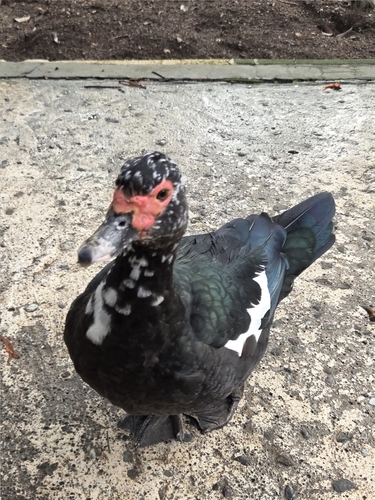 Anatra muta
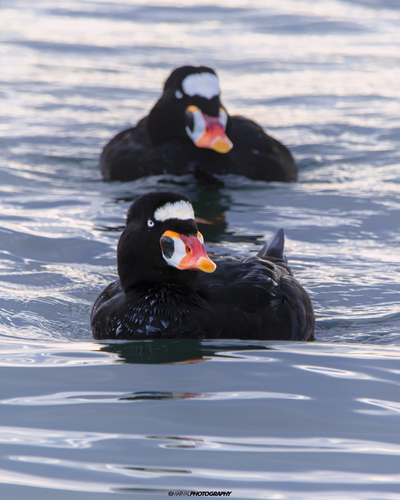 Surf Scoter
In breve
Il segno distintivo più affidabile per separare l'Anatra muta dallo Surf Scoter è la presenza di un volto caruncolato, nudo e rosso e grandi macchie bianche sulle ali (soprattutto in volo) nell'Anatra muta adulta, rispetto alle ali completamente scure dello Surf Scoter e alle distintive macchie bianche sulla testa nei maschi adulti. I giovani Anatre mute sono più opachi e potrebbero mancare di bianco evidente sulle ali, ma mostrano comunque una struttura più grande e massiccia e una macchia facciale nuda, mentre i giovani Surf Scoter sono compatti, marroni e non mostrano mai pelle nuda sul volto. In volo, le Anatre mute (eccetto i giovani opachi) mostrano un bianco prominente sulle ali, mentre gli Surf Scoter hanno sempre ali completamente scure. La forma e il colore del becco, la dimensione del corpo e il contesto dell'habitat aiutano anche: l'Anatra muta è un'anatra massiccia, con coda piatta e becco largo di acqua dolce o stagni urbani, mentre lo Surf Scoter è un'anatra marina più piccola con un becco gonfio e multicolore e una silhouette più compatta.
Consigli di identificazione
- Schema delle ali in volo: Le Anatre mute adulte e la maggior parte degli immaturi mostrano grandi macchie bianche o barre sulle ali, soprattutto evidenti in volo. Gli Surf Scoter di tutte le età hanno ali completamente scure—nessuna macchia o barra bianca.
- Pelle facciale nuda: Le Anatre mute (di tutte le età) hanno un'area caruncolata nuda, rossa o scura attorno al becco e agli occhi. Questo è assente nello Surf Scoter, che ha sempre un volto completamente piumato.
- Forma e colore del becco: L'Anatra muta ha un becco largo e piatto, solitamente nero con alcune macchie rosa (variabile negli uccelli domestici/selvatici). Lo Surf Scoter ha un becco gonfio distintivo con una base quadrata, decorato in bianco, rosso, giallo e nero nei maschi, e di colore nerastro con sfumature verdi/blu nelle femmine.
- Schema della testa: Il maschio adulto dello Surf Scoter mostra macchie bianche audaci sulla fronte e sulla nuca, che non sono mai presenti nell'Anatra muta. Le femmine e i giovani Surf Scoter hanno macchie sulle guance più chiare e talvolta una nuca biancastra, ma mai pelle nuda. L'Anatra muta può avere bianco sulla testa/collo negli uccelli selvatici, ma non è mai sotto forma di macchie ordinate sulla fronte/nuca.
- Dimensione e forma del corpo: L'Anatra muta è molto più grande e massiccia, con un collo lungo e una coda larga e piatta. Lo Surf Scoter è più compatto, con un collo più corto e una coda arrotondata.
- Lucentezza del piumaggio: Il maschio adulto dell'Anatra muta è nero lucido con piume del dorso e delle ali iridescenti; lo Surf Scoter è nero vellutato senza iridescenza.
- Dimorfismo sessuale: I maschi dell'Anatra muta sono molto più grandi delle femmine, con un prominente pomello alla base del becco e una cresta corta. I maschi e le femmine dello Surf Scoter differiscono principalmente nel colore e nello schema della testa, non nella dimensione.
- Confusione giovanile: Il giovane Anatra muta è opaco e potrebbe mancare di bianco nelle ali, ma mostra comunque pelle facciale nuda e una struttura pesante. Il giovane Surf Scoter è uniformemente marrone con un ventre biancastro, senza pelle nuda e ha sempre ali scure.
- Coda: L'Anatra muta ha una coda larga e piatta, spesso tenuta in fuori o scossa. La coda dello Surf Scoter è più corta e meno appariscente.
- Piedi e artigli: L'Anatra muta ha artigli lunghi sui piedi, a volte visibili quando è posata o cammina. I piedi dello Surf Scoter sono tipici delle anatre tuffatrici.
- Habitat: L'Anatra muta si trova in acque dolci, spesso in stagni urbani o agricoli, a volte posandosi sugli alberi o su strutture. Lo Surf Scoter è quasi sempre in acque salate, raramente si avventura nell'entroterra.
- Comportamento: L'Anatra muta è lenta, spesso si riposa a terra o si posa. Lo Surf Scoter è attivo in acqua, tuffandosi frequentemente, e raramente viene a terra se non per riprodursi.
- Vocalizzazioni: I maschi dell'Anatra muta emettono un richiamo basso e affannoso, le femmine un coo trillante. Le vocalizzazioni dello Surf Scoter non sono solitamente udibili sul campo.
- Variazione dell'Anatra muta domestica/selvatica: L'Anatra muta selvatica può mostrare una vasta gamma di bianco sulla testa e sul collo, ma controlla sempre per il volto nudo e rosso e la struttura pesante.
- Contesto: Se vedi un'anatra grande e pesante con un volto nudo e rosso in un parco cittadino, è un'Anatra muta. Un'anatra nera con macchie bianche sulla testa nell'oceano è uno Surf Scoter.
Taglia
Anatra muta is dramatically larger and heavier than Surf Scoter. Adult Muscovy males can weigh over 2,000 g (often up to 3–4 kg), with females about half that, while Surf Scoter averages about 950 g. Muscovy is also much longer (males 76–84 cm, females 71–76 cm) and has a much broader wingspan (137–152 cm) compared to Surf Scoter’s 44–48 cm length and 76–77 cm wingspan. Even a female or juvenile Muscovy will look bulkier and longer-necked than any Surf Scoter.
Piumaggio
-
Juvenile/immature birds in flight: Juvenile Muscovy Ducks are dull overall and may lack the white wing patches typical of adults, but still show a large, heavy body and bare facial skin. Juvenile Surf Scoters are paler brown with a whitish belly and breast, but always have completely dark wings in flight—no white patches or bars. This is a key separation for flying birds of any age: Muscovy (except dull juveniles) shows obvious white in the wings, Surf Scoter never does.
-
Adult males: Muscovy males are glossy black with large white patches on the wings (especially visible in flight), a naked red or dark carunculated face, and a short crest. Surf Scoter males are velvety black overall with distinctive white patches on the forehead and nape, but no white in the wings or on the face. The bill is swollen and multicolored in Surf Scoter, black with a pinkish speckling in Muscovy.
-
Adult females: Female Muscovy is smaller, drabber, but still has a feathered face and may show some white in the wings. Female Surf Scoter is brownish, with paler cheek patches and sometimes a whitish nape, but no white in the wings and no bare facial skin.
-
Domesticated/feral Muscovy: Plumage is variable, but always look for the bare red facial skin and heavy structure. White patches on the neck and head may be extensive, but the wing pattern remains a key mark.
Comportamento
Le Anatre mute sono spesso viste riposare a terra, posandosi su tronchi o anche sugli alberi, e possono nidificare in cavità degli alberi o a terra in parchi urbani o fattorie. Sono lente, con una camminata pesante e ondeggiante, e spesso dormono in acqua di notte. Gli Surf Scoter sono anatre marine, solitamente viste in gruppi in acque aperte, tuffandosi frequentemente per cibo. Il loro volo è diretto e veloce, con battiti d'ali rapidi, e raramente si posano a terra o sugli alberi. Il volo dell'Anatra muta è pesante e faticoso rispetto al volo rapido e basso dello Surf Scoter.
Habitat
Le Anatre mute sono uccelli di habitat d'acqua dolce—stagni, laghi, fiumi e parchi urbani, soprattutto in climi caldi. Gli uccelli selvatici sono comuni nei parchi cittadini e nei cortili delle fattorie. Gli Surf Scoter sono strettamente associati a grandi corpi d'acqua salata in inverno—baie costiere, estuari e mare aperto. Si riproducono molto a nord in Canada e Alaska, ma durante la migrazione e in inverno non si trovano quasi mai lontano dall'acqua salata. Se vedi un'anatra grande con un volto nudo e rosso in uno stagno cittadino, è un'Anatra muta; un'anatra nera con macchie bianche sulla testa nell'oceano è uno Surf Scoter.
Voce
I maschi dell'Anatra muta emettono un richiamo basso e affannoso, mentre le femmine hanno un coo tranquillo e trillante. Le vocalizzazioni dello Surf Scoter non sono descritte nelle fonti fornite, ma non è probabile che siano una separazione pratica sul campo nella maggior parte delle circostanze.