

Averla cenerina vs Averla mascherata
Lanius minor contro Lanius nubicus
Fai un quiz con Averla cenerina e Averla mascherata
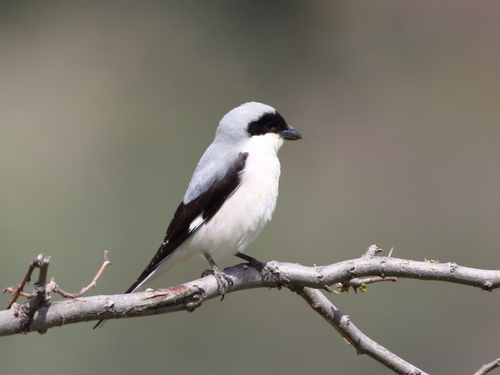 Averla cenerina
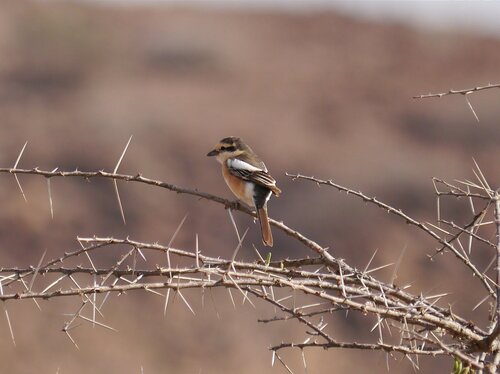 Averla mascherata
In breve
Il segno distintivo più affidabile tra Averla cenerina e Averla mascherata è il motivo della testa negli adulti: l'Averla cenerina ha una corona e un nuca scuri (neri o grigio scuro) con un dorso grigio-bluastro chiaro, mentre l'Averla mascherata mostra una corona, una fronte e un supercilio bianchi che contrastano con le parti superiori nere. I giovani sono più difficili da distinguere, ma i giovani di Averla mascherata hanno un volto più chiaro e una barratura più estesa sopra e sotto, oltre a una coda più lunga. L'Averla cenerina è notevolmente più robusta e pesante, con un aspetto più robusto e una tendenza a posarsi in luoghi aperti, mentre l'Averla mascherata è più piccola, più snella e spesso si tiene su posatoi meno esposti. Entrambi possono mostrare bianco nelle ali, ma il motivo e il contesto differiscono.
Consigli di identificazione
- Motivo della testa negli adulti: L'Averla cenerina ha una corona nera (maschio) o grigio scuro (femmina) e una nuca, con un dorso grigio-bluastro chiaro. L'Averla mascherata mostra una corona, una fronte e un supercilio bianchi, in netto contrasto con le parti superiori nere. Questo è il segno più affidabile negli adulti.
- Piumaggio giovanile: I giovani di Averla mascherata hanno un volto più chiaro, una barratura più estesa sopra e sotto, e una coda più lunga rispetto ai giovani di Averla cenerina, che sono complessivamente più marroni con una barratura leggera e mancano del dorso e della coda grigi.
- Motivo delle ali in volo (giovani): I giovani di Averla mascherata mostrano una macchia bianca prominente sulle primarie, mentre i giovani di Averla cenerina hanno meno contrasto e mancano di una forte macchia bianca primaria.
- Dimensioni e struttura: L'Averla cenerina è molto più robusta e pesante, con un becco più robusto e un aspetto più potente. L'Averla mascherata è più piccola, snella e con una coda lunga, con un becco relativamente piccolo e fine.
- Coda: La coda dell'Averla mascherata è più lunga in proporzione al suo corpo, e le penne esterne della coda sono bianche. La coda dell'Averla cenerina è più corta e più larga, con un motivo più uniforme in bianco e nero.
- Becco: L'Averla cenerina ha un becco più spesso e potente, tipico delle grandi averle. Il becco dell'Averla mascherata è più fine, con un dente tomiale distintivo e una cresta triangolare, ma questo dettaglio è difficile da vedere sul campo.
- Parti inferiori: Gli adulti di Averla cenerina hanno parti inferiori bianche con una sfumatura rosata sul petto e sull'addome (soprattutto nei maschi). Gli adulti di Averla mascherata hanno parti inferiori bianche con fianchi e petto arancioni, che possono apparire come una macchia di colore distinta.
- Dorso e coda: Gli adulti di Averla cenerina hanno un dorso e una coda grigio-bluastro chiaro; gli adulti di Averla mascherata hanno una coda scura e parti superiori nere, con il bianco confinato alla testa e alle macchie delle ali.
- Comportamento di posatura: L'Averla cenerina si posano apertamente su fili o rami esposti; l'Averla mascherata preferisce posatoi meno esposti all'interno di cespugli o alberi.
- Habitat: In campagna aperta, specialmente nelle pianure più secche, è più probabile incontrare l'Averla cenerina. In boschi aperti con alberi e cespugli sparsi, specialmente dove le averle sono meno evidenti, si favorisce l'Averla mascherata.
- Stile di volo: Il volo dell'Averla cenerina è basso e ondulato, con occasionali planate e risalite verso i posatoi. Il volo dell'Averla mascherata è meno descritto ma generalmente più delicato, in linea con la sua struttura.
- Differenze sessuali: La femmina di Averla cenerina è più opaca, con una testa grigio scuro e parti superiori grigio-marroni; la femmina di Averla mascherata è più marrone sopra, con meno contrasto e una sfumatura giallastra o grigia nelle aree bianche.
- Vocalizzazioni: Se sentito, il canto dell'Averla mascherata è più melodico e simile a quello di un canoro, mentre i richiami dell'Averla cenerina sono più aspri e tipici delle averle.
- Esposizione: Se l'uccello è molto evidente e aggressivo, specialmente in campagna aperta, sospettare l'Averla cenerina. Se è più ritirato e si tiene nascosto, sospettare l'Averla mascherata.
- Stagione e posizione: Entrambi sono migratori, ma l'Averla mascherata è più probabile nel sud-est dell'Europa e nel Mediterraneo orientale, mentre l'Averla cenerina è più diffusa nell'Europa centrale e orientale e nell'Asia occidentale. Entrambi sono rari vagabondi altrove.
Taglia
Averla cenerina is significantly larger and heavier (body mass ~46 g) than Averla mascherata (~25 g). Averla cenerina measures about 20 cm in length with a 13 cm wing, while Averla mascherata is 17–18.5 cm long with a 24–26.5 cm wingspan. The difference is obvious in direct comparison: Averla cenerina appears bulkier and more powerful, with a stouter bill, whereas Averla mascherata is notably slender, long-tailed, and fine-billed for a shrike.
Piumaggio
-
Juveniles: Averla cenerina juveniles are overall more brown, with pale brown and faintly barred upperparts, lacking the adult's grey back and rump. Underparts are white and cream, without pink. Averla mascherata juveniles have grey-brown upperparts with darker barring from head to rump, a paler grey forehead, and barred off-white underparts. Their brown wings show white primary patches. Averla mascherata juveniles also have a longer tail and paler face than Averla cenerina juveniles.
-
Adult males: Averla cenerina males have a black nape, cheeks, ear and eye coverts, and front crown, with a pale bluish-grey back and rump, white underparts with pinkish lower breast and belly, and a black-and-white tail. Averla mascherata males have mainly black upperparts, but with a bold white crown, forehead, and supercilium, large white patches on shoulders and primaries, and white underparts with orange flanks and breast. The tail is long with white outer feathers.
-
Adult females: Both species' females are duller than males. Averla cenerina females have a dark grey head, brownish-black ear coverts, brownish-grey upperparts, and less pink below. Averla mascherata females are browner above, with a grey or buff tinge to shoulder patches and underparts.
-
In flight: Both species show white in the wings, but Averla mascherata's white primary patch is more prominent, especially in juveniles. Averla cenerina has a white base to the primaries and a more uniform pale grey back in adults.
Comportamento
L'Averla cenerina spesso si posano in modo evidente su fili o rami esposti, scrutando la preda, e ha un volo basso e ondulato con occasionali planate. È audace e aggressiva, frequentemente aprendo e muovendo la coda. L'Averla mascherata è più riservata, preferendo posarsi in luoghi meno esposti all'interno di boschi aperti o tra i cespugli, ed è generalmente meno evidente. Il suo comportamento è più delicato, in linea con la sua struttura più piccola e snella.
Habitat
L'Averla cenerina predilige pianure secche e aperte ed è spesso vista su fili telefonici o posatoi prominenti in campagna aperta. L'Averla mascherata preferisce boschi aperti con cespugli e alcuni alberi grandi, evitando habitat molto aperti e rimanendo spesso meno visibile tra il fogliame. I loro areali si sovrappongono nel sud-est dell'Europa, ma l'Averla mascherata è più legata a habitat con alberi sparsi e copertura più densa.
Voce
I richiami dell'Averla mascherata sono brevi e graffianti, ma il suo canto è più melodico e simile a quello di un canoro. Le vocalizzazioni dell'Averla cenerina non sono descritte in dettaglio qui, ma sono generalmente più aspre e meno musicali rispetto a quelle dell'Averla mascherata. In pratica, il canto dell'Averla mascherata è più probabile che venga confuso con quello di un canoro piuttosto che con un'altra averla.
Averla cenerina · Averla mascherata · I miei uccelli difficili