

Alcaudón Chico vs Alcaudón Núbico
Lanius minor frente a Lanius nubicus
Juega un quiz con Alcaudón Chico y Alcaudón Núbico
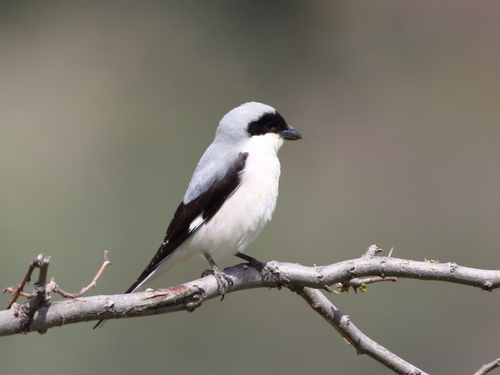 Alcaudón Chico
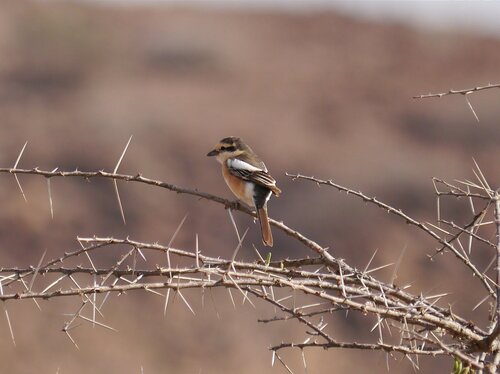 Alcaudón Núbico
En breve
La marca de campo más confiable entre Alcaudón Chico y Alcaudón Núbico es el patrón de la cabeza en los adultos: Alcaudón Chico tiene una corona y nuca oscuras (negras o gris oscuro) con un dorso pálido gris azulado, mientras que Alcaudón Núbico muestra una striking corona blanca, frente y supercilio que contrastan con las partes superiores negras. Los juveniles son más complicados, pero los juveniles de Alcaudón Núbico tienen una cara más pálida y un barrado más extenso arriba y abajo, además de una cola más larga. Alcaudón Chico es notablemente más robusto y pesado, con una apariencia más robusta y una tendencia a posarse a la vista, mientras que Alcaudón Núbico es más pequeño, más esbelto y a menudo se mantiene en posaderos menos expuestos. Ambos pueden mostrar blanco en las alas, pero el patrón y el contexto difieren.
Consejos de identificación
- Patrón de cabeza en adultos: Alcaudón Chico tiene una corona negra (macho) o gris oscuro (hembra) y nuca, con un dorso pálido gris azulado. Alcaudón Núbico muestra una corona blanca, frente y supercilio, que contrastan marcadamente con las partes superiores negras. Esta es la marca más confiable en los adultos.
- Plumaje juvenil: Los juveniles de Alcaudón Núbico tienen una cara más pálida, un barrado más extenso arriba y abajo, y una cola más larga que los juveniles de Alcaudón Chico, que son más marrones en general con un barrado tenue y carecen del dorso y la rabadilla grises.
- Patrón de alas en vuelo (juveniles): Los juveniles de Alcaudón Núbico muestran una mancha blanca prominente en las primarias, mientras que los juveniles de Alcaudón Chico tienen menos contraste y carecen de una mancha blanca primaria fuerte.
- Tamaño y estructura: Alcaudón Chico es mucho más robusto y pesado, con un pico más robusto y una apariencia más poderosa. Alcaudón Núbico es más pequeño, esbelto y de cola larga, con un pico relativamente pequeño y fino.
- Cola: La cola de Alcaudón Núbico es más larga en proporción a su cuerpo, y las plumas de la cola exterior son blancas. La cola de Alcaudón Chico es más corta y más ancha, con un patrón más uniforme en blanco y negro.
- Pico: Alcaudón Chico tiene un pico más grueso y poderoso, típico de los grandes alcaudones. El pico de Alcaudón Núbico es más fino, con un diente tomial distintivo y una cresta triangular, pero este detalle es difícil de ver en el campo.
- Partes inferiores: Los adultos de Alcaudón Chico tienen partes inferiores blancas con un tinte rosado en el pecho y vientre inferiores (especialmente los machos). Los adultos de Alcaudón Núbico tienen partes inferiores blancas con flancos y pecho naranjas, que pueden aparecer como un parche de color distinto.
- Dorso y rabadilla: Los adultos de Alcaudón Chico tienen un dorso y rabadilla pálidos gris azulados; los adultos de Alcaudón Núbico tienen una rabadilla oscura y partes superiores negras, con blanco confinado a la cabeza y parches de alas.
- Comportamiento de posado: Alcaudón Chico se posa abiertamente en cables o ramas expuestas; Alcaudón Núbico prefiere posaderos menos expuestos dentro de arbustos o árboles.
- Hábitat: En campo abierto, especialmente en llanuras secas, es más probable encontrar Alcaudón Chico. En bosques abiertos con árboles y arbustos dispersos, especialmente donde los alcaudones son menos conspicuos, se prefiere Alcaudón Núbico.
- Estilo de vuelo: El vuelo de Alcaudón Chico es bajo y ondulante, con deslizamientos ocasionales y ascensos hacia los posaderos. El vuelo de Alcaudón Núbico se describe menos, pero es generalmente más delicado, acorde con su estructura.
- Diferencias sexuales: La hembra de Alcaudón Chico es más apagada, con una cabeza gris oscura y partes superiores gris marrón; la hembra de Alcaudón Núbico es más marrón arriba, con menos contraste y un tinte amarillento o gris en las áreas blancas.
- Vocalizaciones: Si se escucha, el canto de Alcaudón Núbico es más melódico y similar al de un currucucha, mientras que los llamados de Alcaudón Chico son más ásperos y típicos de los alcaudones.
- Exposición: Si el ave es muy conspicua y agresiva, especialmente en campo abierto, sospecha de Alcaudón Chico. Si es más reservada y se mantiene cubierta, sospecha de Alcaudón Núbico.
- Temporada y ubicación: Ambos son migrantes, pero Alcaudón Núbico es más probable en el sureste de Europa y el este del Mediterráneo, mientras que Alcaudón Chico es más común en Europa central y oriental y Asia occidental. Ambos son vagabundos raros en otros lugares.
Tamaño
Alcaudón Chico is significantly larger and heavier (body mass ~46 g) than Alcaudón Núbico (~25 g). Alcaudón Chico measures about 20 cm in length with a 13 cm wing, while Alcaudón Núbico is 17–18.5 cm long with a 24–26.5 cm wingspan. The difference is obvious in direct comparison: Alcaudón Chico appears bulkier and more powerful, with a stouter bill, whereas Alcaudón Núbico is notably slender, long-tailed, and fine-billed for a shrike.
Plumaje
-
Juveniles: Alcaudón Chico juveniles are overall more brown, with pale brown and faintly barred upperparts, lacking the adult's grey back and rump. Underparts are white and cream, without pink. Alcaudón Núbico juveniles have grey-brown upperparts with darker barring from head to rump, a paler grey forehead, and barred off-white underparts. Their brown wings show white primary patches. Alcaudón Núbico juveniles also have a longer tail and paler face than Alcaudón Chico juveniles.
-
Adult males: Alcaudón Chico males have a black nape, cheeks, ear and eye coverts, and front crown, with a pale bluish-grey back and rump, white underparts with pinkish lower breast and belly, and a black-and-white tail. Alcaudón Núbico males have mainly black upperparts, but with a bold white crown, forehead, and supercilium, large white patches on shoulders and primaries, and white underparts with orange flanks and breast. The tail is long with white outer feathers.
-
Adult females: Both species' females are duller than males. Alcaudón Chico females have a dark grey head, brownish-black ear coverts, brownish-grey upperparts, and less pink below. Alcaudón Núbico females are browner above, with a grey or buff tinge to shoulder patches and underparts.
-
In flight: Both species show white in the wings, but Alcaudón Núbico's white primary patch is more prominent, especially in juveniles. Alcaudón Chico has a white base to the primaries and a more uniform pale grey back in adults.
Comportamiento
Alcaudón Chico a menudo se posa conspicuamente en cables o ramas expuestas, escaneando en busca de presas, y tiene un vuelo bajo y ondulante con deslizamientos ocasionales. Es audaz y agresivo, frecuentemente abriendo y moviendo su cola. Alcaudón Núbico es más secreto, prefiriendo posarse en lugares menos expuestos dentro de bosques abiertos o entre arbustos, y generalmente es menos conspicuo. Su comportamiento es más delicado, acorde con su estructura más pequeña y esbelta.
Hábitat
Alcaudón Chico prefiere llanuras secas y abiertas y a menudo se le ve en cables telefónicos o posaderos prominentes en campo abierto. Alcaudón Núbico prefiere bosques abiertos con arbustos y algunos árboles grandes, evitando hábitats muy abiertos y a menudo permaneciendo menos visible dentro del follaje. Sus rangos se superponen en el sureste de Europa, pero Alcaudón Núbico está más ligado a hábitats con árboles dispersos y cobertura más densa.
Voz
Los llamados de Alcaudón Núbico son cortos y chirriantes, pero su canto es más melódico y similar al de un currucucha. Las vocalizaciones de Alcaudón Chico no se describen en detalle aquí, pero son generalmente más ásperas y menos musicales que las de Alcaudón Núbico. En la práctica, el canto de Alcaudón Núbico es más probable que se confunda con el de un currucucha que con el de otro alcaudón.