

Helmeted Pygmy-Tyrant vs Acre Tody-Tyrant
Lophotriccus galeatus contro Hemitriccus cohnhafti
Fai un quiz con Helmeted Pygmy-Tyrant e Acre Tody-Tyrant
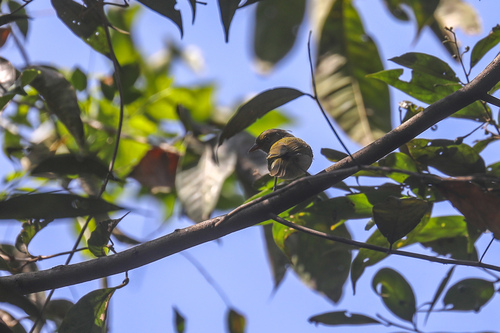 Helmeted Pygmy-Tyrant
 Acre Tody-Tyrant
In breve
Il segno distintivo più affidabile per separare il Helmeted Pygmy-Tyrant dall'Acre Tody-Tyrant è la presenza di una cresta lunga e nera, a volte erettile, sul Helmeted Pygmy-Tyrant, che non è mai mostrata dall'Acre Tody-Tyrant. Inoltre, il Helmeted Pygmy-Tyrant è più piccolo e più chiaro sotto, con un volto e parti inferiori biancastre, mentre l'Acre Tody-Tyrant è più grande, con una testa e parti inferiori di un verde oliva, e una sfumatura fulva sul volto. Entrambe le specie mostrano due barre alari, ma il colore e la prominenza differiscono. La forma e il colore del becco, il colore dell'iride e le striature delle parti inferiori forniscono anche indizi utili. È possibile sovrapposizione degli habitat, ma l'Acre Tody-Tyrant ha un'area di distribuzione più ristretta.
Consigli di identificazione
- Crest presence: Il Helmeted Pygmy-Tyrant mostra una lunga cresta nera ed erettile con bordi grigio oliva, spesso visibile anche quando appiattita; l'Acre Tody-Tyrant non mostra mai una cresta. Questo è il segno distintivo più affidabile per tutte le età e stagioni.
- Head pattern: Il Helmeted Pygmy-Tyrant ha un volto per lo più oliva con lore biancastre in contrasto; l'Acre Tody-Tyrant ha una testa di un verde oliva e una nuca con striature più scure e una sfumatura fulva sulle lore e sul volto. Cerca le lore chiare rispetto alla sfumatura fulva.
- Underparts color: Il Helmeted Pygmy-Tyrant è per lo più biancastro sotto con deboli striature grigie; l'Acre Tody-Tyrant è verde oliva sulla gola e sul petto con striature giallo crema, fianchi verde oliva e un ventre e sottocoda giallo zolfo. L'impressione generale è molto più chiara sotto nel Helmeted Pygmy-Tyrant.
- Wing bars: Entrambe le specie mostrano due barre alari, ma quelle del Helmeted Pygmy-Tyrant sono deboli e con punte olive, mentre quelle dell'Acre Tody-Tyrant sono più prominenti, giallo fulvo e si distinguono contro le copritrici alari nerastre. Questo è più utile in buona luce.
- Wing and tail edges: Il Helmeted Pygmy-Tyrant ha bordi oliva sulle ali e sulla coda scure; l'Acre Tody-Tyrant ha bordi esterni gialli e bordi interni bianchi sulle penne di volo, e la coda è nerastra con vane interne di un verde scuro. I bordi gialli e le tonalità verdi sono più pronunciati nell'Acre Tody-Tyrant.
- Bill shape and color: Il Helmeted Pygmy-Tyrant ha un becco grigio con una base rosa per la mandibola; l'Acre Tody-Tyrant ha un becco più piatto e largo con una base ampia, grandi narici ovali, nero con una base crema per la mandibola. Le differenze nel becco sono sottili ma possono aiutare a distanza ravvicinata.
- Iris color: Il Helmeted Pygmy-Tyrant ha un'iride bianco giallastro o arancione; l'iride dell'Acre Tody-Tyrant è crema o nocciola marrone. Questo è sottile e non sempre visibile sul campo.
- Leg color: Il Helmeted Pygmy-Tyrant ha gambe e piedi rosa grigi; quelli dell'Acre Tody-Tyrant sono grigi. Il colore delle gambe è raramente diagnostico ma può aiutare nelle foto.
- Size and structure: Il Helmeted Pygmy-Tyrant è più piccolo e più delicato, con un becco più corto e fine e una struttura complessiva più minuta. L'Acre Tody-Tyrant è più robusto, con un corpo leggermente più lungo e un becco più pesante. Usa questo quando gli uccelli sono affiancati o con specie conosciute per scala.
- Underpart streaking: Le striature del Helmeted Pygmy-Tyrant sono deboli e grigie su parti inferiori bianche; le striature dell'Acre Tody-Tyrant sono giallo crema su verde oliva, e solo sulla gola e sul petto. Il ventre inferiore è non striato e giallo nell'Acre Tody-Tyrant.
- Tail color: Entrambi hanno code scure, ma quella del Helmeted Pygmy-Tyrant è scura con bordi oliva, mentre quella dell'Acre Tody-Tyrant è nerastra con vane interne di un verde scuro. Questo è sottile e meglio visto in buona luce.
- Vocalization: Se senti un breve trill a bassa tonalità di note 'tick' senza note introduttive, è probabile che sia l'Acre Tody-Tyrant. La mancanza di canto non è diagnostica per il Helmeted Pygmy-Tyrant.
- Range and habitat: Se sei al di fuori della Bolivia, del Brasile o del Perù, l'Acre Tody-Tyrant può essere escluso. All'interno delle zone di sovrapposizione, l'habitat non è diagnostico, ma il Helmeted Pygmy-Tyrant è più diffuso.
- Sex and age: Entrambe le specie hanno un piumaggio simile in entrambi i sessi e in tutte le età descritte; non sono riportati schemi specifici di ali o coda per età. Concentrati sulla cresta e sul colore delle parti inferiori per tutti gli individui.
- Common pitfalls: Le deboli barre alari e le tonalità olive del Helmeted Pygmy-Tyrant possono essere trascurate, facendolo apparire ancora più semplice dell'Acre Tody-Tyrant. Controlla sempre la cresta, anche se non è completamente sollevata, e non fare affidamento solo sulla dimensione a meno che tu non abbia un confronto diretto.
Taglia
Il Helmeted Pygmy-Tyrant è nettamente più piccolo, con una massa media di circa 6,6 g e una lunghezza di 10 cm. L'Acre Tody-Tyrant è più grande, con circa 11 cm e almeno 9 g (basato su un singolo maschio). Sul campo, il Helmeted Pygmy-Tyrant apparirà notevolmente più minuto e delicato, con una struttura complessiva più fine.
Piumaggio
Non sono descritti schemi di ali specifici per età giovanile o immatura per nessuna delle due specie, quindi ci si concentra sul piumaggio adulto. Il Helmeted Pygmy-Tyrant ha una cresta nera lunga e unica con bordi grigio oliva, che può essere sollevata o appiattita, estendendosi oltre la parte posteriore della testa. Il suo volto è oliva con lore biancastre in contrasto, e le parti inferiori sono per lo più bianche con deboli striature grigie. Le ali sono scure con bordi oliva e due deboli barre alari. La coda è scura con bordi oliva. Al contrario, l'Acre Tody-Tyrant non ha una cresta, ha una testa verde oliva con striature più scure sulla corona, e una sfumatura fulva sulle lore e sul volto. Le sue parti inferiori sono verde oliva con striature giallo crema sulla gola e sul petto, fianchi verde oliva non striati, e un ventre e sottocoda giallo zolfo. Le ali sono nerastre con bordi esterni gialli e due barre alari giallo fulvo, più prominenti rispetto al Helmeted Pygmy-Tyrant. La coda è nerastra con vane interne di un verde scuro.
Comportamento
Entrambe le specie sono piccoli e attivi catturatori di insetti, probabilmente visibili mentre si muovono nei livelli inferiori o medi della foresta o del bosco. Non sono descritte differenze comportamentali dettagliate nelle fonti; entrambe possono essere viste mentre si lanciano per gli insetti o fanno brevi voli tra i posatoi. Il Helmeted Pygmy-Tyrant può apparire ancora più irrequieto e delicato a causa delle sue dimensioni più piccole.
Habitat
Il Helmeted Pygmy-Tyrant ha un'area di distribuzione più ampia, trovato in Brasile, Colombia, Guyana Francese, Guyana, Perù, Suriname e Venezuela, ed è probabile che venga incontrato in una varietà più ampia di habitat forestali. L'Acre Tody-Tyrant è più ristretto, trovato solo in Bolivia, Brasile e Perù. Entrambe le specie si trovano nelle regioni amazzoniche, quindi è possibile una sovrapposizione nell'Amazzonia occidentale. L'habitat da solo non è diagnostico a meno che non si sia al di fuori dell'area di distribuzione dell'Acre Tody-Tyrant.
Voce
Solo le vocalizzazioni dell'Acre Tody-Tyrant sono descritte: un breve trill a bassa tonalità di note 'tick', solitamente senza note introduttive, e richiami a nota singola 'skep' o 'keek', a volte combinati con richiami a bassa frequenza 'kup'. Non è fornita alcuna descrizione vocale per il Helmeted Pygmy-Tyrant, quindi la voce non è un separatore affidabile a meno che non si senta il distintivo trill dell'Acre Tody-Tyrant.
Helmeted Pygmy-Tyrant · Acre Tody-Tyrant · I miei uccelli difficili