

Gray-headed Albatross vs White-capped Albatross
Thalassarche chrysostoma contro Thalassarche cauta
Fai un quiz con Gray-headed Albatross e White-capped Albatross
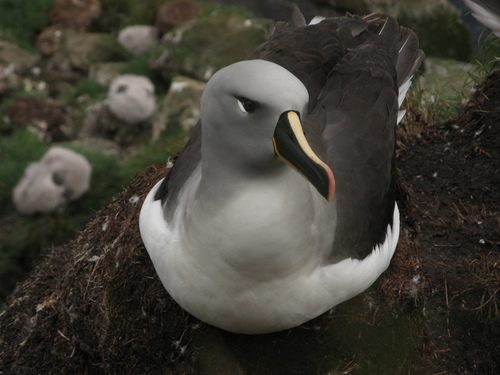 Gray-headed Albatross
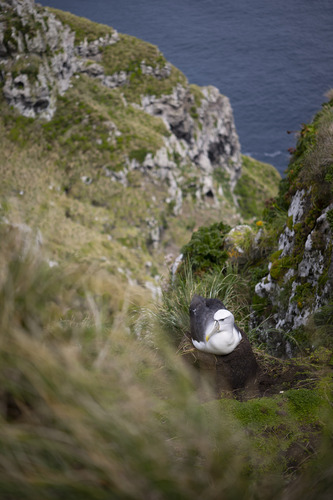 White-capped Albatross
In breve
Il segno distintivo più affidabile per separare il Gray-headed Albatross dal White-capped Albatross è la testa e il becco: l'adulto Gray-headed mostra una testa e un collo uniformemente grigio-ash con un becco nero a forte contrasto bordato di giallo brillante, mentre l'adulto White-capped ha una corona e una fronte bianche, un volto grigio chiaro e un becco grigio-giallo con un culmine e una punta gialla. In volo, il sottovolo del Gray-headed è bianco con ampie macchie nere sul bordo anteriore (quasi completamente scuro nei giovani), mentre il White-capped mostra un distintivo 'segno di pollice' nero alla base del bordo anteriore del sottovolo. Gli albatros Gray-headed giovani sono complessivamente più scuri, con un sottovolo quasi completamente scuro e un occhio a mezzaluna indistinto, mentre i giovani White-capped hanno un volto più chiaro. Entrambi sono grandi mollymawks, ma il White-capped è leggermente più grande e più robusto. L'habitat e l'areale si sovrappongono in mare, ma i siti di nidificazione sono distinti, e il contesto può aiutare se noto.
Consigli di identificazione
-
Head Color (All Ages): L'adulto Gray-headed Albatross ha una testa, una gola e un collo uniformemente grigio-ash, in forte contrasto con il suo corpo bianco. Gli adulti White-capped Albatross hanno una corona e una fronte bianche, un volto grigio chiaro e un sopracciglio scuro—mai una testa grigia uniforme.
-
Bill Pattern (All Ages): Il Gray-headed ha un becco nero con bordi gialli brillanti e una punta rosa-arancio; il becco del White-capped è grigio-giallo con un culmine giallo prominente e una punta gialla. Il colore del becco è particolarmente utile a distanza ravvicinata o in buona luce.
-
Underwing Pattern (Juveniles): Gli albatros Gray-headed giovani hanno un sottovolo quasi completamente scuro, con poco o nessun bianco, e una testa scura. I giovani White-capped hanno un volto più chiaro e mostrano i primi segni del sottovolo bianco dell'adulto con un segno di pollice nero alla base del bordo anteriore. Se vedi un sottovolo e una testa molto scuri, pensa al Gray-headed.
-
Underwing Pattern (Adults): Gli adulti Gray-headed mostrano un sottovolo bianco con ampie macchie nere lungo il bordo anteriore e meno lungo il bordo posteriore. Gli adulti White-capped hanno un sottovolo bianco con un distintivo 'segno di pollice' nero alla base del bordo anteriore, ma meno nero complessivamente rispetto al Gray-headed. Il segno di pollice è un segno distintivo chiave per il White-capped.
-
Eye Crescent: Gli adulti Gray-headed hanno una mezzaluna bianca dietro l'occhio, che è indistinta o assente nei giovani. Il White-capped manca di questa caratteristica, mostrando invece un sopracciglio scuro sotto la corona bianca.
-
Face Pattern: Il White-capped mostra sempre una corona e una fronte bianche, con un volto grigio chiaro e un sopracciglio scuro. Il Gray-headed non mostra mai una corona o un sopracciglio bianchi; la sua testa è uniformemente grigia.
-
Upperparts: Entrambe le specie hanno ali superiori, mantello e coda scuri, ma quelle del Gray-headed sono quasi nere, mentre quelle del White-capped sono grigio-nere. Questo è sottile e non sempre affidabile in mare.
-
Rump and Underparts: Entrambi hanno rami e parti inferiori bianchi, non utili per la separazione.
-
Size and Structure: Il White-capped è leggermente più grande (90–99 cm contro 81 cm), con un aspetto più largo e pesante, ma questo è evidente solo con un confronto diretto o esperienza.
-
Jizz in Flight: Entrambi planano bassi sopra l'oceano con uno stile di volo simile; la struttura non è un separatore affidabile.
-
Habitat/Range: Se visti nidificare, la posizione è diagnostica: il Gray-headed nidifica su isole subantartiche in tutto l'Oceano Meridionale; il White-capped solo su tre isole della Tasmania. In mare, entrambi si distribuiscono ampiamente e si sovrappongono.
-
Juvenile Pitfalls: Il giovane Gray-headed può essere scambiato per altri mollymawks con testa scura, ma la combinazione di una testa scura, un becco scuro e un sottovolo quasi completamente scuro è distintiva. I giovani White-capped hanno un volto più chiaro e iniziano a mostrare la corona bianca dell'adulto.
-
Bill Color in Juveniles: Il giovane Gray-headed ha un becco nero; i giovani White-capped hanno un becco più chiaro, grigiastro, ma questo può essere sottile.
-
Season/Sex: Nessun forte dimorfismo sessuale o variazione stagionale in entrambe le specie; l'età è più importante per l'identificazione.
-
When in Doubt: Dare priorità al colore della testa e al modello del sottovolo, specialmente in volo. Se vedi una testa grigia uniforme e ampie macchie nere sul sottovolo, è Gray-headed. Se la corona è bianca e il sottovolo mostra un segno di pollice nero, è White-capped.
Taglia
Il White-capped Albatross è il più grande dei due, con una lunghezza media di 90–99 cm e un'apertura alare di 220–256 cm, con un peso medio di circa 4,1 kg [wikipedia]. Il Gray-headed Albatross è leggermente più piccolo, con una lunghezza media di 81 cm, un'apertura alare di 2,2 m e una massa media di 3,65 kg [wikipedia]. Sul campo, questa differenza di dimensioni è sottile e potrebbe non essere ovvia a meno che gli uccelli non siano affiancati, ma il White-capped appare spesso più robusto e con ali più lunghe.
Piumaggio
-
Juveniles/immatures: Gli albatros Gray-headed giovani sono molto scuri nel complesso, con un becco e una testa neri, una nuca più scura e un sottovolo che è quasi completamente scuro. La mezzaluna bianca dell'occhio è indistinta o assente. Gli albatros White-capped giovani, sebbene non descritti in dettaglio qui, hanno tipicamente un volto più chiaro e mostrano i primi segni della corona bianca e del volto chiaro dell'adulto, mancando della testa scura uniforme del giovane Gray-headed.
-
Adults: Gli albatros Gray-headed adulti hanno una testa, una gola e un collo uniformemente grigio-ash, con una mezzaluna bianca dietro l'occhio e un becco nero sorprendente con bordi gialli e una punta rosa-arancio. Le ali superiori, il mantello e la coda sono quasi neri, in contrasto con il ramo e le parti inferiori bianchi. Il sottovolo è bianco con ampie macchie nere sul bordo anteriore e meno sul bordo posteriore. Gli albatros White-capped adulti hanno una fronte e una corona bianche, un volto grigio chiaro bordato sotto da un sopracciglio scuro, e un becco grigio-giallo con un culmine e una punta gialla prominenti. L'ala superiore, il mantello e la coda sono grigio-neri, e il sottovolo è bianco con un distintivo 'segno di pollice' nero alla base del bordo anteriore. Il resto del sottovolo è meno marcato rispetto al Gray-headed.
-
Bill: Gray-headed: nero con bordi gialli brillanti e punta rosa-arancio. White-capped: grigio-giallo con culmine e punta gialli.
Comportamento
Entrambe le specie sono tipici mollymawks in volo, utilizzando il volo dinamico e planando bassi sopra l'oceano. Il White-capped Albatross può apparire leggermente più pesante e con ali più larghe, ma lo stile di volo è molto simile e non è una separazione affidabile. Entrambi sono altamente pelagici al di fuori della nidificazione, raramente visti vicino alla terra, tranne che nelle colonie.
Habitat
Il Gray-headed Albatross nidifica su isole isolate in tutto l'Oceano Meridionale, specialmente Georgia del Sud e isole subantartiche, e si nutre più a sud di qualsiasi altro mollymawk, spesso all'interno o a sud della Zona Frontale Polare Antartica [wikipedia]. Il White-capped Albatross è endemico come nidificante su tre isole al largo della Tasmania, Australia, ma si distribuisce ampiamente in mare, incluso l'oceano indiano meridionale e occasionalmente il Pacifico e l'Atlantico meridionale. In mare, entrambi possono sovrapporsi, ma il contesto di nidificazione è diagnostico se noto.
Gray-headed Albatross · White-capped Albatross · I miei uccelli difficili