

Green-backed Trogon vs Guianan Trogon
Trogon viridis contro Trogon violaceus
Fai un quiz con Green-backed Trogon e Guianan Trogon
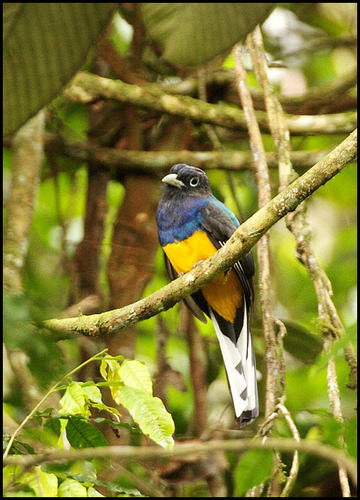 Green-backed Trogon
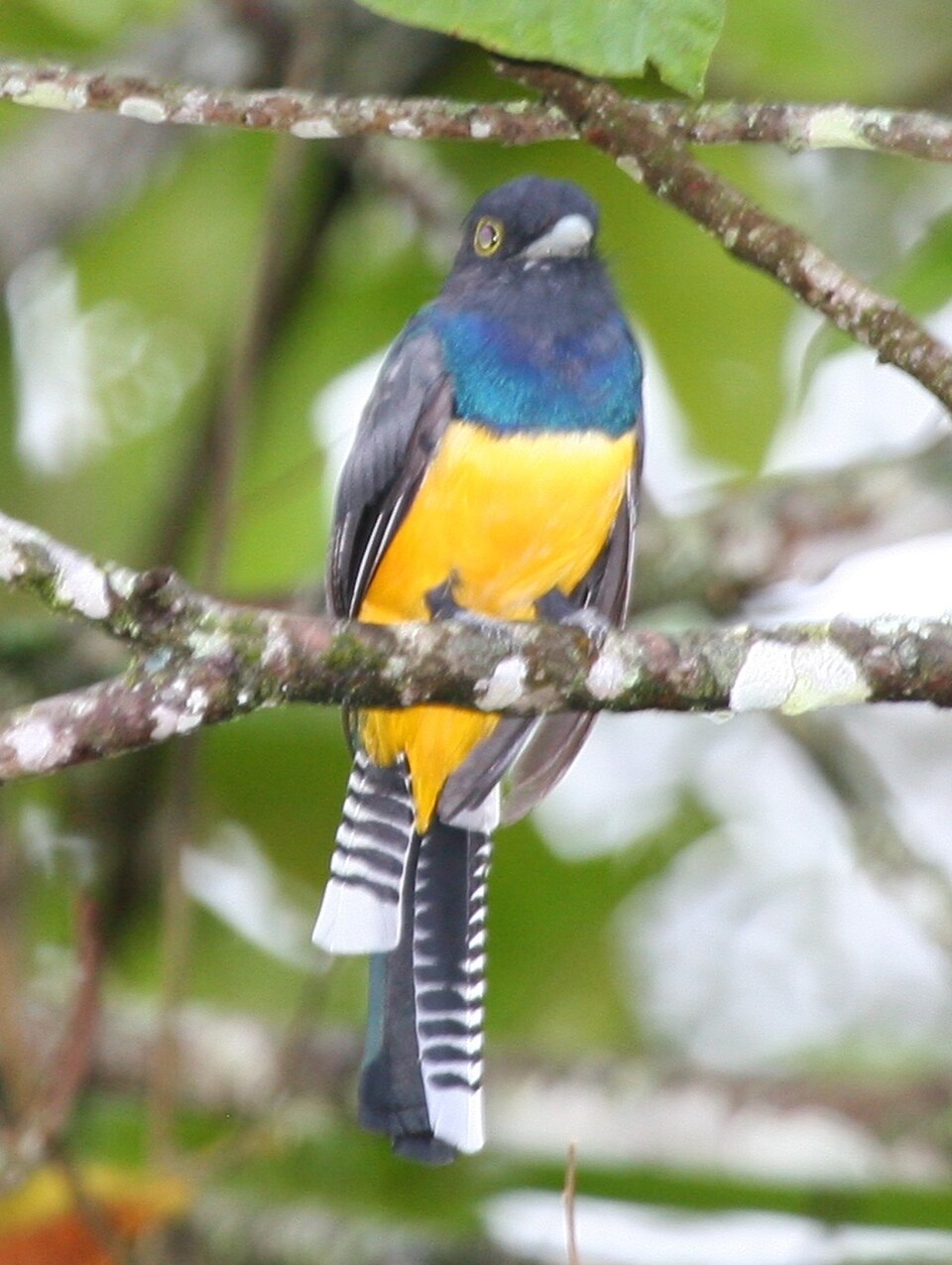 Guianan Trogon
In breve
Il segno di campo più affidabile per separare il Green-backed Trogon e il Guianan Trogon è il motivo della coda negli adulti: i maschi del Green-backed Trogon mostrano una coda nera e bianca con basi nere ampie e punte/bordi bianchi ampi, mentre i maschi del Guianan Trogon hanno striature nere e bianche fini e punte bianche larghe. Le femmine di entrambi sono grigie sopra, ma differiscono nel motivo della coda e nel colore dell'anello oculare. Il Green-backed è anche notevolmente più grande e massiccio, con un anello oculare blu pallido completo (maschio), rispetto al più piccolo Guianan Trogon con un anello oculare giallo (maschio). Le piume giovanili sono meno ben descritte, ma i motivi delle ali e della coda degli adulti rimangono i segni di campo più pratici. Entrambe le specie sono sessualmente dimorfiche, quindi assicurati di considerare il sesso quando confronti le piume.
Consigli di identificazione
- Motivo della coda nei maschi (adulti): Il Green-backed Trogon mostra basi nere ampie e punte/bordi bianchi ampi per ogni piuma della coda; il Guianan Trogon ha striature nere e bianche fini e punte bianche larghe. Questo è il segno più affidabile per i maschi adulti.
- Motivo della coda nelle femmine (adulte): La femmina del Green-backed ha striature nere e bianche principalmente sulle web esterne di ogni piuma della coda; la femmina del Guianan ha striature sui lati della coda e un motivo meno contrastante. Cerca la distribuzione delle striature e la presenza di punte bianche ampie (Guianan) rispetto a un nero più esteso (Green-backed).
- Colore dell'anello oculare (adulti): Il maschio del Green-backed ha un anello oculare blu pallido completo; il maschio del Guianan ha un anello oculare giallo pallido. Anche la femmina del Green-backed ha un anello oculare blu, mentre quello della femmina del Guianan è giallo o incompleto con archi bianchi sopra e sotto l'occhio.
- Dimensione e struttura: Il Green-backed è notevolmente più grande (28–30 cm vs 23–25 cm) e massiccio. Se visti insieme o con esperienza, questo può essere un indizio utile, ma fai attenzione agli effetti di distanza e postura.
- Colore della testa e del petto (maschi): Il maschio del Green-backed ha una testa e un petto superiori blu scuro (quasi neri); il maschio del Guianan ha una testa blu-violetta con una maschera nera e una gola, e una stretta banda bianca sul petto. Questa banda è assente nel Green-backed.
- Colore della schiena (maschi): Il maschio del Green-backed ha una schiena verde; il maschio del Guianan ha parti superiori verdi metalliche ma una coda e una testa blu-violetta, creando un aspetto più contrastante.
- Colore della pancia: Entrambi hanno parti inferiori gialle, ma quella del Green-backed è più giallo-arancione, mentre quella del Guianan è gialla brillante nei maschi e gialla più opaca con lavaggio grigio nelle femmine.
- Motivo delle ali: Entrambi hanno ali scure con marcature bianche, ma quelle del Green-backed sono nere vermicolate di bianco, mentre quelle del Guianan appaiono grigio-marrone scuro (maschio) o sottilmente ma densamente striate (femmina). Questo è sottile e non sempre affidabile sul campo.
- Motivo facciale (femmine): La femmina del Guianan ha archi bianchi sopra e sotto l'occhio, assenti nel Green-backed. Usa questo in buona luce e da vicino.
- Piumaggio giovanile: I maschi giovanili del Guianan Trogon hanno ali più marroni e meno bianco sulla coda rispetto agli adulti; il giovanile del Green-backed non è descritto, quindi fai attenzione con gli uccelli giovani.
- Canto: Il canto del Green-backed è più lento, con note che accelerano; quello del Guianan è una serie rapida di fischi vuoti. Usa con cautela a meno che tu non sia familiare con entrambi.
- Habitat: Entrambi si trovano in foreste tropicali umide e possono sovrapporsi nel loro areale, quindi non fare affidamento solo sull'habitat a meno che tu non sia al di fuori della zona di sovrapposizione.
- Comportamento: Entrambi si posano eretti e sono riluttanti a volare; il comportamento non è un forte separatore.
- Dimorfismo sessuale: Entrambe le specie sono fortemente sessualmente dimorfiche; considera sempre il sesso quando confronti le piume, specialmente per i motivi della coda e facciali.
- Insidie: Una scarsa illuminazione può far apparire la testa blu del Green-backed nera; fai attenzione a questo quando usi il colore della testa come segno. Il motivo della coda e il colore dell'anello oculare sono più affidabili in tali condizioni.
Taglia
Green-backed Trogon is the larger species, measuring 28–30 cm in length, while Guianan Trogon is 23–25 cm. The Green-backed is also likely heavier, though only the Guianan's mass is given (38–57 g). In the field, Green-backed often appears bulkier and longer-tailed, which can help in direct comparison if both are seen together or with experience.
Piumaggio
-
Juvenile/immature plumages: Juvenile Guianan Trogon males have browner wings and less white on the undertail than adults, but otherwise resemble adults. Juvenile females are similar to adult females. Juvenile Green-backed Trogon is not described in detail, but adult-like patterns are likely to appear early.
-
Adult males: Green-backed Trogon males have a dark blue (almost blackish) head and upper breast, green back, orange-yellow underparts, and a black-and-white vermiculated wing. Their undertail is diagnostic: each feather has a broad black base and a broad white tip and edge. The eye-ring is complete and pale bluish. Guianan Trogon males have a violet-blue head with a black mask and throat, metallic green upperparts, a narrow white band across the breast, and bright yellow underparts. Their undertail shows fine black-and-white barring and wide white tips (not broad black bases). The eye-ring is pale yellow.
-
Adult females: Both are gray above and below, but Green-backed Trogon females have a complete pale blue eye-ring and a tail with black-and-white barring mainly on the outer webs. Guianan Trogon females have a yellow eye-ring (incomplete in some), white arcs above and below the eye, and the tail underside appears barred on the sides. Their belly is duller yellow with a gray wash on the flanks.
-
Wings: Both species' wings appear dark with fine white markings, but Green-backed's are described as black vermiculated with white, while Guianan's are so finely barred that they appear dark gray-brown (male) or thinly but densely barred (female).
Comportamento
Entrambe le specie si posano erette e immobili, tipiche dei trogoni, e sono riluttanti a volare lontano. Il Green-backed Trogon è noto per essere particolarmente frugivoro e meno propenso a unirsi a stormi di specie miste rispetto ad altri trogoni, incluso il Guianan Trogon. Entrambi hanno becchi ampi e gambe deboli, riflettendo le loro abitudini arboricole. In volo, entrambi sono veloci ma non volatori di lunga distanza; il loro aspetto è simile, quindi il comportamento non è un forte separatore.
Habitat
Il Green-backed Trogon è diffuso nella foresta pluviale amazzonica, nel Guiana Shield, a Trinidad e nella Foresta Atlantica del Brasile orientale, ed è tipicamente il trogon più comune nel suo areale. Il Guianan Trogon si trova in Brasile, Guyana Francese, Guyana, Suriname, Trinidad e Venezuela. I loro areali si sovrappongono in alcune parti del nord del Sud America e a Trinidad. Entrambi preferiscono foreste tropicali umide, quindi l'habitat non è un forte separatore a meno che tu non sia al di fuori della zona di sovrapposizione.
Voce
Il canto del Green-backed Trogon è una serie di circa 20 note 'mucca', che inizia lentamente e accelera, più lento del white-tailed trogon e più acuto del black-tailed trogon. Il Guianan Trogon emette una lunga serie di fischi rapidi, vuoti e discendenti ('kyu-kyu-kyu-kyu-kyu'). Il canto del Green-backed è più lento e meno rapido di quello del Guianan. I richiami non sono ben descritti per il Green-backed, ma il Guianan emette richiami chiacchierini rotolanti. Il ritmo e il tono del canto possono aiutare, ma sono sottili e richiedono esperienza.
Green-backed Trogon · Guianan Trogon · I miei uccelli difficili