

Dusky Long-tailed Cuckoo vs African Cuckoo
Cercococcyx mechowi contro Cuculus gularis
Fai un quiz con Dusky Long-tailed Cuckoo e African Cuckoo
 Dusky Long-tailed Cuckoo
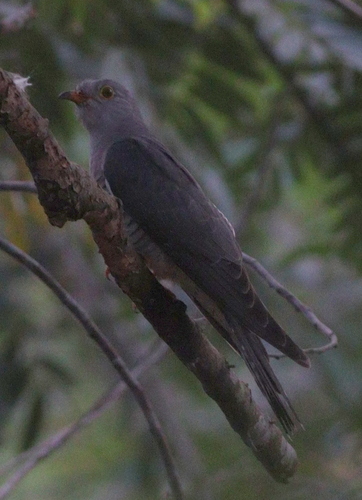 African Cuckoo
In breve
Il segno di campo più affidabile per separare il Dusky Long-tailed Cuckoo dall'African Cuckoo è la combinazione di colore delle parti superiori e del modello delle ali: il Dusky Long-tailed ha parti superiori di colore marrone scuro e grigio fuligginoso con una lucentezza blu-viola e macchie buff e bianche prominenti sulle ali, mentre l'African Cuckoo è complessivamente grigio scuro sopra senza macchie. I giovani Dusky Long-tailed Cuckoo mostrano barre rugginose sulle parti superiori, a differenza delle due forme giovanili dell'African Cuckoo (grigia e epatica). In volo, la coda del Dusky Long-tailed è più lunga e più graduata, e le sue parti inferiori sono più pesantemente barrate. L'habitat è anche un forte indizio: il Dusky Long-tailed è una specie forestale, l'African Cuckoo preferisce boschi aperti e savana. I richiami sono molto diversi, ma entrambi sono più spesso uditi che visti.
Consigli di identificazione
- Juvenile upperparts: Cerca barre rugginose sulle parti superiori del giovane Dusky Long-tailed Cuckoo; i giovani African Cuckoo non mostrano mai questo, apparendo invece grigi o marroni (epatici) con barre bianche o buff.
- Adult upperwing pattern: Il Dusky Long-tailed Cuckoo mostra macchie buff e bianche sulle ali marrone scuro (tutte le età); le ali dell'African Cuckoo sono semplicemente grigio scuro senza macchie.
- Tail shape and length: La coda del Dusky Long-tailed è più lunga e più graduata, particolarmente evidente quando è posato o in volo. La coda dell'African Cuckoo è lunga ma meno graduata, con una punta bianca e barrature scure.
- Upperpart color: Il Dusky Long-tailed è marrone scuro con un lavaggio grigio fuligginoso e iridescenza blu-viola; l'African Cuckoo è grigio scuro, privo di toni marroni o iridescenza.
- Underpart barring: Il Dusky Long-tailed ha barre più pesanti, marrone scuro, sulle parti inferiori bianche; le barre dell'African Cuckoo sono grigio scuro e più regolari, con toni cremosi o buff nei giovani.
- Vent color: Il Dusky Long-tailed ha un'apertura buff, che può essere visibile quando l'uccello si pulisce o in buona luce; l'apertura dell'African Cuckoo non è buff.
- Bare part color: Il Dusky Long-tailed ha occhi marrone scuro, becco verde-nerastro e piedi gialli. I maschi dell'African Cuckoo hanno occhi gialli, le femmine marrone chiaro, con un becco giallo (punta nera/di corno) e gambe giallastre. Il colore degli occhi è meglio visibile da vicino.
- Flight style: Il volo dell'African Cuckoo è veloce e simile a quello di un falco, spesso paragonato a un piccolo rapace; il volo del Dusky Long-tailed è meno appariscente e più riservato.
- Perching posture: L'African Cuckoo spesso si posa quasi verticalmente, specialmente in spazi aperti; il Dusky Long-tailed è più probabile che sia nascosto nella vegetazione o a metà chioma.
- Habitat context: Una foresta densa o una vegetazione fitta indicano fortemente il Dusky Long-tailed; boschi aperti o savana per l'African Cuckoo.
- Vocalizations: Il richiamo del Dusky Long-tailed è un 'hu hee wheeu' o una lunga serie di note che accelerano/decrescono; il maschio dell'African Cuckoo emette un 'coo-coo' a due note con la seconda nota più alta e forte, e la femmina un 'kwik-kwik-kwik' gorgogliante.
- Seasonal movement: L'African Cuckoo è migratorio e potrebbe essere assente al di fuori della stagione delle piogge in alcune aree; il Dusky Long-tailed è residente nel suo habitat forestale.
- Sex differences: Solo l'African Cuckoo mostra dimorfismo sessuale nel colore degli occhi (giallo nei maschi, marrone chiaro nelle femmine); i sessi del Dusky Long-tailed sono simili.
- Association with mixed flocks: Il Dusky Long-tailed può unirsi a stormi di specie miste nella foresta, l'African Cuckoo è solitamente solitario.
- Host choice (contextual): Entrambi sono parassiti della covata, ma le loro specie ospiti differiscono e sono poco utili per l'identificazione sul campo a meno che non vengano osservati in un nido.
Taglia
Entrambe le specie sono simili in lunghezza, circa 32–33 cm (13 in) [wikipedia]. Il Dusky Long-tailed Cuckoo è leggermente più pesante (50–61 g) rispetto all'African Cuckoo (non è stata fornita una massa precisa, ma sono di dimensioni simili). Entrambi hanno code lunghe, ma quella del Dusky Long-tailed è notevolmente più graduata e appare più lunga rispetto al corpo. La struttura è altrimenti simile, con entrambe che mostrano proporzioni tipiche di cuculi snelli.
Piumaggio
- Juvenile/immature: I giovani Dusky Long-tailed Cuckoo hanno una gola nerastra e barre rugginose sulle parti superiori, che è unica tra questi due. I giovani African Cuckoo si presentano in due forme: una forma grigia (più grigia dell'adulto, con barre bianche, parti inferiori bianco-cremose con dense barre scure) e una forma epatica (marrone sopra, buff/tawny sotto, non barrata di ruggine come il Dusky Long-tailed).
- Adult upperparts: Il Dusky Long-tailed è marrone scuro con un lavaggio grigio fuligginoso e un'iridescenza blu-viola, oltre a macchie buff e bianche sulle ali. L'African Cuckoo è grigio scuro sopra, senza macchie o iridescenza.
- Underparts: Entrambi hanno parti inferiori bianche con barrature scure, ma le barre del Dusky Long-tailed sono marrone scuro e più pesanti; quelle dell'African Cuckoo sono grigio scuro e più regolari. L'apertura del Dusky Long-tailed è buff, quella dell'African Cuckoo non è descritta in questo modo.
- Tail: La coda del Dusky Long-tailed è più lunga e più graduata, marrone scuro con possibili macchie; quella dell'African Cuckoo è grigio scuro con barrature scure e una punta bianca.
- Bare parts: Il Dusky Long-tailed ha occhi marrone scuro, becco verde-nerastro, piedi gialli. I maschi dell'African Cuckoo hanno occhi gialli, le femmine marrone chiaro, con un becco giallo con punta nera/di corno e gambe giallastre.
- Sexes: Entrambe le specie sono simili tra i sessi, ma il colore degli occhi differisce nell'African Cuckoo.
Comportamento
Il Dusky Long-tailed Cuckoo si trova spesso in vegetazione densa o a metà chioma, a volte unendosi a stormi di specie miste, ed è più probabile che venga visto in coppie che chiamano dalle cime degli alberi. L'African Cuckoo è generalmente solitario, cerca cibo sugli alberi e a terra, e si posa quasi verticalmente. Il volo dell'African Cuckoo è descritto come 'veloce' e ricorda quello di un piccolo rapace, mentre il volo del Dusky Long-tailed è meno notato ma probabilmente più riservato a causa del suo habitat forestale.
Habitat
L'habitat è un forte separatore: il Dusky Long-tailed Cuckoo è uno specialista della foresta, preferendo vegetazione densa, liane, foreste secondarie alte e foreste fluviali in Africa Centrale. L'African Cuckoo si trova in boschi aperti e savana con acacie sparse, ed è assente da foreste dense e regioni aride. Se vedi un cuculo in una foresta fitta, è molto più probabile che sia un Dusky Long-tailed; in boschi aperti o savana, l'African Cuckoo è la norma.
Voce
Il Dusky Long-tailed Cuckoo emette un 'hu hee wheeu' e una serie di note che accelerano e poi decelerano, discendendo. Il richiamo maschile dell'African Cuckoo è un 'coo-coo' a due note con la seconda nota più alta e forte; la femmina emette un 'kwik-kwik-kwik' gorgogliante. I richiami sono molto diversi e diagnostici se uditi bene.
Dusky Long-tailed Cuckoo · African Cuckoo · I miei uccelli difficili