

Crowned Hornbill vs Southern Red-billed Hornbill
Lophoceros alboterminatus contro Tockus rufirostris
Fai un quiz con Crowned Hornbill e Southern Red-billed Hornbill
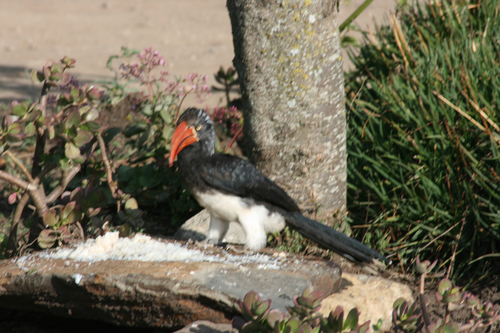 Crowned Hornbill
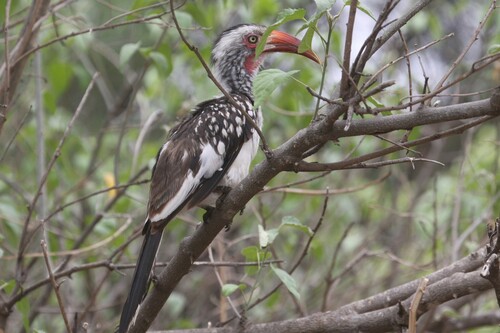 Southern Red-billed Hornbill
In breve
Il segno di campo più affidabile per separare il Crowned Hornbill dal Southern Red-billed Hornbill è la combinazione di piumaggio generale e struttura del becco: il Crowned Hornbill è più grande, con un robusto becco rosso sormontato da un prominente casco (più piccolo nelle femmine), un ventre bianco, dorso e ali neri, e una lunga coda con punte bianche. Il Southern Red-billed Hornbill è più piccolo, con un becco rosso più snello (la mandibola inferiore parzialmente nera nei maschi), occhi gialli, pelle orbitale pallida, e distintive striature nerastre dai copritrici auricolari lungo il collo, oltre a copritrici delle ali macchiate. I modelli delle ali superiori specifici per i giovani o gli immaturi non sono descritti per nessuna delle due specie, quindi concentrati su queste caratteristiche adulte. L'habitat può anche aiutare: il Crowned Hornbill preferisce aree boschive, mentre il Southern Red-billed Hornbill è un uccello di savana aperta e macchia.
Consigli di identificazione
- Struttura e colore del becco: Il Crowned Hornbill ha un becco spesso e rosso con un prominente casco sulla mandibola superiore (più piccolo nelle femmine), che gli conferisce un aspetto pesante e arcuato. Il becco del Southern Red-billed Hornbill è più snello, privo di un prominente casco, e nei maschi, la mandibola inferiore è parzialmente nera.
- Modello della coda: La lunga coda del Crowned Hornbill ha punte bianche evidenti, visibili sia in posizione percheggiata che in volo. La coda del Southern Red-billed Hornbill non ha queste punte bianche e appare più semplice.
- Contrasto del piumaggio: Il Crowned Hornbill mostra un forte contrasto tra il suo dorso/ali neri e il ventre bianco. Il Southern Red-billed Hornbill è complessivamente più chiaro, con una gola bianca e parti inferiori pallide, ma con striature nerastre lungo il collo e copritrici delle ali macchiate.
- Modello del collo e del viso: Il Southern Red-billed Hornbill ha striature nerastre dai copritrici auricolari lungo il lato del collo, e un anello orbitale pallido (rosa a grigiastro) attorno all'occhio giallo. Il Crowned Hornbill non ha queste striature e ha un modello della testa più uniforme.
- Colore degli occhi: Entrambe le specie hanno occhi gialli, ma la pelle orbitale pallida del Southern Red-billed Hornbill è distintiva da vicino.
- Copritrici delle ali: Il Southern Red-billed Hornbill ha copritrici delle ali chiaramente macchiate, una caratteristica assente nel Crowned Hornbill.
- Dimensioni e corporatura: Il Crowned Hornbill è più grande e pesante, con una corporatura più robusta e una coda più lunga. Il Southern Red-billed Hornbill è notevolmente più piccolo e più snello.
- Habitat: Il Crowned Hornbill si trova nelle foreste (specialmente costiere e fluviali), mentre il Southern Red-billed Hornbill preferisce savane aperte e macchia. Solo l'habitat può essere un forte indizio.
- Comportamento: Il Crowned Hornbill è più arboricolo, spesso cerca cibo in alto sugli alberi e talvolta in gruppi. Il Southern Red-billed Hornbill è più terrestre, spesso visto camminare a terra o muoversi attraverso la vegetazione bassa.
- Dimorfismo sessuale: Nel Crowned Hornbill, le femmine hanno un casco più piccolo, ma altrimenti i sessi sono simili. Nel Southern Red-billed Hornbill, i maschi sono più grandi con un becco più lungo e più nero sulla mandibola inferiore.
- Vocalizzazioni: Se senti un 'kuk kuk kuk...' che accelera e termina in 'kuk-we kuk-we,' è il Southern Red-billed Hornbill. Il richiamo del Crowned Hornbill non è descritto qui.
- Display: Il Southern Red-billed Hornbill non alza le ali in mostra, a differenza di alcuni altri hornbill con becco rosso. Questo non è un criterio di separazione dal Crowned, ma può aiutare a evitare confusione con altre specie.
- Dimensione del gruppo: Il Crowned Hornbill può essere visto in gruppi più numerosi, specialmente nella stagione secca, mentre il Southern Red-billed Hornbill è più spesso in coppie o piccoli gruppi.
- Sovrapposizione geografica: Entrambe le specie possono verificarsi in parti dell'Africa meridionale, ma il Crowned Hornbill è più ristretto alle foreste costiere e fluviali orientali, mentre il Southern Red-billed è diffuso in habitat aperti e più secchi.
- Confusione giovanile/immatura: Non sono descritti modelli distintivi delle ali per i giovani o gli immaturi per nessuna delle due specie, quindi fai affidamento sulle caratteristiche strutturali e di piumaggio sopra indicate a tutte le età.
Taglia
Il Crowned Hornbill è significativamente più pesante, con una massa corporea media di 224.5g [wikidata], ed è descritto come di dimensioni medie (50–54 cm di lunghezza) [wikipedia]. Il Southern Red-billed Hornbill è più piccolo e leggero; mentre non è data una massa precisa, è costantemente notato come più piccolo e più snello rispetto al Crowned Hornbill. Sul campo, il Crowned Hornbill apparirà più robusto e con una coda più lunga, con una presenza più imponente, specialmente quando è percheggiato.
Piumaggio
-
Modelli delle ali giovanili/immaturi: Non sono descritti modelli distintivi delle ali superiori o segni di volo specifici per età per nessuna delle due specie nelle note fornite. Concentrati sul piumaggio adulto per la separazione.
-
Crowned Hornbill (adulto): Dorso e ali neri, ventre bianco, lunga coda con punte bianche. Il becco è rosso con un prominente casco sulla mandibola superiore (più piccolo nelle femmine). Gli occhi sono gialli. Complessivamente, l'uccello appare scuro sopra e chiaro sotto, con un forte contrasto di colore tra le parti superiori nere e le parti inferiori bianche.
-
Southern Red-billed Hornbill (adulto): Gola bianca, parti inferiori pallide, ma con ampie striature nerastre che corrono dai copritrici auricolari lungo il lato del collo. Le copritrici delle ali sono chiaramente macchiate. Il becco è rosso (la mandibola inferiore parzialmente nera nei maschi), e l'iride è gialla con un anello orbitale pallido (rosa a grigiastro). Il dorso non è descritto come solidamente nero, e la coda manca delle prominenti punte bianche del Crowned Hornbill. L'impressione complessiva è più chiara e più decorata, specialmente sul collo e sulle ali.
Comportamento
Il Crowned Hornbill cerca cibo principalmente sugli alberi, spesso in gruppi durante la stagione secca, ed è più arboricolo nelle sue abitudini. Il Southern Red-billed Hornbill è tipicamente visto in campagna aperta, spesso camminando a terra o muovendosi attraverso cespugli e alberi bassi. Non si esibisce alzando le ali, a differenza di alcuni altri hornbill con becco rosso. Entrambe le specie possono essere viste in coppie o piccoli gruppi, ma il Crowned Hornbill è più probabile che venga osservato nella chioma degli alberi, mentre il Southern Red-billed Hornbill è più terrestre e conspicuo in habitat aperti.
Habitat
Il Crowned Hornbill è residente delle foreste costiere e fluviali nell'Africa meridionale e nordorientale, favorendo ambienti boschivi densi. Al contrario, il Southern Red-billed Hornbill è nativo delle savane e delle macchie secche dell'Africa meridionale, ed è generalmente assente dalle foreste dense e dalle basse terre orientali del Mozambico. Se incontri un hornbill in una foresta fitta, è molto più probabile che sia un Crowned; in macchia aperta o savana, ci si aspetta un Southern Red-billed.
Voce
Il Southern Red-billed Hornbill ha un richiamo distintivo: una serie accelerante di note 'kuk kuk kuk...' che termina in un crescendo di note doppie, 'kuk-we kuk-we.' Le vocalizzazioni del Crowned Hornbill non sono descritte nelle note fornite, quindi la voce è solo diagnostica se senti il richiamo descritto del Southern Red-billed.
Crowned Hornbill · Southern Red-billed Hornbill · I miei uccelli difficili