

Toco Coronado vs Toco Piquirrojo Sureño
Lophoceros alboterminatus frente a Tockus rufirostris
Juega un quiz con Toco Coronado y Toco Piquirrojo Sureño
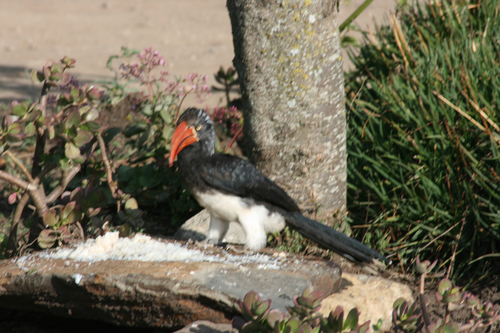 Toco Coronado
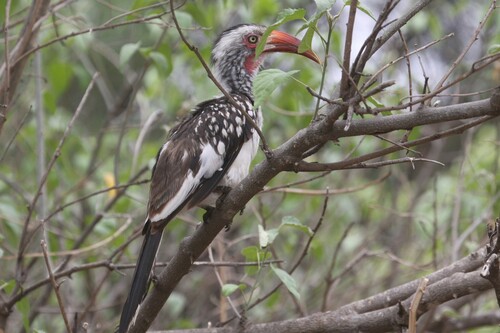 Toco Piquirrojo Sureño
En breve
La marca de campo más confiable para separar el Toco Coronado del Toco Piquirrojo Sureño es la combinación de plumaje general y estructura del pico: el Toco Coronado es más grande, con un pico rojo robusto coronado por un casco prominente (más pequeño en las hembras), un vientre blanco, espalda y alas negras, y una cola larga con puntas blancas. El Toco Piquirrojo Sureño es más pequeño, con un pico rojo más delgado (la mandíbula inferior parcialmente negra en los machos), ojos amarillos, piel orbital pálida y distintivas estrías negruzcas desde las coberturas auriculares hasta el cuello, además de coberturas alares moteadas. No se describen patrones específicos de ala superior para juveniles o inmaduros en ninguna de las especies, así que enfócate en estas características de adultos. El hábitat también puede ayudar: el Toco Coronado prefiere áreas boscosas, mientras que el Toco Piquirrojo Sureño es un ave de sabana abierta y matorrales.
Consejos de identificación
- Estructura y color del pico: El Toco Coronado tiene un pico grueso y rojo con un casco prominente en la mandíbula superior (más pequeño en las hembras), dándole un aspecto pesado y arqueado. El pico del Toco Piquirrojo Sureño es más delgado, carece de un casco prominente, y en los machos, la mandíbula inferior es parcialmente negra.
- Patrón de la cola: La larga cola del Toco Coronado tiene puntas blancas obvias, visibles tanto posado como en vuelo. La cola del Toco Piquirrojo Sureño carece de estas puntas blancas y parece más simple.
- Contraste del plumaje: El Toco Coronado muestra un fuerte contraste entre su espalda/alas negras y su vientre blanco. El Toco Piquirrojo Sureño es más pálido en general, con una garganta blanca y partes inferiores pálidas, pero con estrías negruzcas en el cuello y coberturas alares moteadas.
- Patrón del cuello y la cara: El Toco Piquirrojo Sureño tiene estrías negruzcas desde las coberturas auriculares hasta el lado del cuello, y un anillo orbital pálido (rosado a grisáceo) alrededor del ojo amarillo. El Toco Coronado carece de estas estrías y tiene un patrón de cabeza más uniforme.
- Color de los ojos: Ambas especies tienen ojos amarillos, pero la piel orbital pálida del Toco Piquirrojo Sureño es distintiva a corta distancia.
- Coberturas alares: El Toco Piquirrojo Sureño tiene coberturas alares claramente moteadas, una característica que no está presente en el Toco Coronado.
- Tamaño y volumen: El Toco Coronado es más grande y pesado, con una construcción más robusta y una cola más larga. El Toco Piquirrojo Sureño es notablemente más pequeño y más esbelto.
- Hábitat: El Toco Coronado se encuentra en bosques (especialmente costeros y ribereños), mientras que el Toco Piquirrojo Sureño prefiere sabanas abiertas y matorrales. El hábitat por sí solo puede ser una pista fuerte.
- Comportamiento: El Toco Coronado es más arbóreo, a menudo buscando alimento en lo alto de los árboles y a veces en bandadas. El Toco Piquirrojo Sureño es más terrestre, a menudo visto caminando por el suelo o moviéndose a través de vegetación baja.
- Dimorfismo sexual: En el Toco Coronado, las hembras tienen un casco más pequeño, pero de otro modo los sexos son similares. En el Toco Piquirrojo Sureño, los machos son más grandes con un pico más largo y más negro en la mandíbula inferior.
- Vocalizaciones: Si escuchas un 'kuk kuk kuk...' acelerado que termina en 'kuk-we kuk-we', es el Toco Piquirrojo Sureño. El canto del Toco Coronado no se describe aquí.
- Exhibición: El Toco Piquirrojo Sureño no levanta sus alas en exhibición, a diferencia de algunos otros tocos de pico rojo. Esto no es una separación del Toco Coronado, pero puede ayudar a evitar confusiones con otras especies.
- Tamaño de la bandada: El Toco Coronado puede verse en bandadas más grandes, especialmente en la temporada seca, mientras que el Toco Piquirrojo Sureño se encuentra más a menudo en parejas o grupos pequeños.
- Superposición geográfica: Ambas especies pueden ocurrir en partes del sur de África, pero el Toco Coronado está más restringido a los bosques costeros y ribereños del este, mientras que el Toco Piquirrojo Sureño es ampliamente distribuido en hábitats abiertos y secos.
- Confusión juvenil/inmaduro: No se describen patrones de alas distintivos para juveniles o inmaduros en ninguna de las especies, así que confía en las características estructurales y de plumaje mencionadas anteriormente en todas las edades.
Tamaño
El Toco Coronado es significativamente más pesado, con una masa corporal promedio de 224.5g [wikidata], y se describe como de tamaño mediano (50–54 cm de longitud) [wikipedia]. El Toco Piquirrojo Sureño es más pequeño y ligero; aunque no se da una masa precisa, se nota consistentemente que es más pequeño y más esbelto que el Toco Coronado. En el campo, el Toco Coronado se verá más voluminoso y con una cola más larga, con una presencia más imponente, especialmente cuando está posado.
Plumaje
-
Patrones de alas juveniles/inmaduros: No se describen patrones de alas superiores o marcas de vuelo específicos para ninguna de las especies en las notas proporcionadas. Enfócate en el plumaje de adultos para la separación.
-
Toco Coronado (adulto): Espalda y alas negras, vientre blanco, cola larga con puntas blancas. El pico es rojo con un casco prominente en la mandíbula superior (más pequeño en las hembras). Los ojos son amarillos. En general, el ave se ve oscura por encima y pálida por debajo, con un fuerte contraste de color entre las partes superiores negras y las partes inferiores blancas.
-
Toco Piquirrojo Sureño (adulto): Garganta blanca, partes inferiores pálidas, pero con amplias estrías negruzcas que corren desde las coberturas auriculares hasta el lado del cuello. Las coberturas alares están claramente moteadas. El pico es rojo (la mandíbula inferior parcialmente negra en los machos), y el iris es amarillo con un anillo orbital pálido (rosado a grisáceo). La espalda no se describe como completamente negra, y la cola carece de las prominentes puntas blancas del Toco Coronado. La impresión general es más pálida y más patrón, especialmente en el cuello y las alas.
Comportamiento
El Toco Coronado busca alimento principalmente en los árboles, a menudo en bandadas durante la temporada seca, y es más arbóreo en sus hábitos. El Toco Piquirrojo Sureño se ve típicamente en campo abierto, a menudo caminando por el suelo o moviéndose a través de arbustos y árboles bajos. No exhibe levantando sus alas, a diferencia de algunos otros tocos de pico rojo. Ambas especies pueden verse en parejas o grupos pequeños, pero el Toco Coronado es más probable que se observe en el dosel, mientras que el Toco Piquirrojo Sureño es más terrestre y conspicuo en hábitats abiertos.
Hábitat
El Toco Coronado es residente de bosques costeros y ribereños en el sur y noreste de África, favoreciendo entornos densos y boscosos. En contraste, el Toco Piquirrojo Sureño es nativo de sabanas y matorrales secos en el sur de África, y generalmente está ausente de bosques densos y de las tierras bajas orientales de Mozambique. Si encuentras un toco en un bosque denso, es mucho más probable que sea el Toco Coronado; en matorrales abiertos o sabana, se espera el Toco Piquirrojo Sureño.
Voz
El Toco Piquirrojo Sureño tiene un canto distintivo: una serie acelerada de notas 'kuk kuk kuk...' que termina en un crescendo de notas dobles, 'kuk-we kuk-we.' Las vocalizaciones del Toco Coronado no se describen en las notas proporcionadas, así que la voz solo es diagnóstica si escuchas el canto descrito del Toco Piquirrojo Sureño.