

Re di quaglie vs Piviere dorato
Crex crex contro Pluvialis apricaria
Fai un quiz con Re di quaglie e Piviere dorato
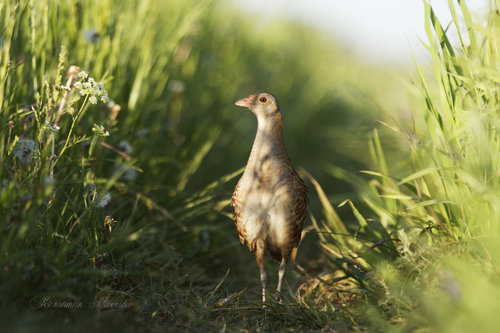 Re di quaglie
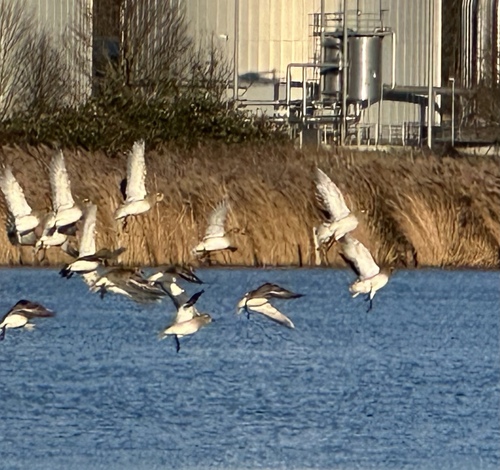 Piviere dorato
In breve
The most reliable field mark to separate Corncrake from European Golden Plover is the Corncrake’s combination of chestnut upperwing coverts and blue-grey underparts with barred flanks, versus the Golden Plover’s gold-spangled upperparts and distinctive white S-shaped band on the face and flanks in breeding plumage. In flight, Corncrake shows chestnut in the wings and dangles its legs, while Golden Plover has rapid, powerful wingbeats and a compact, thickset shape. Juvenile Corncrakes are buffy and lack the blue-grey underparts, but still never show the gold-spangled pattern or the S-shaped white band of Golden Plover. Structure, bill shape, and habitat also differ markedly, helping clinch identification even at a distance.
Consigli di identificazione
- Chestnut wing coverts (Corncrake): In all ages, Corncrake shows chestnut on the wing coverts, especially obvious in flight or when the wing is stretched. Golden Plover never shows chestnut in the wing.
- Barred flanks and undertail (Corncrake): Look for chestnut-and-white barring on the flanks and undertail, present in all Corncrake plumages except very young chicks. Golden Plover always has plain, unbarred flanks.
- Blue-grey underparts (Corncrake adult): Adult Corncrake has blue-grey face, neck, and breast, contrasting with the brown-streaked upperparts. Golden Plover never shows blue-grey underparts.
- Gold-spangled upperparts (Golden Plover): All ages of Golden Plover have golden or yellow spots on the back and wings, which Corncrake never shows.
- White S-band (Golden Plover breeding): In breeding plumage, Golden Plover has a white S-shaped band from forehead to flanks, with a black face and belly. Corncrake never shows this pattern.
- Flight style: Corncrake flies with legs dangling and shallow, less rounded wings; Golden Plover has rapid, powerful wingbeats and a compact, thickset profile.
- Bill shape: Corncrake has a strong, flesh-coloured rail bill, thicker and less pointed than the slender, short bill of Golden Plover.
- Legs: Corncrake’s legs are longer and paler, often visible trailing behind in flight. Golden Plover’s legs are shorter and rarely visible in flight.
- Face pattern: Corncrake has a pale brown eye-stripe; Golden Plover has a more uniform face in non-breeding plumage, or a striking white S-band in breeding plumage.
- Juvenile confusion: Even juvenile Corncrake, though buffier, never shows gold spangling or the S-band of Golden Plover. Juvenile Golden Plover always shows gold-spangled upperparts.
- Habitat: Corncrake is almost always found in dense grass or hayfields, rarely in the open; Golden Plover prefers open moorland or fields and is often seen in flocks.
- Vocalization: Corncrake’s loud, repetitive 'krek krek' is very different from the Golden Plover’s soft, descending 'tuu'.
- Seasonal changes: Corncrake’s upperparts darken and underparts become less grey outside the breeding season, but chestnut wing coverts and barred flanks remain. Golden Plover loses the black belly and S-band in winter but keeps gold-spangled upperparts.
- Jizz: Corncrake is elongated, laterally compressed, and often skulking; Golden Plover is thickset, upright, and more confiding in open habitats.
- Gamebird confusion: If the bird looks like a gamebird in flight but shows chestnut wings and dangling legs, it is Corncrake, not Golden Plover.
Taglia
Both species are similar in mass (Corncrake males average 165g, females 145g; European Golden Plover about 175g [wikidata]), but their shapes are quite different. Corncrake is a medium-sized rail with a more elongated body, longer neck, and longer legs (often seen dangling in flight). Golden Plover is thickset and compact, with relatively short legs for a plover and wings only slightly longer than the tail. Corncrake’s wingspan is 42–53 cm, but its body is more laterally compressed and less upright than the plover’s.
Piumaggio
- Juveniles/immatures: Corncrake juveniles resemble adults but are yellower above and buff-brown below, lacking blue-grey underparts. They still show chestnut in the wing coverts and barred flanks/undertail. Golden Plover juveniles and non-breeding birds always show gold-spangled upperparts and lack any chestnut or barring on the flanks/undertail. No age of Golden Plover ever shows the Corncrake’s blue-grey or barred underparts.
- Adults (breeding): Corncrake adults have brown-black upperparts streaked with buff/grey, chestnut wing coverts, blue-grey face, neck, and breast, and chestnut-and-white barred flanks/undertail. Golden Plover adults in breeding plumage have a striking white S-band from forehead to flanks, black face/belly, and gold-spangled upperparts.
- Adults (non-breeding): Corncrake upperparts darken, underparts become less grey, but the chestnut wing coverts and barred flanks persist. Golden Plover loses the black belly and S-band but retains gold-spangled upperparts and never shows chestnut or barred flanks.
- In flight: Corncrake shows chestnut in the wings, white leading edge to inner wing, and dangling legs. Golden Plover shows uniform gold-spangled upperparts, white underwings (not axillaries), and a compact, rapid flight.
Comportamento
Corncrake is secretive, usually skulking in dense grass and rarely seen in the open except when flushed, when it flies low with dangling legs and shallow wingbeats. Golden Plover is much more likely to be seen standing in the open, often in flocks, and has a rapid, powerful flight with regular wingbeats and a compact profile. Corncrake’s flight can resemble a gamebird, but the chestnut wing pattern and leg position are distinctive.
Habitat
Corncrake breeds in dense grassland and hayfields, rarely venturing into open ground, and migrates to Africa for the winter. Golden Plover prefers open moorland, tundra, or grassland, often in more exposed locations than Corncrake, and is commonly seen in flocks on open fields or mudflats outside the breeding season. Habitat context is a strong clue: a bird flushed from thick grass is far more likely to be a Corncrake.
Voce
Corncrake gives a loud, repetitive 'krek krek' call, especially at night or dusk, which is very different from the Golden Plover’s soft, descending 'tuu'. If you hear a harsh, mechanical call from grassland, it is Corncrake; a plaintive, whistled note from open ground points to Golden Plover.