

Canebrake Groundcreeper vs Grassland Yellow-Finch
Clibanornis dendrocolaptoides contro Sicalis luteola
Fai un quiz con Canebrake Groundcreeper e Grassland Yellow-Finch
 Canebrake Groundcreeper
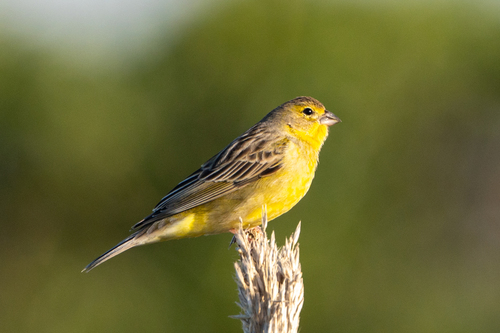 Grassland Yellow-Finch
In breve
Il segno distintivo più affidabile per separare il Canebrake Groundcreeper dal Grassland Yellow-Finch è la struttura e la colorazione complessive: il groundcreeper è un uccello molto più grande e pesante con un becco dritto e scuro e toni rugginoso-marroni ricchi, mentre il yellow-finch è molto più piccolo, più leggero e distintamente giallo. I giovani groundcreepers mostrano una gola bianca lavata di buff semplice e un petto leggermente maculato, ma non si avvicinano mai al giallo brillante di qualsiasi età del yellow-finch. Sul campo, cerca la forma robusta e simile a un ovenbird del groundcreeper e i colori terrosi rispetto alla costruzione compatta e simile a un passero del yellow-finch e al giallo vivido. L'habitat può aiutare: i groundcreepers sono furtivi in densa vegetazione, mentre i yellow-finches sono uccelli di campagna aperta.
Consigli di identificazione
- Dimensione e massa: Il groundcreeper è oltre tre volte più pesante del yellow-finch. Se l'uccello appare grande, allungato e robusto, è quasi certamente un groundcreeper. Gli uccelli piccoli e delicati sono yellow-finches.
- Forma del becco: Il groundcreeper ha un becco lungo, dritto e scuro adatto per sondare; il yellow-finch ha un becco corto, conico e chiaro per mangiare semi. La forma del becco è diagnostica a distanza ravvicinata.
- Colore complessivo: Il groundcreeper non è mai giallo a nessuna età; è rugginoso-marrone a castagna sopra, con parti inferiori grigie e ocra. Il yellow-finch è sempre giallastro, specialmente sotto, anche nei giovani.
- Supercilium e faccia: Il groundcreeper mostra un supercilium grigio o buff-grigio stretto che si allarga dietro l'occhio, con lore scure e una faccia marrone rossiccio opaca. Il yellow-finch manca di questo schema, mostrando invece una faccia semplice o leggermente marcata.
- Corona e dorso: Il groundcreeper ha una corona marrone castagna scura e un dorso marrone rugginoso; il yellow-finch ha parti superiori olivastre o marroni ma mai castagne o rugginose.
- Ali e coda: Le copritrici delle ali e le penne di volo del groundcreeper sono rugginoso-marroni, e la coda è per lo più rugginoso-castagna. Il yellow-finch ha ali e coda marroni semplici, mai rugginosi o castagni.
- Gola e parti inferiori: Il groundcreeper adulto ha una gola bianca con macchie nere sui lati; i giovani hanno una gola bianca lavata di buff semplice. Il yellow-finch è giallastro sulla gola e sulle parti inferiori, a volte con striature deboli nei giovani ma mai bianco o maculato.
- Petto e pancia: Il petto e la pancia del groundcreeper sono grigio opaco, con lati rugginoso-marroni e fianchi ocra. Il yellow-finch è giallo brillante sotto, a volte con striature deboli nei giovani.
- Colore delle zampe: Il groundcreeper ha zampe e piedi verde oliva a grigio verdastro; le zampe del yellow-finch sono chiare e poco appariscenti.
- Comportamento: Il groundcreeper si muove lentamente in densa vegetazione, raramente volando lontano o posandosi in aperto. Il yellow-finch è attivo, si posa su steli esposti e vola spesso in gruppi.
- Habitat: La densa vegetazione forestale intricata indica il groundcreeper; la campagna aperta o i campi infestati da erbacce indicano il yellow-finch.
- Confusione giovanile: Anche i giovani groundcreepers, con le loro gole più semplici e i petti leggermente maculati, non mostrano mai toni gialli. I giovani yellow-finches possono essere più opachi ma rimangono giallastri e mancano delle tonalità rugginose e castagne del groundcreeper.
- Sessi: Entrambe le specie sono sessualmente monomorfiche nel piumaggio, quindi il sesso non è un segno utile sul campo.
- Volo: Il volo del groundcreeper è pesante e diretto, raramente sostenuto; il yellow-finch è veloce, saltellante e agile.
- Se hai dubbi: Un uccello che è sia giallo che piccolo è un yellow-finch; un grande uccello rugginoso-marrone che si muove furtivamente è un groundcreeper.
Taglia
Il Canebrake Groundcreeper è sostanzialmente più grande e pesante, pesando circa 53 g e misurando 20–22 cm di lunghezza. Ha un corpo robusto e allungato tipico dei grandi furnariidi. Al contrario, il Grassland Yellow-Finch è molto più piccolo e leggero, con soli 15,5 g, con una costruzione compatta simile a un fringillide. Questa differenza di dimensioni è ovvia in un confronto diretto: il groundcreeper appare ingombrante e allungato, mentre il yellow-finch è minuto e delicato. Anche la dimensione e la forma del becco differiscono: il becco del groundcreeper è dritto e forte, adatto per sondare, mentre quello del yellow-finch è corto e conico.
Piumaggio
Il giovane Canebrake Groundcreeper può essere riconosciuto dalla sua gola bianca lavata di buff semplice e dalla leggera maculatura buff sul petto, con una pancia più grigia rispetto agli adulti. Anche così, rimane un uccello opaco, dai toni terrosi con parti superiori rugginoso-marroni e senza giallo. Gli adulti hanno un supercilium grigio o buff-grigio stretto, una corona marrone castagna scura, un dorso marrone rugginoso e ali e coda rugginoso-marroni. La gola è bianca con macchie nere, e le parti inferiori sono grigie opache con lati rugginoso-marroni e fianchi ocra. Il Grassland Yellow-Finch, al contrario, è di un giallo brillante complessivamente negli adulti, con toni olivastri o marroni sul dorso e sulle ali ma mai il ricco rugginoso o castagna del groundcreeper. I giovani yellow-finches possono essere più opachi, ma mostrano ancora toni giallastri e mancano delle tonalità castagne e rugginose del groundcreeper. Nessuna età o stagione del yellow-finch somiglia al piumaggio terroso e simile a un ovenbird del groundcreeper.
Comportamento
Il Canebrake Groundcreeper è un furtivo, si muove lentamente e deliberatamente attraverso la densa vegetazione, spesso vicino al suolo, sondando con il suo becco dritto. È raramente visto in aperto. Il Grassland Yellow-Finch è molto più attivo e appariscente, spesso visto posarsi su steli d'erba esposti o volare in gruppi sopra campi aperti. Il loro volo è veloce e saltellante, tipico dei piccoli mangiatori di semi. Il comportamento del groundcreeper è furtivo e segreto, mentre il yellow-finch è sociale e visibile.
Habitat
Il Canebrake Groundcreeper abita in densa vegetazione intricata in foreste umide, specialmente in aree con canne o bambù spessi, ed è trovato in Argentina, Brasile e Paraguay. Evita le aree aperte. Il Grassland Yellow-Finch, come suggerisce il suo nome, si trova in prati aperti, pascoli e campi infestati da erbacce, raramente avventurandosi in coperture dense. Se vedi un uccello in un habitat erboso aperto, è quasi certamente un yellow-finch; un uccello che si muove attraverso una densa vegetazione ombrosa è probabilmente un groundcreeper.
Canebrake Groundcreeper · Grassland Yellow-Finch · I miei uccelli difficili