

Espinero Tacuatí vs Chirigüe Sabanero
Clibanornis dendrocolaptoides frente a Sicalis luteola
Juega un quiz con Espinero Tacuatí y Chirigüe Sabanero
 Espinero Tacuatí
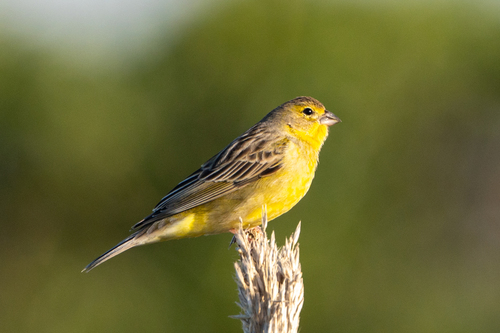 Chirigüe Sabanero
En breve
La marca de campo más confiable para separar el Espinero Tacuatí del Chirigüe Sabanero es la estructura y coloración general: el tacuatí es un ave mucho más grande y pesada con un pico recto y oscuro y tonos ricos de marrón rufo, mientras que el chirigüe es mucho más pequeño, ligero y distintivamente amarillo. Los tacuatí juveniles muestran una garganta blanca lavada de color crema y un pecho débilmente moteado, pero nunca se acercan al brillante amarillo de cualquier chirigüe de cualquier edad. En el campo, busca la forma robusta y similar a un horno del tacuatí y sus colores terrosos frente a la construcción compacta y similar a un gorrión del chirigüe y su amarillo vívido. El hábitat puede ayudar: los tacuatí son furtivos en la densa maleza, mientras que los chirigües son aves de campo abierto.
Consejos de identificación
- Tamaño y volumen: El tacuatí es más de tres veces más pesado que el chirigüe. Si el ave parece grande, alargada y robusta, casi con seguridad es un tacuatí. Las aves pequeñas y delicadas son chirigües.
- Forma del pico: El tacuatí tiene un pico largo, recto y oscuro adecuado para sondear; el chirigüe tiene un pico corto, cónico y pálido para comer semillas. La forma del pico es diagnóstica a corta distancia.
- Color general: El tacuatí nunca es amarillo a ninguna edad; es marrón rufo a castaño por encima, con partes inferiores grisáceas y ocráceas. El chirigüe siempre es amarillento, especialmente por debajo, incluso en juveniles.
- Supercilio y cara: El tacuatí muestra un supercilio estrecho grisáceo o de color crema que se ensancha detrás del ojo, con lore oscuro y una cara marrón rojizo apagada. El chirigüe carece de este patrón, mostrando en su lugar una cara simple o sutilmente marcada.
- Cresta y espalda: El tacuatí tiene una cresta marrón castaño oscuro y una espalda marrón rufo; el chirigüe tiene partes superiores oliváceas o marrones pero nunca castañas o rufo.
- Alas y cola: Las coberturas de las alas y las plumas de vuelo del tacuatí son marrón rufo, y la cola es mayormente marrón castaño. El chirigüe tiene alas y cola marrones simples, nunca rufo o castaño.
- Garganta y partes inferiores: El tacuatí adulto tiene una garganta blanca con manchas negruzcas en los lados; los juveniles tienen una garganta blanca lavada de color crema. El chirigüe es amarillento en la garganta y partes inferiores, a veces con estrías débiles en juveniles pero nunca blanca o moteada.
- Pecho y vientre: El pecho y el vientre del tacuatí son grisáceos apagados, con lados marrón rufo y flancos ocráceos. El chirigüe es de un amarillo brillante por debajo, a veces con estrías débiles en juveniles.
- Color de las patas: El tacuatí tiene patas y pies de color verde oliváceo a gris verdoso; las patas del chirigüe son pálidas y poco notables.
- Comportamiento: El tacuatí se mueve lentamente en la densa maleza, rara vez vuela lejos o se posa a la vista. El chirigüe es activo, se posa en tallos expuestos y a menudo vuela en bandadas.
- Hábitat: La densa y enredada maleza forestal apunta al tacuatí; los campos abiertos o los campos de maleza al chirigüe.
- Confusión juvenil: Incluso los tacuatí juveniles, con sus gargantas más simples y pechos débilmente moteados, nunca muestran tonos amarillos. Los chirigües juveniles pueden ser más apagados pero siguen siendo amarillentos y carecen de los tonos rufo y castaño del tacuatí.
- Sexos: Ambas especies son monomórficas sexualmente en plumaje, por lo que el sexo no es una marca de campo útil.
- Vuelo: El vuelo del tacuatí es pesado y directo, rara vez sostenido; el chirigüe es rápido, saltarín y ágil.
- Si tienes dudas: Un ave que es amarilla y pequeña es un chirigüe; un ave grande, marrón rufo y furtiva es un tacuatí.
Tamaño
El Espinero Tacuatí es sustancialmente más grande y pesado, pesando alrededor de 53 g y midiendo 20–22 cm de longitud. Tiene un cuerpo robusto y alargado típico de los grandes furnáridos. En contraste, el Chirigüe Sabanero es mucho más pequeño y ligero, con solo 15.5 g, y una construcción compacta similar a la de un pinzón. Esta diferencia de tamaño es obvia en comparación directa: el tacuatí se ve voluminoso y alargado, mientras que el chirigüe es pequeño y delicado. El tamaño y la forma del pico también difieren: el pico del tacuatí es recto y fuerte, adecuado para sondear, mientras que el del chirigüe es corto y cónico.
Plumaje
El juvenil Espinero Tacuatí se puede identificar por su garganta blanca lavada de color crema y un leve moteado de color crema en el pecho, con un vientre más gris que los adultos. Aun así, sigue siendo un ave apagada, de tonos terrosos con partes superiores marrón rufo y sin amarillo. Los adultos tienen un supercilio estrecho grisáceo o de color crema, una cresta marrón castaño oscuro, una espalda marrón rufo y alas y cola marrón rufo. La garganta es blanca con manchas negruzcas, y las partes inferiores son grisáceas apagadas con lados marrón rufo y flancos ocráceos. El Chirigüe Sabanero, en contraste, es de un amarillo brillante en general en los adultos, con tonos oliváceos o marrones en la espalda y alas pero nunca el rico rufo o castaño del tacuatí. Los chirigües juveniles pueden ser más apagados, pero aún muestran tonos amarillentos y carecen de los tonos castaños y rufo del tacuatí. Ninguna edad o estación del chirigüe se asemeja al plumaje terroso y similar a un horno del tacuatí.
Comportamiento
El Espinero Tacuatí es un furtivo, moviéndose lenta y deliberadamente a través de la densa maleza, a menudo cerca del suelo, sondeando con su pico recto. Rara vez se ve en la apertura. El Chirigüe Sabanero es mucho más activo y conspicuo, a menudo visto posado en tallos de hierba expuestos o volando en bandadas sobre campos abiertos. Su vuelo es rápido y saltarín, típico de pequeños granívoros. El comportamiento del tacuatí es furtivo y secreto, mientras que el chirigüe es social y visible.
Hábitat
El Espinero Tacuatí habita en la densa y enredada maleza en bosques húmedos, especialmente en áreas con caña o bambú grueso, y se encuentra en Argentina, Brasil y Paraguay. Evita áreas abiertas. El Chirigüe Sabanero, como su nombre sugiere, se encuentra en pastizales abiertos, praderas y campos de maleza, rara vez aventurándose en cubiertas densas. Si ves un ave en un hábitat de hierba abierta, casi con seguridad es un chirigüe; un ave que se mueve a través de la densa maleza sombría es probablemente un tacuatí.