

Blue-eared Kingfisher vs Banded Kingfisher
Alcedo meninting contro Lacedo pulchella
Fai un quiz con Blue-eared Kingfisher e Banded Kingfisher
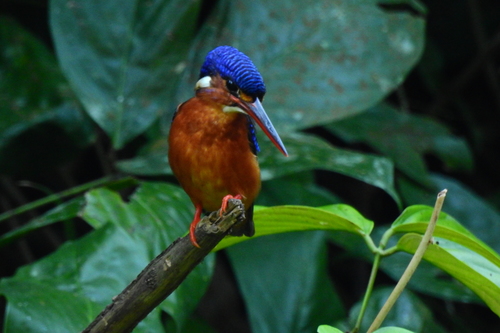 Blue-eared Kingfisher
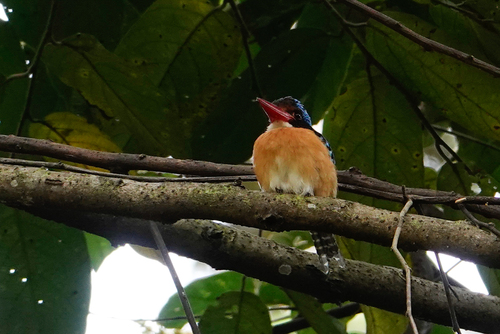 Banded Kingfisher
In breve
Il segno di campo più affidabile per separare il Blue-eared Kingfisher dal Banded Kingfisher è la presenza di copritrici auricolari blu e una forma di martin pescatore piccola e compatta nel Blue-eared, rispetto alla dimensione maggiore, alla prominente cresta corta e al marcato dimorfismo sessuale del Banded Kingfisher. I giovani Blue-eared Kingfishers possono mostrare copritrici auricolari rugginose (come il Martin pescatore), ma i giovani Banded Kingfisher sono sempre più opachi, con un becco marrone-arancio e barrature scure. Negli adulti, il Blue-eared Kingfisher è un uccello piccolo, con corona scura, intensamente cobalto, con parti inferiori rugginose ricche e senza cresta, mentre i maschi del Banded Kingfisher hanno un cappello blu audace con faccia castagna e parti superiori a bande blu, e le femmine sono fortemente bande rugginose e nere sopra. Il colore e la forma del becco, il motivo della testa e il contesto dell'habitat sono anche indizi forti.
Consigli di identificazione
- Juvenile Blue-eared Kingfisher: Cerca un collo e un petto superiore maculati, copritrici auricolari rugginose (come il Martin pescatore), e un becco rossastro con punte bianche. I giovani Banded Kingfisher non mostrano mai copritrici auricolari blu o questa forma compatta.
- Adult Blue-eared Kingfisher: Copritrici auricolari blu diagnostiche, corona scura, parti superiori blu cobalto intense e parti inferiori rugginose ricche. Nessuna cresta. Becco tutto scuro nei maschi, mandibola inferiore rossastra nelle femmine.
- Adult Banded Kingfisher (male): Cappello blu brillante, faccia e nuca castagne, parti superiori nere a bande blu, ventre bianco e un becco rosso spesso e robusto. Cresta corta spesso sollevata. Non mostra mai copritrici auricolari blu.
- Adult Banded Kingfisher (female): Parti superiori bande rugginose e nere, parti inferiori bianche con barrature nere su petto e fianchi, becco rosso spesso e cresta corta. Nessun blu sulle copritrici auricolari o sulla corona.
- Bill color and shape: Il Blue-eared Kingfisher ha un becco proporzionalmente più piccolo e fine (scuro nei maschi, bicolore nelle femmine). Il Banded Kingfisher di entrambi i sessi ha un becco rosso brillante, spesso e lungo, anche nei giovani (sebbene più opaco).
- Crest: Solo il Banded Kingfisher mostra una cresta corta, spesso sollevata. Il Blue-eared Kingfisher appare sempre con la testa liscia.
- Size and structure: Il Blue-eared Kingfisher è piccolo e compatto (16 cm), mentre il Banded Kingfisher è notevolmente più grande e robusto (20 cm), con una corporatura più pesante.
- Head pattern: Il Blue-eared Kingfisher ha una corona scura e copritrici auricolari blu; i maschi del Banded Kingfisher hanno un cappello blu e faccia castagna, le femmine hanno una testa bande rugginose e nere.
- Underparts: Il Blue-eared Kingfisher è rugginoso sotto (eccetto la gola bianca), il maschio del Banded Kingfisher è rugginoso su petto/fianchi con ventre bianco, la femmina è bianca con barrature nere.
- Upperparts: Il Blue-eared Kingfisher è cobalto intenso nel complesso; il maschio del Banded Kingfisher è nero a bande blu, la femmina è bande rugginose e nere.
- Habitat: Il Blue-eared è legato a torrenti forestali densi e ombreggiati; il Banded è nella foresta di pianura, spesso lontano dall'acqua.
- Behavior: Il Blue-eared si appollaia basso sull'acqua, il Banded si appollaia più in alto, spesso eretto, e risponde ai richiami.
- Vocalization: Solo il Banded Kingfisher emette un richiamo fischiato distintivo; il Blue-eared è per lo più silenzioso.
- Sexual dimorphism: I sessi del Banded Kingfisher sembrano molto diversi; i sessi del Blue-eared Kingfisher sono simili tranne per il colore del becco.
- Common pitfalls: Il giovane Blue-eared può essere confuso con il Martin pescatore, ma non con il Banded Kingfisher. Se vedi un martin pescatore con una cresta o un becco rosso spesso, è un Banded. Se vedi copritrici auricolari blu e nessuna cresta, è un Blue-eared.
Taglia
Il Blue-eared Kingfisher è un martin pescatore compatto e piccolo (circa 16 cm), notevolmente più piccolo e più delicato rispetto al Banded Kingfisher, che è più grande e robusto a 20 cm. Il Banded Kingfisher ha una corporatura più pesante e robusta e un becco rosso più spesso e lungo, mentre il Blue-eared è più delicato con un becco proporzionalmente più piccolo. Queste differenze di dimensione e struttura sono ovvie se entrambe le specie vengono viste nello stesso contesto, ma possono essere sottili se viste da sole.
Piumaggio
Il giovane Blue-eared Kingfisher può mostrare copritrici auricolari rugginose (come il Martin pescatore), ma di solito ha maculature sulla gola e sul petto superiore, e un becco rossastro con punte bianche. Questa maculatura scompare negli adulti, che hanno copritrici auricolari blu, una corona scura, parti superiori blu cobalto intense e parti inferiori rugginose ricche. I maschi adulti hanno un becco tutto scuro, le femmine una mandibola inferiore rossastra. I giovani Banded Kingfisher sono più opachi degli adulti, con un becco marrone-arancio e barrature scure sulle parti inferiori, ma non mostrano mai copritrici auricolari blu o una forma compatta di martin pescatore. Il maschio adulto del Banded Kingfisher è inconfondibile con un cappello blu brillante, faccia e nuca castagne, parti superiori nere a bande blu e un ventre bianco. La femmina adulta è fortemente bande rugginose e nere sopra, con parti inferiori bianche e barrature nere su petto e fianchi. Entrambi i sessi hanno una cresta corta che è spesso sollevata e un becco rosso spesso. Nessuna età del Banded Kingfisher assomiglia mai al Blue-eared Kingfisher, e viceversa, una volta che vedi il motivo della testa e la cresta.
Comportamento
Il Blue-eared Kingfisher si appollaia tipicamente silenziosamente su rami bassi sopra torrenti forestali ombreggiati, tuffandosi per prede acquatiche. I suoi movimenti sono rapidi e diretti, e tende a rimanere vicino all'acqua in copertura densa. Il Banded Kingfisher, al contrario, è un martin pescatore degli alberi della foresta di pianura, spesso trovato più in alto nel sottobosco o nella chioma, a volte lontano dall'acqua. È più probabile che venga visto appollaiato eretto, mostrando la sua cresta, e può rispondere a richiami imitati. La ricerca del Banded è meno legata all'acqua, e la sua postura è più eretta e robusta.
Habitat
Il Blue-eared Kingfisher è fortemente associato a torrenti e pozze di foresta sempreverde densa e ombreggiata, solitamente sotto i 1000 m di elevazione, e raramente si allontana molto dall'acqua. Il Banded Kingfisher è un uccello della foresta tropicale di pianura, spesso in foreste più secche o più aperte rispetto al Blue-eared, ed è meno dipendente dalla prossimità all'acqua. Se sei nel profondo di una foresta densa vicino a un torrente ombreggiato, è più probabile che sia un Blue-eared; in foreste di pianura più aperte o più secche, specialmente lontano dall'acqua, il Banded è il default.
Voce
Il Banded Kingfisher ha un distintivo lungo fischio 'wheeeoo' seguito da una serie di note 'chiwiu', ripetute rapidamente e svanendo. È reattivo alle imitazioni. Il Blue-eared Kingfisher è generalmente silenzioso e non è noto per alcun richiamo distintivo sul campo, quindi un martin pescatore vocalizzante nella foresta del sud-est asiatico è molto più probabile che sia un Banded.
Blue-eared Kingfisher · Banded Kingfisher · I miei uccelli difficili