

Ash-throated Crake vs Gray-cowled Wood-Rail
Mustelirallus albicollis contro Aramides cajaneus
Fai un quiz con Ash-throated Crake e Gray-cowled Wood-Rail
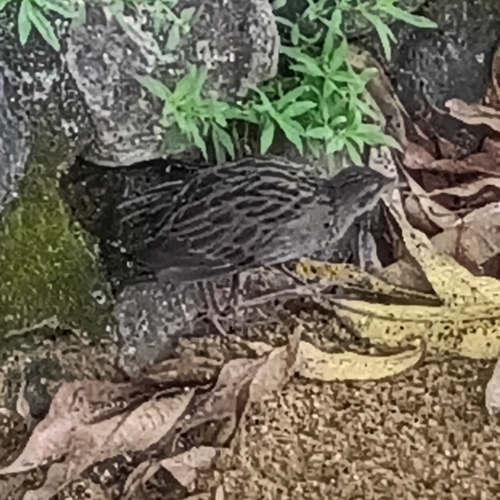 Ash-throated Crake
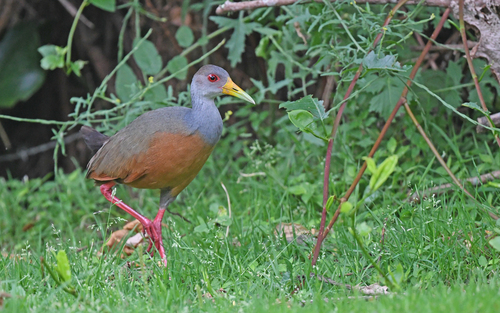 Gray-cowled Wood-Rail
In breve
Il segno distintivo più affidabile per separare l'Ash-throated Crake dal Gray-cowled Wood-Rail è la dimensione: il wood-rail è drammaticamente più grande e pesante, con una corporatura più robusta e gambe più lunghe. In tutte le livree, il crake mostra una gola e un petto grigio chiaro, parti superiori nere con bordi delle piume marroni e distintive striature nere e bianche sui fianchi e sul sottocoda. Al contrario, il wood-rail è di colore oliva-marrone sopra, con una testa e un collo grigio medio, un petto e fianchi rugginosi e un ventre e una coda neri. Anche il colore del becco e delle gambe differisce: il crake ha un becco verdeastro corto e gambe marrone-porpora, mentre il wood-rail ha un becco giallo-verde brillante e gambe rosso-corallo. I wood-rail juvenili sono più opachi ma comunque molto più grandi di qualsiasi crake. Entrambe le specie possono essere trovate in habitat umidi, ma il wood-rail preferisce aree più boschive o di mangrovie, mentre il crake è più probabile trovarlo in paludi aperte.
Consigli di identificazione
- La dimensione è il primo controllo: Se l'uccello è di dimensioni simili a quelle di un pollo, è un Gray-cowled Wood-Rail; se è piccolo e simile a un passero, è un Ash-throated Crake. Questo vale per tutte le età e i sessi.
- Colore del becco e delle gambe: Il crake ha un becco verdeastro corto e gambe marrone-porpora; il wood-rail ha un becco giallo-verde brillante e gambe rosso-corallo. I wood-rail juvenili hanno becchi e gambe scuri, ma appaiono comunque molto più grandi e pesanti di qualsiasi crake.
- Colore della gola e del petto: L'Ash-throated Crake mostra sempre una gola, un petto e un ventre grigio chiaro. Il wood-rail ha una testa e un collo grigio medio, ma il petto e i fianchi sono rugginosi, e il ventre è nero.
- Schema dei fianchi e del sottocoda: Le striature nere e bianche del crake sui fianchi e sul sottocoda sono uniche e mai eguagliate da un wood-rail di qualsiasi età.
- Parti superiori: Il crake è nero sopra con bordi delle piume marroni; il wood-rail è verde oliva a marrone scuro sopra, mai nero.
- Schema della testa: Il wood-rail ha una testa e un collo grigio medio, spesso con una macchia marrone sul retro (eccetto in A. c. avicenniae). La testa del crake non ha un pattern distintivo oltre alla gola grigio chiaro.
- Ventre e coda: Il ventre del crake è grigio chiaro; quello del wood-rail è nero, così come il dorso e la coda—cerca questo contrasto se l'uccello è visto da dietro o in volo.
- Colore degli occhi: Il wood-rail adulto ha occhi rossi; il colore degli occhi del crake non è specificato ma non è notato come rosso.
- Lunghezza delle gambe e postura: Il wood-rail sta in piedi alto su lunghe gambe; il crake ha gambe molto più corte e si trova più vicino al suolo.
- Comportamento: Il crake è estremamente riservato, di solito solo intravisto mentre corre tra la vegetazione; il wood-rail è più probabile a camminare apertamente, specialmente lungo i bordi dell'acqua o in zone umide boschive.
- Habitat: In paludi aperte o prati umidi, aspettati il crake; in foreste, mangrovie o paludi con alberi, aspettati il wood-rail.
- Confusione giovanile: Il wood-rail giovanile è più opaco ma comunque grande, con un ventre nero pece e macchie color crema, becco e gambe scuri; i giovani crake mantengono la gola grigio chiaro e i fianchi striati, che non sono mai presenti nel wood-rail.
- Variazione delle sottospecie: Entrambi hanno sottospecie più piccole e più chiare, ma queste non si sovrappongono nei segni distintivi chiave—le sottospecie di wood-rail possono mancare della macchia marrone sulla nuca ma non mostrano mai le striature sui fianchi del crake.
- Viste in volo: Se visti in volo, le dimensioni del wood-rail, il dorso e la coda neri e la mancanza di striature sono indizi; le piccole dimensioni del crake e i fianchi/sottocoda striati possono essere intravisti se spaventati.
- Voce: Non descritta nelle fonti, quindi non fare affidamento sulle vocalizzazioni per la separazione in questo contesto.
Taglia
L'Ash-throated Crake è un piccolo rail, lungo 21–24 cm e pesante 90–120 g. Il Gray-cowled Wood-Rail è molto più grande, con una lunghezza di 33–40 cm e un peso di 320–465 g—circa il doppio della lunghezza e tre o quattro volte la massa. Anche a distanza, la dimensione del wood-rail e la sua postura alta e pesante sono evidenti rispetto al crake compatto e a gambe corte.
Piumaggio
- Giovanili: Il giovanile Gray-cowled Wood-Rail è più opaco dell'adulto, con un ventre nero pece macchiato di crema, becco e gambe scuri e occhi marroni. L'Ash-throated Crake giovanile non è descritto in dettaglio, ma adulti e giovani condividono la gola grigio chiaro e i fianchi striati in bianco e nero, che non sono mai presenti nel wood-rail di qualsiasi età.
- Adulti: Ash-throated Crake: parti superiori nere con bordi delle piume marroni, gola/petto/ventre grigio chiaro, fianchi e sottocoda striati in bianco e nero, becco verdeastro corto, gambe marrone-porpora. Gray-cowled Wood-Rail: parti superiori verde oliva a marrone scuro, testa e collo grigio medio (con macchia marrone sul retro nel nominato), petto/fianchi rugginosi, ventre/dorso/coda neri, becco giallo-verde brillante, gambe rosso-corallo, occhi rossi. Nessuna striatura sui fianchi o sul sottocoda.
- Sottospecie: Entrambi hanno sottospecie più piccole e più chiare, ma l'A. c. avicenniae del wood-rail manca della macchia marrone sulla nuca ed è leggermente più chiara sotto, ma non mostra mai le striature del crake sui fianchi.
Comportamento
L'Ash-throated Crake è un furtivo nascondino, tipicamente rimane nascosto nella densa vegetazione delle paludi e raramente si avventura all'aperto. È più probabile intravederlo mentre corre tra la vegetazione o sentirlo piuttosto che vederlo bene. Il Gray-cowled Wood-Rail, sebbene anche cauto, è più audace e spesso cammina apertamente lungo i bordi dell'acqua o attraverso mangrovie e paludi boschive, a volte anche nutrendosi alla luce del giorno. Le sue lunghe gambe e la postura eretta contrastano con il profilo basso e compresso del crake. I wood-rail possono essere visti in coppie tutto l'anno.
Habitat
L'Ash-throated Crake si trova in paludi aperte e prati umidi in gran parte del Sud America (eccetto il Cile), preferendo vegetazione densa e bassa. Il Gray-cowled Wood-Rail preferisce habitat più umidi e boschivi: foreste, mangrovie e paludi in tutto il Centro e Sud America. Se l'uccello si trova in una foresta densa o in una mangrovia, è più probabile che sia un wood-rail; in paludi aperte, si favorisce il crake.
Ash-throated Crake · Gray-cowled Wood-Rail · I miei uccelli difficili