

Corythopis de Delalande vs Todirostre à poitrine ombrée
Corythopis delalandi contre Hemitriccus diops
Faire un quiz avec Corythopis de Delalande et Todirostre à poitrine ombrée
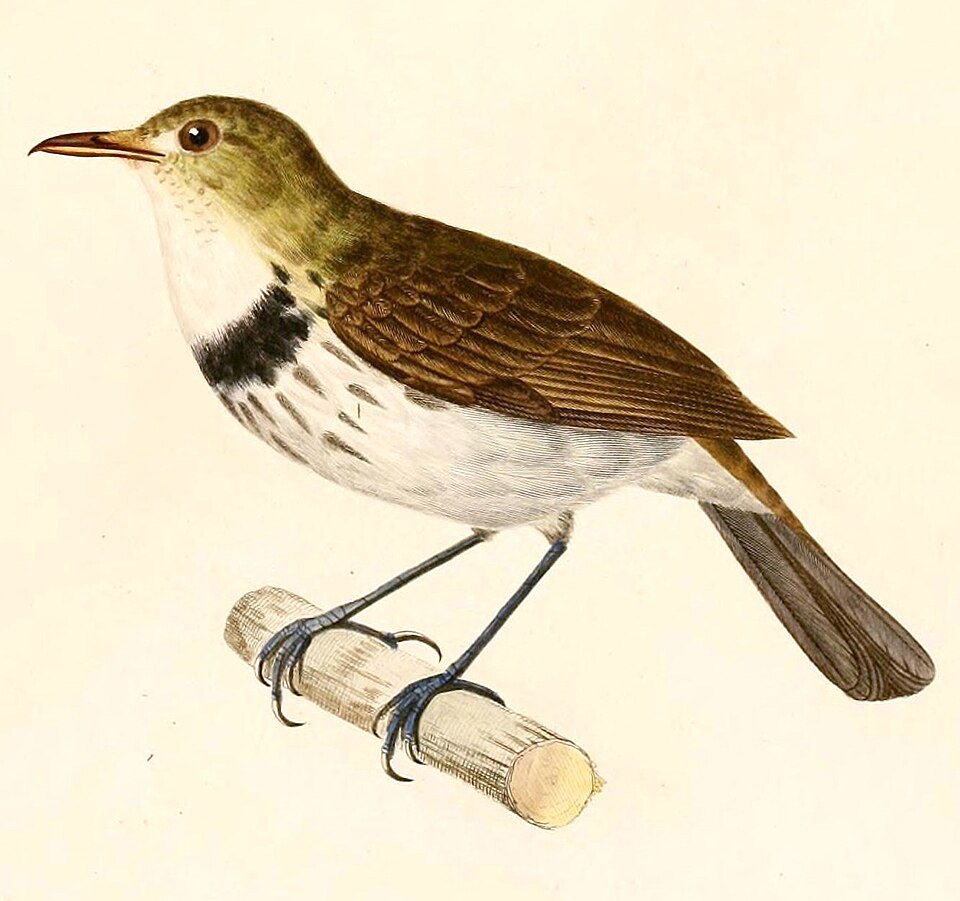 Corythopis de Delalande
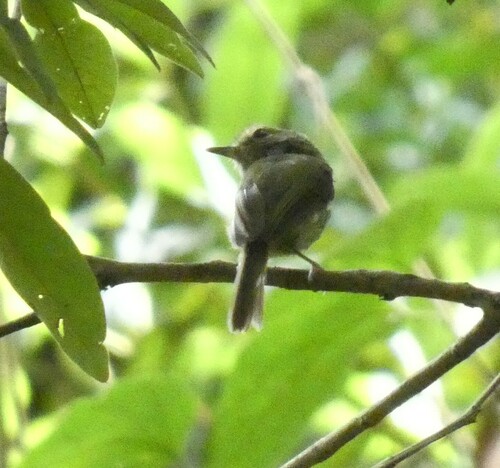 Todirostre à poitrine ombrée
En bref
The most reliable field mark to separate Southern Antpipit from Drab-breasted Pygmy-Tyrant is the bold black breast 'necklace' and streaked flanks of the antpipit, versus the pygmy-tyrant's plain, drab gray breast with only a faint white crescent. Southern Antpipit is also distinctly larger and longer-legged, with a paler, more contrasting face and underparts, while Drab-breasted Pygmy-Tyrant is smaller, more compact, and overall darker olive-green. Both species can show pale spots on the face, but the antpipit's is fainter and less defined. In the field, pay special attention to underpart pattern, overall size, and jizz on the ground or in low vegetation.
Conseils d’identification
- Bold black breast necklace: Southern Antpipit always shows a thick, nearly complete black band across the breast with black streaks down the flanks. Drab-breasted Pygmy-Tyrant never shows this; its breast is plain dull gray with only a faint white crescent.
- Underpart contrast: Antpipit has mostly white underparts with a creamy throat and clear black markings; pygmy-tyrant is duller, with grayish breast and throat, and only a subtle white crescent.
- Facial pattern: Pygmy-tyrant has a distinct white spot above the lores and a well-marked white eyering, both standing out on a dark olive face. Antpipit's facial spots are much fainter and lack a strong eyering.
- Upperpart color: Antpipit is olive above with a grayish-olive crown, while pygmy-tyrant is darker, more uniformly olive-green, including the crown.
- Bill color: Antpipit has a blackish upper mandible and a pale pinkish lower mandible with a yellow to pinkish-orange base. Pygmy-tyrant's bill is gray above and pinkish below, but this is subtle and rarely diagnostic in the field.
- Legs: Antpipit has long, pale grayish-pink legs, giving it a stilted, upright look. Pygmy-tyrant's legs are light gray and shorter, matching its compact shape.
- Size and structure: Antpipit is larger and lankier (13–14 cm, 14–18 g), with a longer tail and legs; pygmy-tyrant is smaller, rounder, and more compact (11 cm, 9.5–13.5 g).
- Behavior: If the bird is walking on the ground or along logs, bobbing its head and tail, it's almost certainly an antpipit. If perched in bamboo or dense undergrowth, especially above ground, pygmy-tyrant is more likely.
- Wing and tail pattern: Neither species shows strong wingbars or panels, but pygmy-tyrant may show paler edges on innermost secondaries; this is subtle and not a primary field mark.
- Iris color: Antpipit has a medium to dark brown iris; pygmy-tyrant's is reddish brown. This is rarely visible in the field.
- Habitat: Antpipit prefers forest floor and low logs in humid forest; pygmy-tyrant is more often in bamboo thickets or dense undergrowth.
- Sex and age: Both species are sexually monomorphic and juveniles resemble adults, so age and sex are not helpful for separation.
- Plumage pitfalls: In poor light, pygmy-tyrant's gray breast may look paler, but it never shows the black necklace or streaks of antpipit. Antpipit's faint facial spots should not be confused with the pygmy-tyrant's strong eyering.
- Context: If seen alone and on the ground, favor antpipit; if in pairs or loose groups in bamboo, favor pygmy-tyrant.
- Flight views: Neither species has distinctive wing or tail patterns in flight, so rely on size, structure, and underpart contrast.
Taille
Southern Antpipit is noticeably larger (13–14 cm, 14–18 g) than Drab-breasted Pygmy-Tyrant (about 11 cm, 9.5–13.5 g). The antpipit also has longer, paler legs, giving it a more upright stance. In the field, the antpipit appears lankier and longer-legged, while the pygmy-tyrant is compact and short-legged. This size difference is usually apparent when both are seen in similar contexts, such as forest floor or low perches.
Plumage
- Juvenile/immature plumage: Both species' juveniles resemble adults, so age-specific wing or upperpart marks are not a primary separator here.
- Southern Antpipit (all ages): Shows a bold, almost solid black breast 'necklace' with black streaks running down the flanks. Underparts are mostly white, with creamy white chin and throat. The face is pale grayish-olive with faint whitish spots (not a strong eyering). Upperparts, wings, and tail are olive, crown grayish-olive. No strong wingbars or panels. Iris medium to dark brown, bill blackish above, pale pinkish below, legs long and pale grayish-pink.
- Drab-breasted Pygmy-Tyrant (all ages): Lacks any black necklace or streaking. Breast and throat are dull gray with a pinkish or purplish tinge, separated by a faint white crescent (not a band). Belly and crissum are whitish, sometimes with a yellowish tinge. Face shows a white spot above the lores and a white eyering, standing out on a dark olive-green face. Upperparts, crown, wings, and tail are plain dark olive-green; innermost secondaries may have paler edges. Iris reddish brown, bill gray above, pinkish below, legs light gray. Overall, the pygmy-tyrant is plainer and darker, with less contrast and no bold breast markings.
Comportement
Southern Antpipit is almost always seen walking slowly on the forest floor or along downed logs, often bobbing its head and tail, and rarely perches above ground. It forages alone and never joins mixed-species flocks. Drab-breasted Pygmy-Tyrant is more likely to be seen perched in low bamboo or undergrowth, sometimes higher, and does not show the same ground-walking behavior. Its movements are more typical of a small tyrant flycatcher: short sallies and quick hops. The antpipit's long legs and terrestrial habits are distinctive.
Habitat
Both species overlap in range (Argentina, Brazil, Paraguay) and occur in forested habitats, but Southern Antpipit is strongly tied to the forest floor and lower strata, especially in humid forests. Drab-breasted Pygmy-Tyrant is more closely associated with bamboo thickets and dense undergrowth, often a bit higher off the ground. If you see a bird foraging on the ground or on logs, antpipit is much more likely; if in dense bamboo or low shrubs, pygmy-tyrant is favored.
Corythopis de Delalande · Todirostre à poitrine ombrée · Mes oiseaux difficiles