

Puffin volage vs Cormoran de Campbell
Puffinus gavia contre Leucocarbo campbelli
Faire un quiz avec Puffin volage et Cormoran de Campbell
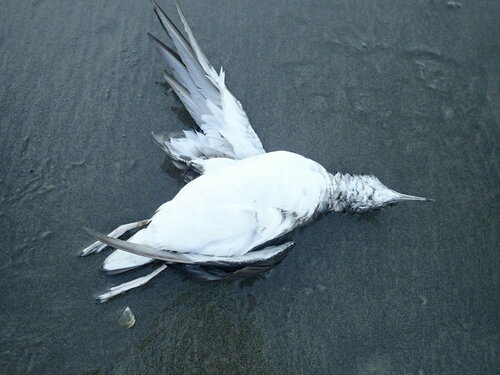 Puffin volage
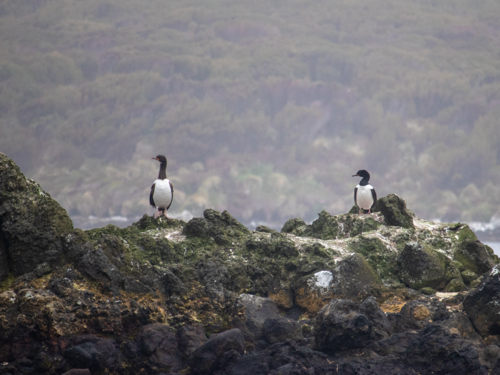 Cormoran de Campbell
En bref
Le marque de terrain le plus fiable pour séparer le Puffin volage du Cormoran de Campbell est la structure et la taille globales : le cormoran est un oiseau beaucoup plus grand et plus lourd avec un long cou et une posture distinctive de cormoran, tandis que le puffin est un oiseau de mer compact et à ailes étroites avec un vol bas et rapide. En vol, le Puffin volage montre une aile supérieure sombre et une aile inférieure blanche avec une tache sombre sur la cuisse, tandis que le Cormoran de Campbell a des ailes larges avec des taches blanches évidentes et un ventre et un menton blancs contrastants. Les cormorans juvéniles et non-nicheurs peuvent apparaître plus bruns, mais conservent toujours la forme lourde et au long cou. Les deux espèces peuvent être vues dans les eaux côtières, mais le contexte et la structure sont généralement décisifs.
Conseils d’identification
- Taille et structure : Le Cormoran de Campbell est beaucoup plus grand, plus massif et au cou plus long que le Puffin volage. Même de loin, la forme de cormoran du cormoran est évidente ; le puffin est compact et profilé. C'est le marque le plus fiable dans toutes les conditions.
- Forme du bec : Le cormoran a un bec épais et crochu avec une tache de base jaune (nicheur), tandis que le bec du puffin est long, fin et sombre. La forme du bec est visible à portée modérée, surtout lorsqu'il est perché ou nage.
- Cou et posture : Les cormorans ont un long cou flexible et une posture droite lorsqu'ils sont perchés ; les puffins ont des cous courts et se tiennent bas sur l'eau.
- Style de vol : Le Puffin volage vole bas au-dessus de la mer avec des battements d'ailes rapides et des glissades courtes, souvent en lignes lâches. Le Cormoran de Campbell vole avec sa tête en dessous de son corps et des battements d'ailes plus lourds et plus profonds ; il glisse rarement et vole souvent en groupes serrés.
- Plumage – parties supérieures : Le puffin est uniformément brun foncé au-dessus ; le cormoran est noir brillant (nicheur) ou brunâtre (immature/non-nicheur) avec un éclat métallique. Les parties supérieures du cormoran ne sont jamais aussi simples que celles du puffin.
- Plumage – parties inférieures : Le puffin est blanc en dessous du menton à la queue, avec une tache sombre sur la cuisse visible en vol ; le cormoran est également blanc en dessous, mais avec un cou et une tête noirs en fort contraste, et de grandes taches blanches sur les ailes. Le blanc du cormoran est plus étendu et aux bords plus nets.
- Plumage – aile inférieure : Le puffin montre des ailes inférieures blanches avec une tache sombre sur la cuisse ; le cormoran a de larges taches blanches sur les ailes visibles d'en dessous et d'en haut, surtout chez les adultes.
- Queue : La queue du puffin est courte et en forme d'éventail en vol ; la queue du cormoran est plus longue et en forme de coin, souvent écartée lorsqu'il est perché.
- Projection des pieds : Les pieds brun-rosé du puffin s'étendent au-delà de la queue en vol ; les pieds roses du cormoran ne dépassent pas la queue.
- Couleur des parties nues : Le cormoran montre des pieds roses et, en période de reproduction, une peau faciale colorée (jaune, violet, orange) ; les pattes du puffin sont brun-rosé avec des membranes sombres, le bec est toujours sombre.
- Crête : Les cormorans nicheurs ont une crête sur la tête ; les puffins n'en ont jamais. Les cormorans immatures/non-nicheurs n'ont pas de crête mais conservent la structure lourde.
- Voix : Le puffin émet un cri dur et disjoint en vol ; le cormoran est principalement silencieux en mer.
- Contexte d'habitat : Le Cormoran de Campbell ne se trouve qu'à l'île Campbell et à proximité ; tout oiseau similaire ailleurs est un puffin. Le puffin est répandu autour de la Nouvelle-Zélande et migre vers l'Australie/Solomons.
- Comportement sur l'eau : Les cormorans s'asseyent souvent droits sur des rochers ou sur l'eau, parfois avec les ailes étendues ; les puffins se tiennent bas et se perchent rarement sauf dans les colonies.
- Comportement en groupe : Les cormorans chassent en groupes serrés et coordonnés avec des plongées synchronisées ; les puffins se nourrissent en groupes plus lâches, plongeant individuellement.
Taille
Le Cormoran de Campbell est dramatiquement plus grand : environ 63 cm de longueur, avec une envergure de 105 cm et pesant entre 1,6 et 2 kg [wikipedia]. Le Puffin volage est beaucoup plus petit, avec des femelles pesant en moyenne 302 g et des mâles 243 g [wikipedia]. La masse, le long cou et le bec lourd du cormoran sont évidents même de loin, tandis que le puffin est mince, au cou court et au corps léger. Dans des groupes mixtes d'oiseaux de mer, l'écart de taille est indiscutable.
Plumage
-
Oiseaux juvéniles/immatures : Les juvéniles du Puffin volage ressemblent à des adultes mais peuvent avoir des bords de couvertures d'ailes plus clairs ; il n'y a pas de motifs d'ailes spécifiques à l'âge, mais l'aile inférieure est toujours principalement blanche avec une tache sombre sur la cuisse. Les juvéniles du Cormoran de Campbell et les adultes non-nicheurs sont globalement plus bruns, avec des parties nues plus ternes, mais montrent toujours le ventre, le menton et les taches blanches sur les ailes. Aucun marque distinctif en 'W' ou en triangle n'est noté pour l'aile supérieure de l'une ou l'autre espèce en vol.
-
Adultes : Le Puffin volage est brun foncé au-dessus et blanc en dessous, avec une aile inférieure blanche et une tache sombre sur la cuisse ; les parties supérieures sont uniformément brun foncé, avec une queue courte en forme d'éventail. Le Cormoran de Campbell est noir et blanc, avec un menton, des parties inférieures et des taches blanches sur les ailes, un cou/tête/dos noir, et un éclat métallique vert-bleu sur les plumes noires. En période de reproduction, le cormoran montre une crête sur la tête et une peau faciale colorée, mais même en dehors de la reproduction, le ventre blanc et les taches blanches sur les ailes sont diagnostiques. Le bec du cormoran est épais et crochu ; celui du puffin est long, fin et sombre. Les pattes du puffin sont brun-rosé avec des membranes sombres, et les pieds s'étendent au-delà de la queue en vol ; les pieds du cormoran sont roses, mais ne dépassent pas la queue.
Comportement
Le Puffin volage vole bas et rapidement au-dessus de l'eau, avec des battements d'ailes rapides et des glissades courtes, souvent en groupes lâches. Il plonge en utilisant ses ailes pour la poursuite sous l'eau. Le Cormoran de Campbell vole avec sa tête en dessous de son corps, souvent en groupes serrés, et se nourrit par plongées coordonnées, parfois avec jusqu'à 100 oiseaux. Sur l'eau ou les rochers, le cormoran se tient droit, souvent en train de sécher ses ailes, tandis que le puffin se perche rarement sauf dans les colonies de reproduction. La recherche de nourriture du cormoran est plus sociale et dramatique, avec des plongées synchronisées.
Habitat
Le Puffin volage se trouve autour de la Nouvelle-Zélande, se reproduisant sur les îles principales et migrant vers l'Australie et les îles Salomon ; il utilise des mers ouvertes et des côtes rocheuses. Le Cormoran de Campbell est limité à l'île Campbell et aux îlots voisins, jamais loin de la terre, et se reproduit uniquement là. Les deux utilisent les eaux côtières, mais le cormoran est une spécialité locale de l'île subantarctique Campbell, tandis que le puffin est répandu et migratoire.
Voix
Le Puffin volage a un cri distinctif et disjoint : 'ka-hek-ka-hek-ka-hek', généralement émis en vol. Le Cormoran de Campbell n'est pas décrit comme vocal en mer ; ses displays de couronnement incluent des vocalisations, mais aucun cri spécifique n'est noté pour la séparation sur le terrain.
Puffin volage · Cormoran de Campbell · Mes oiseaux difficiles