

Fumarel Cariblanco vs Charrán Patinegro
Chlidonias hybrida frente a Thalasseus sandvicensis
Juega un quiz con Fumarel Cariblanco y Charrán Patinegro
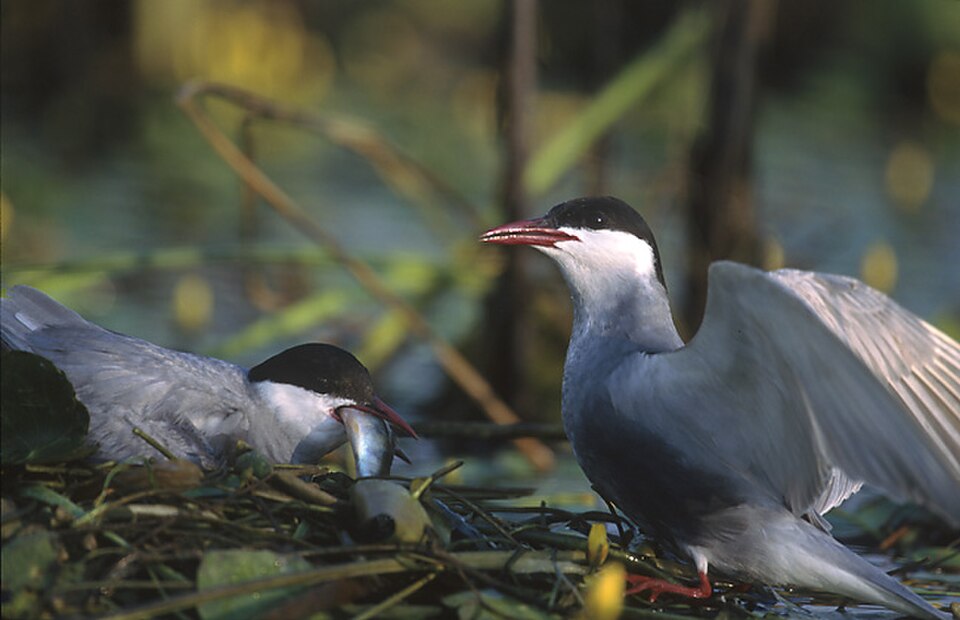 Fumarel Cariblanco
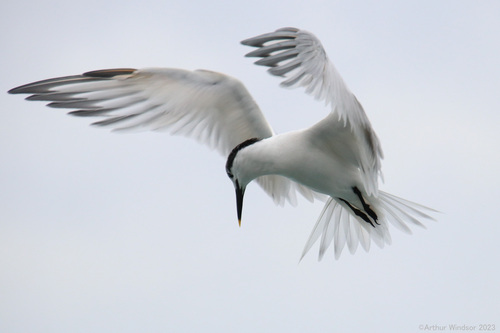 Charrán Patinegro
En breve
Los Fumareles Cariblancos juveniles y de primer invierno muestran un dorso de color jengibre o escamoso beige y escapulares marrón oscuro con bordes pálidos anchos, mientras que los Charranes Patinegros juveniles tienen un patrón escamoso pero también muestran una cola con punta oscura y un pico completamente negruzco. En todos los plumajes, el Charrán Patinegro es mucho más grande, con un pico negro largo y delgado con punta amarilla, patas negras y una apariencia muy pálida y plateada en vuelo. El Fumarel Cariblanco es más pequeño, con un pico rojo más corto (en época de cría), patas rojas y un cuerpo gris más oscuro y uniforme en plumaje de cría. La cola del Fumarel Cariblanco es corta y poco bifurcada, mientras que la del Charrán Patinegro es más larga y más profundamente bifurcada. Cuando está posado, el color del pico y las patas son clave; en vuelo, nota la oscuridad general y la estructura.
Consejos de identificación
- Tamaño: El Charrán Patinegro es mucho más grande y pesado que el Fumarel Cariblanco; usa una comparación directa con gaviotas o charranes cercanos si es posible. (Todas las edades)
- Color y forma del pico: El Fumarel Cariblanco tiene un pico rojo fuerte y corto en plumaje de cría (más corto y más robusto en las hembras), mientras que el Charrán Patinegro tiene un pico negro largo y delgado con una punta amarilla (adultos) o completamente negruzco (juveniles). (Todas las edades, pero especialmente adultos)
- Color de las patas: El Fumarel Cariblanco tiene patas rojas en plumaje de cría; las patas del Charrán Patinegro son siempre negras. (Todas las edades)
- Forma de la cola: La cola del Fumarel Cariblanco es corta y solo poco bifurcada, mientras que la del Charrán Patinegro es más larga y más profundamente bifurcada. El juvenil Charrán Patinegro muestra una punta oscura en la cola. (Todas las edades)
- Patrón del dorso juvenil: El juvenil Fumarel Cariblanco tiene un dorso escamoso de color jengibre o beige con bordes pálidos amplios en escapulares marrón oscuro; el juvenil Charrán Patinegro también es escamoso pero menos, y la punta de la cola es oscura. (Juveniles)
- Patrón de la corona: El juvenil Fumarel Cariblanco tiene una corona salpicada de blanco y una nuca más uniformemente oscura; el juvenil Charrán Patinegro tiene menos negro en la corona. (Juveniles)
- Patrón de las alas: Las alas superiores del Charrán Patinegro son de color gris pálido con primarias oscurecidas en verano y un amplio margen blanco en la red interna de las primarias, que se desgasta hasta formar una 'punta de gancho' a finales de verano. Las alas del Fumarel Cariblanco son más uniformemente grises. (Adultos)
- Coloración general: El Fumarel Cariblanco en plumaje de cría es gris oscuro por encima y por debajo con mejillas blancas; el Charrán Patinegro es mucho más pálido, con partes inferiores blancas y alas superiores gris pálido. (Adultos)
- Cabeza en no cría: Ambas especies desarrollan blanco en la frente en invierno, pero la frente del Charrán Patinegro es más extensa, mientras que la corona del Fumarel Cariblanco está salpicada de blanco. (Adultos no en cría)
- Vuelo: El Charrán Patinegro parece tener alas más largas y ser más alargado en vuelo, mientras que el Fumarel Cariblanco es más compacto y similar a una golondrina. (Todas las edades)
- Postura posada: El Charrán Patinegro se mantiene más alto y erguido; el Fumarel Cariblanco es más compacto. (Todas las edades)
- Hábitat: El Fumarel Cariblanco se encuentra sobre pantanos y humedales interiores; el Charrán Patinegro es costero. (Todas las edades)
- Voz: El Fumarel Cariblanco emite un 'krekk'; el llamado del Charrán Patinegro es un fuerte y chirriante 'kear-ik' o 'kerr ink'. (Todas las edades)
- Color del pico en juveniles: El juvenil Charrán Patinegro tiene un pico completamente negruzco (a veces amarillento en la base), mientras que el pico del Fumarel Cariblanco nunca es negro. (Juveniles)
- Contexto estacional: A finales de verano y otoño, las primarias del Charrán Patinegro desarrollan una distintiva 'punta de gancho' a medida que el borde blanco se desgasta, una característica que no muestra el Fumarel Cariblanco. (Adultos, finales de verano/otoño)
Tamaño
El Charrán Patinegro es sustancialmente más grande y pesado (masa corporal 200–300 g) que el Fumarel Cariblanco (masa corporal 84 g) [wikidata]. El Charrán Patinegro también es más largo (36–41 cm frente a mucho más pequeño para el Fumarel), con una envergadura de 95–105 cm. El Fumarel Cariblanco es el mayor de los charranes de pantano, pero aún así es pequeño en comparación con el Charrán Patinegro, que tiene una apariencia más alargada y esbelta tanto en reposo como en vuelo.
Plumaje
- Juvenil/Primer invierno: Los juveniles del Fumarel Cariblanco tienen un dorso 'escamoso' de color jengibre o beige, con escapulares marrón oscuro bordeadas de pálido, y a menudo algunas nuevas plumas de manto gris aparecen en otoño. Su corona está salpicada de blanco, y la nuca es más uniformemente oscura. Los juveniles del Charrán Patinegro también muestran un patrón escamoso en el dorso y las alas, pero tienen una cola con punta oscura y un pico completamente negruzco (a veces amarillento en la base), y menos negro en la corona. El aspecto escamoso es menos pronunciado que en el Fumarel, y la punta de la cola es una marca clave.
- Adulto en cría: El Fumarel Cariblanco es gris oscuro por encima y por debajo con una capucha negra, mejillas blancas, pico y patas rojas. El Charrán Patinegro es mucho más pálido, con alas superiores gris pálido, partes inferiores blancas y una capucha negra, pero con un pico negro delgado y largo con una punta amarilla y patas negras.
- Adulto no en cría: Ambas especies desarrollan blanco en la frente, pero la frente del Charrán Patinegro se vuelve extensamente blanca después de la muda de verano, mientras que la corona negra del Fumarel Cariblanco está salpicada de blanco. El Fumarel Cariblanco se vuelve gris más pálido en general, pero aún más oscuro que el Charrán Patinegro.
- Cola: La cola del Fumarel Cariblanco es corta y solo poco bifurcada, mientras que la del Charrán Patinegro es más larga y más profundamente bifurcada, con juveniles mostrando una punta oscura.
- Alas: Las alas superiores del Charrán Patinegro son de color gris pálido con primarias oscurecidas en verano, y un amplio margen blanco en la red interna de las primarias. El Fumarel Cariblanco tiene un ala y un cuerpo de gris más uniforme, careciendo del contraste nítido entre claro y oscuro del Charrán.
Comportamiento
Ambas especies son charranes con un vuelo ágil y flotante. El Charrán Patinegro a menudo parece más alargado y esbelto, con alas y cola más largas, y se ve típicamente en entornos costeros, a menudo en colonias más grandes y ruidosas. El Fumarel Cariblanco es más similar a una golondrina en vuelo, con una cola más corta y una construcción más compacta, y se encuentra generalmente sobre pantanos o humedales interiores, a veces entre Gaviotas Reidoras. Posado, el Charrán Patinegro se mantiene más alto y erguido, mientras que el Fumarel Cariblanco parece más compacto.
Hábitat
El Fumarel Cariblanco cría y forrajea principalmente sobre pantanos interiores y humedales de agua dulce, a menudo en colonias con Gaviotas Reidoras. El Charrán Patinegro es una especie costera, que cría en islas de arena o grava y forrajea en el mar o a lo largo de las costas. Encontrar un charrán sobre pantanos de agua dulce en el interior es más probable que sea un Fumarel; en la costa, especialmente en grandes colonias ruidosas, se espera encontrar un Charrán Patinegro.
Voz
El Fumarel Cariblanco emite un llamado característico 'krekk'. El Charrán Patinegro es muy vocal, con un fuerte y chirriante 'kear-ik' o 'kerr ink'. El llamado del Charrán Patinegro es más agudo y penetrante, a menudo escuchado en colonias ruidosas, mientras que el llamado del Fumarel Cariblanco es más suave y menos áspero.