

Motmot

Paíño de Swinhoe vs Busardo del Himalaya

Hydrobates monorhis frente a Buteo refectus

Juega un quiz con Paíño de Swinhoe y Busardo del Himalaya
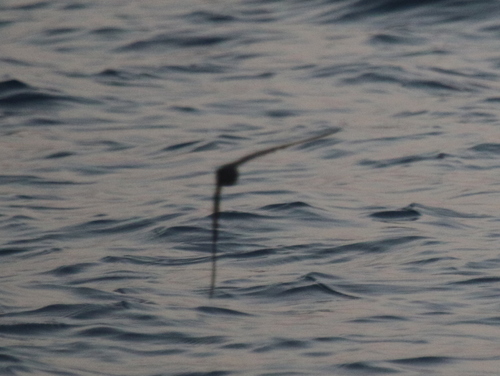
Paíño de Swinhoe (Hydrobates monorhis) Paíño de Swinhoe
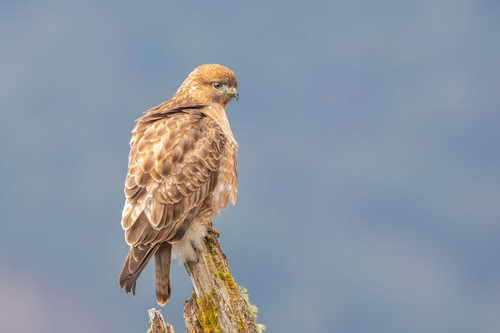
Busardo del Himalaya (Buteo refectus) Busardo del Himalaya

Medios

Cargando…

En breve

The most reliable way to separate Swinhoe's Storm-Petrel from Himalayan Buzzard is by overall structure and flight style: Swinhoe's is a small, all-dark, fluttery seabird with long wings and a forked tail, while Himalayan Buzzard is a large, broad-winged raptor with a heavy, hooked bill and typically soars or glides. Swinhoe's is uniformly dark brown with no pale panels or white rump, and never shows the raptor-like silhouette of a buzzard. Even at a distance, the storm-petrel's quick, erratic flight over water is unlike the steady, soaring or flapping-glide of a buzzard. If you see a bird pattering on the ocean surface or flying low over waves, it's not a buzzard. Conversely, any perched or soaring bird with broad wings and a short, fanned tail is a buzzard, not a storm-petrel.

Consejos de identificación

  1. Size and shape: Swinhoe's Storm-Petrel is tiny and delicate, with long, narrow wings and a forked tail; Himalayan Buzzard is large and heavy-bodied, with broad wings and a short, rounded tail. There is no overlap in silhouette.
  2. Flight style: Swinhoe's has a fluttery, erratic flight, often low over water, sometimes pattering on the surface. Himalayan Buzzard soars, glides, and flaps with deep, slow wingbeats; it never flies close to the water or patters.
  3. Plumage: Swinhoe's is uniformly dark brown in all plumages, with no pale or white markings anywhere. Himalayan Buzzard always shows a mix of browns and paler areas, especially on the underparts and underwings.
  4. Tail shape: Swinhoe's has a distinctly forked tail, visible in flight and at rest. Himalayan Buzzard's tail is broad and rounded, never forked.
  5. Bill: Swinhoe's has a small, fine bill typical of a seabird; Himalayan Buzzard has a large, hooked bill typical of a raptor. This is visible at close range or in good photos.
  6. Habitat: Swinhoe's is only at sea, rarely near land except at remote breeding sites or after storms. Himalayan Buzzard is only found over land, especially mountains and forests.
  7. Perched behavior: Swinhoe's is almost never seen perched except at breeding burrows, and then only shuffling awkwardly. Himalayan Buzzard perches openly on trees, rocks, or posts.
  8. Context: If you see a bird from a boat, especially far from shore, it's almost certainly not a buzzard. If you see a bird soaring over land, it's not a storm-petrel.
  9. Juvenile confusion: There is no age or morph of Himalayan Buzzard that is all-dark like Swinhoe's Storm-Petrel. Juvenile buzzards may be darker below, but always show patterning and never the uniform dark of Swinhoe's.
  10. Rump and wing pattern: Swinhoe's lacks the white rump of some other storm-petrels, but is still all-dark. Buzzards never show an all-dark rump or wings.
  11. Feeding behavior: Swinhoe's feeds by dipping and pattering at the water surface; buzzards hunt from the air or perch, never at sea.
  12. Legs and walking: Swinhoe's can only shuffle awkwardly on land; buzzards can walk and stand firmly.
  13. Vocalization: Not diagnostic for separation in the field, as Swinhoe's is silent at sea and buzzard calls are typical raptor screams, but context and appearance are far more useful.
  14. Ship following: Swinhoe's does not follow ships, unlike some other storm-petrels; buzzards are never seen at sea.
  15. Pitfalls: The only real confusion is with other all-dark storm-petrels (not buzzards), or with distant, dark raptors over land (not at sea). Always check habitat, structure, and flight style first.

Tamaño

Swinhoe's Storm-Petrel is a small seabird, about 18–21 cm in length with a 45–48 cm wingspan [wikipedia]. In contrast, Himalayan Buzzard is a medium to large raptor, much larger and bulkier than any storm-petrel. The buzzard's size is closer to that of a crow or small eagle, while Swinhoe's is only slightly larger than a swallow. There is no overlap in size: even the largest storm-petrel is dwarfed by the smallest buzzard.

Plumaje

Swinhoe's Storm-Petrel is uniformly dark brown in all plumages, with no white rump or pale markings on the wings or tail, regardless of age [wikipedia]. Its wings are long and narrow, and the tail is distinctly forked. Juvenile and adult plumages are essentially identical in the field. Himalayan Buzzard, on the other hand, shows variable plumage but always has a contrasting pattern: typically brown above with paler underparts, and often with a pale breast band or belly, and darker flight feathers. The buzzard's underwings in flight show a clear pattern of pale and dark, and the tail is broad and rounded, sometimes with faint barring. There is no age or morph of Himalayan Buzzard that is uniformly dark like Swinhoe's Storm-Petrel. In summary: Swinhoe's is all-dark and slim-winged; Himalayan Buzzard is patterned and broad-winged.

Comportamiento

Swinhoe's Storm-Petrel is strictly pelagic, rarely seen from land except during storms, and feeds by fluttering low over the water, sometimes pattering on the surface [wikipedia]. Its flight is quick, erratic, and buoyant, with rapid wingbeats and sudden changes in direction. It never soars or glides for long periods. Himalayan Buzzard is a classic raptor, often seen soaring high on thermals, gliding with wings held in a shallow 'V', or perched in trees or on rocks. It never feeds on the wing over water, and never patters on the surface. The two species' flight styles are completely different and should not be confused.

Hábitat

Swinhoe's Storm-Petrel is found exclusively at sea, far from land except at remote breeding islands. It is only likely to be seen from a boat or, rarely, blown to shore by storms [wikipedia]. Himalayan Buzzard is a terrestrial raptor of the Himalayas and adjacent mountains, found over forests, open hillsides, and valleys, never at sea. If you see a bird over open ocean, it's not a buzzard; if you see a bird soaring over land, it's not a storm-petrel.

Enviar una descripción mejor

Usa las mismas secciones que la comparación. El texto se publica al momento.

The most reliable way to separate Swinhoe's Storm-Petrel from Himalayan Buzzard is by overall structure and flight style: Swinhoe's is a small, all-dark, fluttery seabird with long wings and a forked tail, while Himalayan Buzzard is a large, broad-winged raptor with a heavy, hooked bill and typically soars or glides. Swinhoe's is uniformly dark brown with no pale panels or white rump, and never shows the raptor-like silhouette of a buzzard. Even at a distance, the storm-petrel's quick, erratic flight over water is unlike the steady, soaring or flapping-glide of a buzzard. If you see a bird pattering on the ocean surface or flying low over waves, it's not a buzzard. Conversely, any perched or soaring bird with broad wings and a short, fanned tail is a buzzard, not a storm-petrel.

  1. Size and shape: Swinhoe's Storm-Petrel is tiny and delicate, with long, narrow wings and a forked tail; Himalayan Buzzard is large and heavy-bodied, with broad wings and a short, rounded tail. There is no overlap in silhouette.
  2. Flight style: Swinhoe's has a fluttery, erratic flight, often low over water, sometimes pattering on the surface. Himalayan Buzzard soars, glides, and flaps with deep, slow wingbeats; it never flies close to the water or patters.
  3. Plumage: Swinhoe's is uniformly dark brown in all plumages, with no pale or white markings anywhere. Himalayan Buzzard always shows a mix of browns and paler areas, especially on the underparts and underwings.
  4. Tail shape: Swinhoe's has a distinctly forked tail, visible in flight and at rest. Himalayan Buzzard's tail is broad and rounded, never forked.
  5. Bill: Swinhoe's has a small, fine bill typical of a seabird; Himalayan Buzzard has a large, hooked bill typical of a raptor. This is visible at close range or in good photos.
  6. Habitat: Swinhoe's is only at sea, rarely near land except at remote breeding sites or after storms. Himalayan Buzzard is only found over land, especially mountains and forests.
  7. Perched behavior: Swinhoe's is almost never seen perched except at breeding burrows, and then only shuffling awkwardly. Himalayan Buzzard perches openly on trees, rocks, or posts.
  8. Context: If you see a bird from a boat, especially far from shore, it's almost certainly not a buzzard. If you see a bird soaring over land, it's not a storm-petrel.
  9. Juvenile confusion: There is no age or morph of Himalayan Buzzard that is all-dark like Swinhoe's Storm-Petrel. Juvenile buzzards may be darker below, but always show patterning and never the uniform dark of Swinhoe's.
  10. Rump and wing pattern: Swinhoe's lacks the white rump of some other storm-petrels, but is still all-dark. Buzzards never show an all-dark rump or wings.
  11. Feeding behavior: Swinhoe's feeds by dipping and pattering at the water surface; buzzards hunt from the air or perch, never at sea.
  12. Legs and walking: Swinhoe's can only shuffle awkwardly on land; buzzards can walk and stand firmly.
  13. Vocalization: Not diagnostic for separation in the field, as Swinhoe's is silent at sea and buzzard calls are typical raptor screams, but context and appearance are far more useful.
  14. Ship following: Swinhoe's does not follow ships, unlike some other storm-petrels; buzzards are never seen at sea.
  15. Pitfalls: The only real confusion is with other all-dark storm-petrels (not buzzards), or with distant, dark raptors over land (not at sea). Always check habitat, structure, and flight style first.

Swinhoe's Storm-Petrel is a small seabird, about 18–21 cm in length with a 45–48 cm wingspan [wikipedia]. In contrast, Himalayan Buzzard is a medium to large raptor, much larger and bulkier than any storm-petrel. The buzzard's size is closer to that of a crow or small eagle, while Swinhoe's is only slightly larger than a swallow. There is no overlap in size: even the largest storm-petrel is dwarfed by the smallest buzzard.

Swinhoe's Storm-Petrel is uniformly dark brown in all plumages, with no white rump or pale markings on the wings or tail, regardless of age [wikipedia]. Its wings are long and narrow, and the tail is distinctly forked. Juvenile and adult plumages are essentially identical in the field. Himalayan Buzzard, on the other hand, shows variable plumage but always has a contrasting pattern: typically brown above with paler underparts, and often with a pale breast band or belly, and darker flight feathers. The buzzard's underwings in flight show a clear pattern of pale and dark, and the tail is broad and rounded, sometimes with faint barring. There is no age or morph of Himalayan Buzzard that is uniformly dark like Swinhoe's Storm-Petrel. In summary: Swinhoe's is all-dark and slim-winged; Himalayan Buzzard is patterned and broad-winged.

Swinhoe's Storm-Petrel is strictly pelagic, rarely seen from land except during storms, and feeds by fluttering low over the water, sometimes pattering on the surface [wikipedia]. Its flight is quick, erratic, and buoyant, with rapid wingbeats and sudden changes in direction. It never soars or glides for long periods. Himalayan Buzzard is a classic raptor, often seen soaring high on thermals, gliding with wings held in a shallow 'V', or perched in trees or on rocks. It never feeds on the wing over water, and never patters on the surface. The two species' flight styles are completely different and should not be confused.

Swinhoe's Storm-Petrel is found exclusively at sea, far from land except at remote breeding islands. It is only likely to be seen from a boat or, rarely, blown to shore by storms [wikipedia]. Himalayan Buzzard is a terrestrial raptor of the Himalayas and adjacent mountains, found over forests, open hillsides, and valleys, never at sea. If you see a bird over open ocean, it's not a buzzard; if you see a bird soaring over land, it's not a storm-petrel.

¿Descartar los cambios?

Tienes ediciones sin guardar. Si sales ahora, se perderán.

Paíño de Swinhoe · Busardo del Himalaya · Mis aves difíciles