

Colibrí Escamoso vs Ticotico Listado Amazónico
Heliomaster squamosus frente a Automolus subulatus
Juega un quiz con Colibrí Escamoso y Ticotico Listado Amazónico
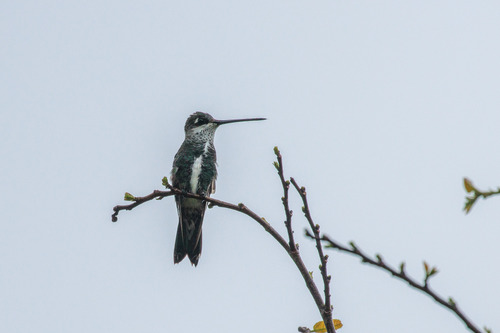 Colibrí Escamoso
 Ticotico Listado Amazónico
En breve
La forma más confiable de separar el Colibrí Escamoso del Ticotico Listado Amazónico es por la estructura general y el plumaje: el colibrí es un pequeño y esbelto colibrí con un pico largo y ligeramente curvado hacia abajo y un gorjeo violeta brillante (en machos en época de cría), mientras que el tico tico es un ave de horno mucho más grande y robusta con un pico corto y pesado y marcas doradas en la cabeza y el pecho. El colibrí muestra una distintiva franja blanca central en la parte inferior y un bigote blanco, mientras que el tico tico tiene una cara y un pecho estriados pero carece de cualquier franja central blanca. La forma de la cola también difiere: la del colibrí es bifurcada (especialmente en machos), mientras que la del tico tico es ancha y redondeada. Es extremadamente poco probable que estas aves se confundan por tamaño o comportamiento en el campo, pero puede haber confusión en vistas pobres o con inmaduros.
Consejos de identificación
- Tamaño y estructura: El colibrí es pequeño y esbelto, con un pico largo y ligeramente curvado hacia abajo; el tico tico es grande, robusto y tiene un pico corto y pesado. Si ves un ave que parece un gorrión o más grande, no puede ser un colibrí.
- Forma del pico: El pico del colibrí es largo, delgado y ligeramente curvado hacia abajo (como un colibrí); el del tico tico es corto, grueso y recto o ligeramente curvado hacia abajo (como un ave de horno). El color del pico también difiere: el del colibrí es negro, el del tico tico es negruzco por encima y pálido por debajo.
- Forma de la cola: Los machos del colibrí tienen una cola profundamente bifurcada, las hembras menos; la cola del tico tico es ancha, redondeada y de color castaño. La cola bifurcada en vuelo es una fuerte pista del colibrí.
- Marcas faciales blancas: El colibrí tiene una fuerte franja blanca detrás del ojo y un bigote blanco, visible en todas las edades y sexos. El tico tico tiene un anillo ocular pálido y franja post-ocular, pero estas son menos nítidas y no parecen bigote.
- Franja central en la parte inferior: El colibrí de todas las edades y sexos muestra una franja blanca en el centro de la parte inferior. El tico tico nunca muestra esto; su pecho está estriado pero el vientre es de un marrón pardo sólido.
- Color del gorjeo/cuello: El macho del colibrí en época de cría tiene un gorjeo violeta brillante con lados acampanados; después de la cría, este muda a grisáceo con manchas negras. Las hembras tienen cuellos de color verde negruzco con bordes blancos. El cuello del tico tico es de un marrón claro con estrías tenues, nunca iridiscente o de color sólido.
- Color de la parte superior: El colibrí es de un verde bronceado por encima con una corona iridiscente; el tico tico es de color marrón oscuro con estrías doradas en la corona y un rabadilla castaña.
- Color de las alas: Las alas del colibrí no se describen en detalle pero son típicamente oscuras para colibrí; las alas del tico tico son de un marrón rufescente, coincidiendo con su cola.
- Confusión juvenil: El juvenil tico tico es más pálido y menos estriado pero aún carece de la franja blanca y el bigote del colibrí. No se describe plumaje juvenil específico para el colibrí, pero todas las edades retienen las marcas faciales y de la parte inferior blancas.
- Comportamiento: Flotar en flores o vuelo rápido y errático es diagnóstico para el colibrí. Desplazarse a lo largo de ramas, sondear entre hojas o unirse a bandadas mixtas es típico del tico tico.
- Hábitat: El colibrí es probable que se encuentre en hábitats abiertos, de borde o jardines; el tico tico está en lo profundo del sotobosque del bosque o en niveles intermedios.
- Diferencias sexuales: Los machos del colibrí en plumaje de cría son los más distintivos (gorjeo violeta), pero las hembras y los machos no en cría aún muestran la franja central blanca y el bigote. Los sexos del tico tico son similares.
- Color de la cola: La cola del colibrí es negra y azul-verde (macho) o verde con azul y blanco (hembra); la del tico tico es siempre castaña.
- Patrón facial: El bigote blanco del colibrí y la franja post-ocular son nítidos y brillantes; la cara del tico tico está estriada pero con un dorado difuso y marrón.
- Cuando tengas dudas: Si ves un ave pequeña y flotante con una franja blanca en el vientre y una cola bifurcada, es un colibrí. Si el ave es grande, se posa o se desplaza a lo largo de las ramas, y tiene una cara estriada y cola castaña, es un tico tico.
Tamaño
El Colibrí Escamoso es un pequeño colibrí, que pesa alrededor de 5.7 g y mide entre 11.2 y 12.4 cm de longitud [wikidata, wikipedia]. En contraste, el Ticotico Listado Amazónico es mucho más grande y pesado, midiendo entre 17 y 18 cm y pesando entre 25 y 38 g [wikipedia]. El tico tico es más de tres veces más pesado y casi el doble de largo que el colibrí, con un cuerpo más voluminoso y robusto y un pico notablemente más pesado. Incluso a distancia, el colibrí parece delicado y rápido, mientras que el tico tico es robusto y deliberado.
Plumaje
- Plumaje juvenil/inmaduro: El juvenil Ticotico Listado Amazónico tiene menos estrías distintivas en la cabeza y el pecho y partes inferiores más pálidas que los adultos, pero aún muestra una cara estriada y cola castaña. No se describe plumaje juvenil específico para el Colibrí Escamoso, pero ambos sexos y edades comparten el bigote blanco y la franja central en la parte inferior, con hembras y machos no en cría careciendo del brillante gorjeo.
- Machos adultos (cría): Los machos del colibrí tienen partes superiores de un verde bronceado, una corona verde iridiscente, un gorjeo violeta brillante con lados acampanados y una fuerte franja blanca en el medio de las partes inferiores verde-negras. La cola es bifurcada, con plumas centrales negras y otras de un oscuro verde azulado. Después de la cría, el cuello muda a grisáceo con manchas negras.
- Hembras adultas: Las hembras del colibrí se asemejan a los machos por encima, pero el cuello es verde negruzco con bordes blancos, el pecho y el vientre son grisáceos con una franja central blanca, y los flancos son verdosos. La cola es verde con una banda azul acero y puntas blancas en las plumas exteriores.
- Ticotico (todas las edades/sexos): Muestra una cara de color marrón oscuro con estrías doradas, anillo ocular pálido y franja post-ocular, corona marrón oscuro con estrías doradas, rabadilla y cola castañas, y un pecho con amplias estrías doradas borrosas que se desvanecen antes del rico vientre marrón pardo. No tiene franja central blanca ni bigote. La subespecie A. s. lemae es más olivácea y tiene un mentón más amarillento.
Comportamiento
El Colibrí Escamoso se comporta como un típico colibrí: flota en flores, se posa en ramas expuestas y es rápido y ágil en vuelo. El Ticotico Listado Amazónico forrajea metódicamente a lo largo de ramas y vides, a menudo uniéndose a bandadas de especies mixtas, y generalmente se ve desplazándose o sondeando entre hojas muertas y epífitas. Sus movimientos son más lentos y deliberados, careciendo de cualquier flotación. El colibrí casi siempre se ve solo o en flores, mientras que el tico tico es a menudo parte de una bandada y rara vez visita flores.
Hábitat
El Colibrí Escamoso es endémico de Brasil y se encuentra típicamente en hábitats adecuados para colibríes, como bordes de bosques, claros y jardines. El Ticotico Listado Amazónico tiene un rango mucho más amplio, encontrado en bosques de tierras bajas y laderas a través de gran parte del norte de Sudamérica (Bolivia, Brasil, Colombia, Ecuador, Perú, Venezuela), y prefiere el sotobosque denso y niveles intermedios. Mientras que ambos pueden ocurrir en Brasil, el colibrí es más probable que se encuentre en hábitats abiertos o de borde, y el tico tico en lo profundo de los interiores del bosque.
Colibrí Escamoso · Ticotico Listado Amazónico · Mis aves difíciles