

Curruca Tomillera vs Curruca Rabilarga
Curruca conspicillata frente a Curruca undata
Juega un quiz con Curruca Tomillera y Curruca Rabilarga
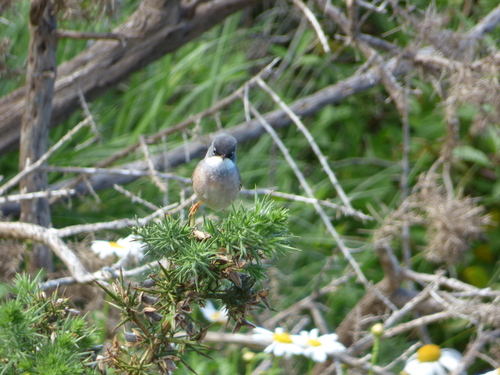 Curruca Tomillera
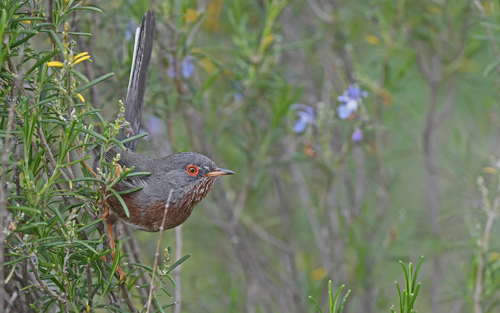 Curruca Rabilarga
En breve
La marca de campo más confiable entre la Curruca Tomillera y la Curruca Rabilarga es la presencia de un anillo ocular blanco audaz en la Curruca Tomillera, especialmente en los machos adultos, frente al ojo rojo de la Curruca Rabilarga y la falta de un anillo ocular fuerte. La Curruca Rabilarga también es notablemente más larga de cola y más oscura en general, con partes inferiores rojizas y una garganta manchada, mientras que la Curruca Tomillera es más pálida y más clara por debajo, con una garganta blanca y parches alares castaños. Las Currucas Tomilleras inmaduras pueden ser muy engañosas, ya que carecen del fuerte patrón de cabeza del adulto y pueden parecerse mucho a las Currucas Rabilargas hembras o juveniles, pero la longitud de la cola y el color del ojo siguen siendo útiles. Ambas especies se superponen en su rango en el suroeste de Europa y el noroeste de África, por lo que se necesita prestar atención cuidadosa a estos detalles.
Consejos de identificación
- Anillo ocular blanco (Curruca Tomillera): Los machos adultos de Curruca Tomillera muestran un anillo ocular blanco audaz y limpio, que es la mejor marca. Las hembras y los inmaduros pueden tener un anillo ocular pálido tenue, pero nunca tan fuerte como en los machos.
- Ojo rojo (Curruca Rabilarga): La Curruca Rabilarga (ambos sexos y edades) tiene un ojo rojo y no tiene un anillo ocular blanco fuerte, lo que contrasta con el anillo pálido o blanco de la Curruca Tomillera.
- Longitud de la cola: La Curruca Rabilarga tiene una cola delgada y larga, a menudo sostenida en alto; la cola de la Curruca Tomillera es más corta y menos prominente. Esto es especialmente notable en vuelo o cuando está posada erguida.
- Color de la cabeza (machos adultos): Los machos de Curruca Tomillera tienen una cabeza gris, mientras que los machos de Curruca Rabilarga tienen una cabeza y espalda gris-marrón o gris-azulada. Las hembras de ambas especies son más marrones, pero la Curruca Rabilarga siempre es más oscura por encima.
- Patrón de la garganta: La Curruca Tomillera tiene una garganta blanca limpia (especialmente en machos), mientras que la Curruca Rabilarga tiene una garganta rojiza con manchas blancas (machos) o una garganta más pálida y menos manchada (hembras).
- Color de las partes inferiores: La Curruca Rabilarga es de un marrón rojizo apagado por debajo con una mancha de vientre blanca sucia; la Curruca Tomillera es clara por debajo, nunca tan ricamente rojiza como la Rabilarga.
- Parche alar: La Curruca Tomillera muestra parches alares castaños, que pueden ser visibles a corta distancia; las alas de la Curruca Rabilarga son más uniformemente apagadas y carecen de castaño.
- Confusión juvenil: Las Currucas Tomilleras inmaduras carecen de la cabeza gris del adulto y del fuerte anillo ocular, lo que las hace muy similares a las juveniles de Curruca Rabilarga. En estos casos, la longitud de la cola y el color del ojo son las mejores pistas.
- Contraste del plumaje: La Curruca Tomillera es generalmente más pálida y más contrastante, mientras que la Curruca Rabilarga es más oscura, más apagada y más mezclada con su hábitat.
- Comportamiento: La Curruca Rabilarga es más esquiva y a menudo mueve su larga cola; la Curruca Tomillera es más propensa a posarse y mostrarse.
- Hábitat: En rangos superpuestos, la Curruca Rabilarga prefiere brezos densos o tojos, mientras que la Curruca Tomillera se encuentra más a menudo en matorrales abiertos o campos.
- Vuelo: La larga cola de la Curruca Rabilarga es obvia en vuelo; la cola más corta de la Curruca Tomillera y los parches alares castaños pueden verse a corta distancia.
- Canto: El canto de la Curruca Tomillera es un trino rápido y agudo; el de la Curruca Rabilarga es más rasposo y más ruidoso, pero esto es sutil y no siempre confiable para la separación.
- Diferencias sexuales: La Curruca Rabilarga muestra un dimorfismo sexual más fuerte, con machos más oscuros y más rojizos por debajo; los sexos de la Curruca Tomillera son más similares, con solo los machos mostrando la cabeza gris completa y el fuerte anillo ocular.
- Trampas: Cuidado con las Currucas Tomilleras inmaduras, que pueden parecerse mucho a la Curruca Rabilarga, especialmente las hembras. En estos casos, confíe en la longitud de la cola, el color del ojo y el contexto del hábitat.
Tamaño
La Curruca Rabilarga es ligeramente más grande, midiendo alrededor de 13 cm de longitud, y es especialmente distintiva por su larga y delgada cola, que es proporcionalmente más larga que la de la Curruca Tomillera. La Curruca Tomillera es un ave muy pequeña, intermedia en tamaño entre la Curruca Zarcera y la Curruca de Tristram, pero siempre con una cola más corta que la de la Rabilarga. Ambas especies son pequeñas y delgadas, pero la cola más larga de la Rabilarga y su estructura ligeramente más robusta pueden ser evidentes cuando están posadas o en vuelo. [wikipedia]
Plumaje
-
Aves juveniles/inmaduras: Ambas especies pueden ser confusas en plumaje inmaduro, ya que ambas son generalmente marrones por encima y más pálidas por debajo. Sin embargo, las juveniles de Curruca Rabilarga son más uniformemente grisáceas por encima y tienen una apariencia más apagada y menos contrastante, con un toque de rojizo por debajo y una garganta menos marcada. Las inmaduras de Curruca Tomillera son claras por debajo y marrones por encima, careciendo de la cabeza gris y del fuerte anillo ocular del adulto, pero pueden mostrar un anillo ocular pálido tenue y una garganta más pálida.
-
Machos adultos: Los machos de Curruca Tomillera tienen una cabeza gris, un audaz anillo ocular blanco, parches alares castaños, garganta blanca y partes inferiores claras. Los machos de Curruca Rabilarga tienen una cabeza y espalda gris-marrón (a veces gris-azulada), un ojo rojo, partes inferiores rojizas, una mancha de vientre blanca sucia y una garganta rojiza con manchas blancas. El plumaje de la Rabilarga es en general más oscuro y más apagado, mezclándose en hábitats de brezo.
-
Hembras adultas: Las hembras de Curruca Rabilarga son más marrones por encima y más pálidas por debajo que los machos, con una garganta más pálida y menos manchada y un ojo rojo. Las hembras de Curruca Tomillera son similares a las inmaduras, careciendo de la fuerte cabeza gris y del anillo ocular, pero aún son más pálidas y tienen una cola más corta que la Rabilarga.
-
En vuelo: No se describe un patrón distintivo en la parte superior del ala o la cola para ninguna de las especies, pero la larga cola de la Rabilarga es obvia en vuelo, mientras que los parches alares castaños de la Curruca Tomillera pueden ser visibles a corta distancia.
Comportamiento
La Curruca Rabilarga a menudo se posa con su larga cola en alto y se mueve a través de arbustos bajos con un movimiento esquivo, similar al de un ratón. Es más probable que se la vea volando bajo sobre el brezal o el tojo, a menudo con un vuelo débil y tembloroso y un frecuente movimiento de cola. La Curruca Tomillera también es activa en vegetación baja, pero es menos esquiva y puede ser más propensa a posarse a la vista. Ambas especies son insectívoras y buscan alimento de maneras similares, pero la cola más larga de la Rabilarga y su comportamiento más secreto pueden ser distintivos.
Hábitat
Ambas especies ocurren en el suroeste de Europa y el noroeste de África, pero la Curruca Rabilarga está más asociada con brezos secos, tojos y matorrales bajos, especialmente en el oeste de Europa y el Reino Unido. La Curruca Tomillera prefiere hábitats secos y abiertos con arbustos dispersos, incluyendo matorrales costeros, campos en barbecho y maquis mediterráneo. Donde sus rangos se superponen, la Rabilarga es más probable que se encuentre en brezos densos y maduros o tojos, mientras que la Tomillera se encuentra más a menudo en vegetación más escasa y áreas abiertas.
Voz
El canto de la Curruca Tomillera es un trino rápido y agudo, típico de las pequeñas currucas pero no especialmente distintivo. El canto de la Curruca Rabilarga no se describe en las notas, pero es generalmente un trino rasposo y ruidoso. En el campo, las vocalizaciones pueden no ser diagnósticas sin experiencia, ya que ambas son agudas y rápidas, pero el canto de la Curruca Tomillera es más alto y musical, mientras que el de la Rabilarga es más áspero y ruidoso.