

Obispo Rojo vs Obispo Culigualdo
Euplectes orix frente a Euplectes capensis
Juega un quiz con Obispo Rojo y Obispo Culigualdo
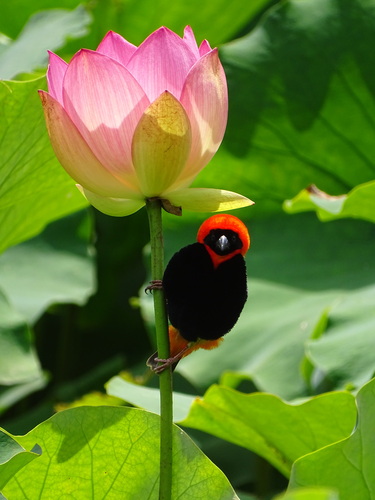 Obispo Rojo
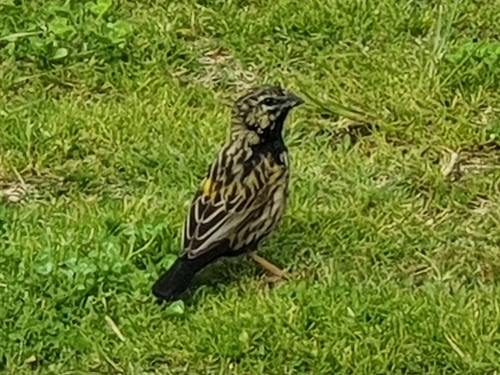 Obispo Culigualdo
En breve
La marca de campo más confiable entre el Obispo Rojo y el Obispo Culigualdo es la presencia de parches amarillos brillantes en la parte baja de la espalda, el rabadilla y los hombros del Obispo Culigualdo, que nunca se muestran en el Obispo Rojo. Los machos reproductores de Obispo Rojo son strikingmente rojos y negros, mientras que los Obispos Culigualdo son mayormente negros con toques amarillos. Las aves no reproductoras y las hembras de ambas especies pueden ser confusamente marrones estriadas, pero los parches amarillos en la rabadilla y los hombros del Obispo Culigualdo persisten incluso en plumaje no reproductor, proporcionando un punto de separación crucial. El tamaño y la estructura también ayudan: el Obispo Culigualdo es notablemente más grande y robusto, con una cresta corta y un pico más robusto, mientras que el Obispo Rojo es más pequeño y compacto.
Consejos de identificación
- Busca parches amarillos: El Obispo Culigualdo de cualquier edad o sexo (excepto posiblemente los juveniles más jóvenes) muestra amarillo en la parte baja de la espalda, el rabadilla y los hombros. El Obispo Rojo nunca muestra amarillo en ninguna parte.
- Rojo vs amarillo/negro: El macho reproductor del Obispo Rojo es de un rojo brillante y negro, con rojo en la cabeza, partes superiores y partes inferiores, y negro en la cara, garganta y vientre. El macho reproductor del Obispo Culigualdo es negro con parches amarillos, nunca rojo.
- Tamaño y construcción: El Obispo Culigualdo es notablemente más grande y robusto (alrededor de 34g, 15 cm), con un pico más grueso, a menudo más grande, y una cresta corta. El Obispo Rojo es más pequeño (alrededor de 23g, 10–11 cm), más compacto y carece de cresta.
- Color y forma del pico: Ambos tienen picos cónicos gruesos, pero el pico del Obispo Culigualdo puede ser especialmente grande y varía entre razas; en plumaje no reproductor, se vuelve pálido. El pico del Obispo Rojo es grueso pero más pequeño y no muestra tanta variación.
- Confusión entre no reproductores y hembras: Las hembras de ambas especies y los machos no reproductores son marrones estriados en la parte superior y más pálidos en la parte inferior. En el Obispo Culigualdo, los machos no reproductores retienen parches amarillos, mientras que las hembras no. Las hembras y los machos no reproductores del Obispo Rojo nunca muestran amarillo.
- Desafío juvenil: Los juveniles y hembras de Obispo Culigualdo son notoriamente difíciles de separar de otros obispos y viudas, pero los parches amarillos en la rabadilla/hombros (si están presentes) son diagnósticos. Los juveniles del Obispo Rojo son marrones estriados y carecen de amarillo.
- Ala y cola: Ambos tienen alas y colas marrones, pero las alas del Obispo Culigualdo tienen bordes marrones y la cola es relativamente corta. Las alas y la cola del Obispo Rojo son simplemente marrones, sin amarillo ni marcas especiales.
- Cresta: Los machos reproductores del Obispo Culigualdo tienen una cresta corta, que el Obispo Rojo carece. Esto puede ser sutil pero es útil en vistas cercanas.
- Comportamiento en bandadas: En la temporada no reproductora, el Obispo Culigualdo a menudo se une a bandadas mixtas con otras especies de Euplectes. El Obispo Rojo también es social, pero no se especifica tanto su comportamiento de bandada.
- Pistas de hábitat: El Obispo Rojo prefiere humedales y praderas, mientras que el Obispo Culigualdo es más probable que se encuentre en hábitats de tierras altas, menos áridos o fynbos.
- Vistas de vuelo: En vuelo, busca destellos de amarillo en la rabadilla y los hombros para el Obispo Culigualdo; el Obispo Rojo no mostrará estos.
- Contexto: Si ves un obispo rojo y negro brillante en el sur de África, es un Obispo Rojo. Si el ave es negra y amarilla, es un Obispo Culigualdo.
- Contexto estacional: Durante la temporada de cría, los machos son fáciles de separar por color. En la temporada no reproductora, confía en los parches amarillos para el Obispo Culigualdo y en el tamaño general más pequeño para el Obispo Rojo.
- Trampas: No confíes solo en el plumaje marrón estriado para la identificación; siempre verifica los parches amarillos y el tamaño/estructura.
- Voz: Los llamados no son diagnósticos entre estas dos especies según las notas disponibles.
Tamaño
El Obispo Culigualdo es sustancialmente más pesado (alrededor de 34g) y más largo (15 cm) que el Obispo Rojo (alrededor de 23g, 10–11 cm). Esta diferencia a menudo es visible en el campo, con el Obispo Culigualdo apareciendo más robusto y robusto, mientras que el Obispo Rojo se ve más pequeño y más delicado. El tamaño del pico también es más variable y generalmente más grande en el Obispo Culigualdo, especialmente en algunas razas, en comparación con el pico consistentemente grueso pero más pequeño del Obispo Rojo.
Plumaje
- Juveniles y aves no reproductoras: Ambas especies son marrones estriadas y pueden ser muy similares, pero el Obispo Culigualdo (todas las edades y sexos) muestra amarillo en la parte baja de la espalda, el rabadilla y los hombros, que el Obispo Rojo nunca hace. Este amarillo es la marca más confiable para todos menos los juveniles más jóvenes.
- Machos reproductores: Los machos del Obispo Rojo son de un rojo vívido con una cara, garganta y vientre negros, y alas/cola marrones. Los machos del Obispo Culigualdo son negros con parches amarillos brillantes en la parte baja de la espalda, el rabadilla y los hombros, y alas con bordes marrones. El Obispo Rojo nunca muestra amarillo, y el Obispo Culigualdo nunca muestra rojo extenso.
- Hembras: Ambas son marrones estriadas y más pálidas por debajo, pero las hembras del Obispo Culigualdo carecen de los parches amarillos que se ven en los machos, lo que las hace especialmente complicadas. Sin embargo, las hembras del Obispo Rojo son más pequeñas y carecen de cualquier amarillo.
- Machos no reproductores: Ambos se ven similares a las hembras, pero los machos del Obispo Culigualdo retienen parches amarillos, mientras que los machos del Obispo Rojo no lo hacen.
Comportamiento
El Obispo Culigualdo a menudo es solitario o en parejas durante la temporada de cría, pero se vuelve gregario y forma bandadas mixtas con otras especies de Euplectes en la temporada no reproductora. El Obispo Rojo también es social, pero las notas no especifican el comportamiento de bandada tan claramente. Ambas especies se alimentan de semillas e insectos, pero se nota que el Obispo Culigualdo se une a bandadas de especies mixtas fuera de la temporada de cría.
Hábitat
El Obispo Rojo es común en humedales y praderas al sur del ecuador, mientras que el Obispo Culigualdo prefiere hábitats vegetados menos áridos, como fynbos, praderas húmedas y valles cubiertos de helechos, a menudo a altitudes más altas desde el nivel del mar hasta las Tierras Altas de Etiopía. Es posible que haya superposición en praderas húmedas, pero el Obispo Culigualdo es más probable que se encuentre en áreas de tierras altas o montañosas y zonas menos áridas.
Voz
El Obispo Rojo tiene varios llamados trinos, un llamado nasal de contacto y una canción zumbante. No se describen vocalizaciones específicas para el Obispo Culigualdo en las notas, por lo que los llamados no son una marca de campo confiable para la separación.