

Anteojitos de Seychelles vs Anteojitos Malgache
Zosterops modestus frente a Zosterops maderaspatanus
Juega un quiz con Anteojitos de Seychelles y Anteojitos Malgache
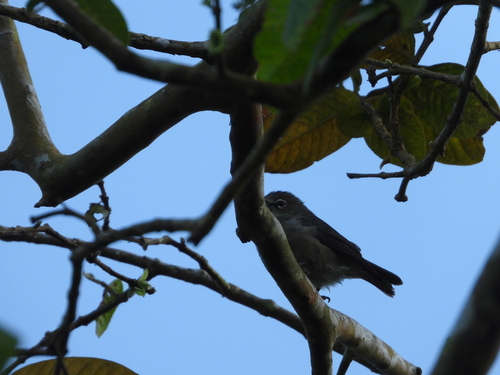 Anteojitos de Seychelles
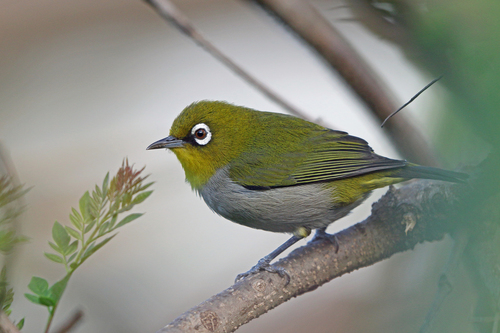 Anteojitos Malgache
En breve
La marca de campo más confiable entre el Anteojitos de Seychelles y el Anteojitos Malgache es la coloración de las partes inferiores: el Anteojitos de Seychelles tiene partes inferiores opacas y de color uniforme, mientras que el Anteojitos Malgache muestra una garganta amarilla distintiva y un vientre gris pálido. Ambas especies tienen partes superiores de tono oliva y un anillo ocular blanco, pero el anillo ocular es completo y estrecho en el Anteojitos de Seychelles, e incompleto (roto en la parte delantera) en el Anteojitos Malgache. Las diferencias estructurales son sutiles, pero el Anteojitos de Seychelles es ligeramente más pesado y tiene una cola más larga y oscura. El hábitat y la abundancia también son clave: el Anteojitos de Seychelles es raro y local en el dosel de Seychelles, mientras que el Anteojitos Malgache es común en Madagascar y Seychelles, a menudo en una variedad de hábitats boscosos.
Consejos de identificación
- Color de las partes inferiores: El Anteojitos de Seychelles tiene partes inferiores opacas y uniformes, mientras que el Anteojitos Malgache muestra una garganta amarilla clara y un vientre gris pálido. Esta es la diferencia más visible en buena luz.
- Anillo ocular: El anillo ocular del Anteojitos de Seychelles es estrecho y completo, rodeando completamente el ojo. El del Anteojitos Malgache es incompleto, roto en la parte delantera (especialmente obvio a corta distancia o en fotos).
- Color de la garganta: Solo el Anteojitos Malgache tiene una garganta amarilla; la garganta del Anteojitos de Seychelles es opaca y coincide con el resto de las partes inferiores.
- Partes superiores: Ambos son oliva por encima, pero el Anteojitos Malgache se describe como de un verde oliva más oscuro, mientras que el Anteojitos de Seychelles es de un oliva grisáceo. Esto es sutil y puede verse afectado por la iluminación.
- Cola: El Anteojitos de Seychelles tiene una cola bastante larga y gris oscura, que puede parecer más prominente cuando está posado o agitada.
- Color del pico: El Anteojitos Malgache muestra un pico bicolor (mandíbula superior negra, inferior gris), mientras que el pico del Anteojitos de Seychelles no se describe como bicolor en las descripciones disponibles.
- Color de los ojos: El Anteojitos Malgache tiene un ojo marrón rojizo, que puede ser visible a corta distancia; el color de los ojos del Anteojitos de Seychelles no se especifica pero no se menciona como rojizo.
- Hábitat y distribución: Si se ve en Madagascar, es el Anteojitos Malgache. En Seychelles, verifica el hábitat: el Anteojitos de Seychelles es raro, local y prefiere el dosel alto; el Anteojitos Malgache es común y se encuentra en una variedad de hábitats boscosos.
- Abundancia: El Anteojitos de Seychelles es muy raro y difícil de encontrar; el Anteojitos Malgache es común y se encuentra en hábitats adecuados.
- Comportamiento: El Anteojitos de Seychelles es secreto y busca alimento en lo alto del dosel; el Anteojitos Malgache es más adaptable y a menudo más fácil de observar.
- Canto: Si se escucha un canto complejo, melodioso y nasal, considera el Anteojitos de Seychelles, pero la falta de canto no es diagnóstica.
- Reproducción cooperativa: Solo se conoce al Anteojitos de Seychelles por su compleja reproducción cooperativa, pero esto no es una marca de campo.
- Aves juveniles/inmaduras: No se describen marcas distintivas específicas de edad para ninguna de las especies; utiliza características del plumaje adulto para todas las edades.
- En vuelo: No se describen diferencias diagnósticas en el vuelo o el patrón de alas; concéntrate en el color de las partes inferiores y el anillo ocular si son visibles.
- Trampas: La mala iluminación puede oscurecer la garganta amarilla y el anillo ocular incompleto del Anteojitos Malgache, haciéndolo parecer más como el Anteojitos de Seychelles. Siempre intenta obtener múltiples vistas y nota el contexto.
Tamaño
Ambas especies son muy similares en tamaño, con el Anteojitos de Seychelles promediando 12.0 g y el Anteojitos Malgache 11.2 g [wikidata]. La longitud es casi idéntica, alrededor de 10–11 cm. En el campo, estas diferencias son insignificantes y poco útiles para la separación. Cualquier diferencia de tamaño percibida es más probable que se deba a la postura o el ángulo de visión.
Plumaje
- Plumaje juvenil/inmaduro: No se describen diferencias específicas de edad en el patrón de alas o vuelo para ninguna de las especies; ambas carecen de marcas distintivas de alas juveniles en las fuentes disponibles.
- Plumaje adulto: El Anteojitos de Seychelles tiene partes superiores de oliva grisáceo y partes inferiores opacas, con un anillo ocular blanco estrecho y completo y una cola bastante larga y gris oscura. El Anteojitos Malgache es de un verde oliva más oscuro por encima, con una garganta amarilla y un pecho y vientre gris pálido. Su anillo ocular blanco es incompleto, roto en la parte delantera, y el ojo en sí es marrón rojizo. El pico del Anteojitos Malgache es bicolor (mandíbula superior negra, inferior gris), mientras que el pico del Anteojitos de Seychelles se describe como pequeño y afilado pero no específicamente bicolor. Las partes inferiores del Anteojitos de Seychelles son más uniformemente opacas, careciendo del contraste de la garganta amarilla y el vientre pálido del Anteojitos Malgache.
Comportamiento
El Anteojitos de Seychelles es difícil de observar, a menudo busca alimento en lo alto del dosel y exhibe un comportamiento de reproducción cooperativa complejo único entre los anteojitos. El Anteojitos Malgache es más adaptable, se encuentra en una variedad de hábitats boscosos y generalmente es más fácil de ver. Ambos son aves activas, similares a los reinitas, pero los hábitos secretos y la rareza del Anteojitos de Seychelles hacen que sea mucho menos probable encontrarlo, excepto en localidades específicas.
Hábitat
El Anteojitos de Seychelles es endémico y extremadamente local en Seychelles, prefiriendo el dosel alto en áreas boscosas. El Anteojitos Malgache es común en Madagascar y también se encuentra en Seychelles, ocupando una amplia gama de hábitats boscosos que incluyen bosques secos, bosques húmedos de tierras bajas y montanos, y manglares. Si el ave se ve fuera de Seychelles o en un hábitat diferente al dosel denso del bosque, es casi seguro que es el Anteojitos Malgache.
Voz
El Anteojitos de Seychelles tiene un canto melodioso y complejo con tonos nasales. No se proporciona una descripción vocal específica para el Anteojitos Malgache en las fuentes disponibles. La voz es poco probable que sea diagnóstica a menos que se escuche y reconozca el canto del Anteojitos de Seychelles, pero en la práctica, la mayoría de la separación en el campo dependerá del plumaje y el contexto.
Anteojitos de Seychelles · Anteojitos Malgache · Mis aves difíciles